


강정호 기자 ㅣ 여행레저신문
Saipan’s tourism crisis began while the island was still strong
Jungchan Lee l The Travel News
Saipan’s tourism crisis did not begin when visitor numbers softened. It began when the island was still doing well.
That is the central failure behind Saipan’s decline as a destination. During its strongest years, Saipan had the market position, the resort infrastructure, the Korean outbound demand and the brand recognition needed to prepare for the next stage of growth. Instead, the island relied too heavily on the conditions that had already made it successful.
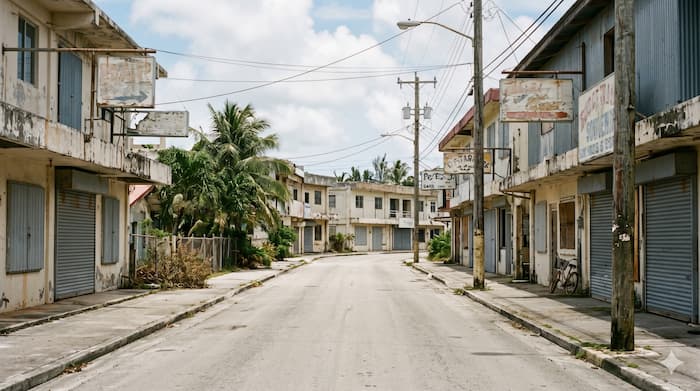
The result is now visible. Saipan still has natural beauty. It still has beaches, marine attractions and a short-haul advantage for Korean travelers. But the destination’s market value has weakened. Its pricing power has declined. Its commercial district has lost energy. Its resort identity has become less distinct. The problem is not the absence of tourism assets. The problem is the failure to manage those assets through the full cycle of growth, maturity and decline.
Markets do not move in straight lines
No tourism market grows forever. Destinations rise, peak, mature and face decline. The work of destination marketing is not to pretend that this cycle does not exist. It is to prepare for it.
A strong market can create a dangerous illusion. When rooms are full, flights are moving and travel agencies are selling packages, managers often assume that the market is stable. But high volume does not always mean long-term strength. A destination can remain busy while its brand is weakening. It can fill rooms while losing premium customers. It can maintain traffic while damaging pricing discipline.
Saipan’s experience shows that risk clearly.

For years, the island benefited from a strong position in the Korean market. It was close, foreign enough, relatively safe and easy to sell. Honeymooners came first. Families followed. Major resort brands gave the island credibility. Garapan offered shopping and a visitor district. Korean travel agencies had a product they could sell with confidence.
That was Saipan’s peak. But a peak is not a guarantee. It is the moment when a destination must prepare for the next market.
Saipan failed to use its peak
The core question is simple: what did Saipan do while it was strong?
The island should have used its peak years to renew facilities, strengthen service standards, protect rate integrity and broaden its customer base. It should have developed separate strategies for families, divers, golfers, senior travelers, education groups, long-stay visitors and high-value marine tourism. It should have rebuilt Garapan before the district lost commercial strength. It should have updated the destination’s identity before the old resort image became stale.
Instead, the market leaned on familiar tools: package distribution, repetitive beach imagery, familiarization trips, short-term promotions and price-led sales.
Those tools can produce movement. They cannot produce renewal.
A destination that depends too long on the same customer, the same message and the same sales channel eventually loses control of its own value. Once travelers stop seeing a destination as worth paying more for, the market begins to ask only whether it is cheap enough.
That is the beginning of brand decline.
Price became a substitute for strategy
Discounting is often presented as a recovery tactic. In reality, it is frequently a sign that strategy has already failed.
When Saipan’s market position weakened, the island did not respond with a strong product reset. It did not sufficiently rebuild premium value. It did not create a clear new reason for travelers to choose Saipan over competing destinations. Instead, the market leaned further into lower-margin sales and price-sensitive demand.
That may have kept some rooms occupied. But it also weakened the destination’s long-term position.
Price-led tourism has a cost. It lowers the customer’s expectation of value. It reduces the ability of hotels and operators to reinvest. It pushes higher-spending travelers toward other destinations. It turns a place once chosen for its experience into a place chosen for its discount.
For Saipan, that shift was damaging. The island did not simply lose some visitors. It lost part of its authority as a premium Pacific resort destination.
The wrong metrics hid the problem
Saipan’s decline was also obscured by the wrong measurements.
Visitor counts and occupancy rates are easy to track. They offer a quick sense of market activity. But they do not tell the full story. A healthier assessment would have looked at average spending, rate integrity, repeat intention, premium customer share, destination satisfaction, local spending in Garapan and the strength of new customer segments.
Those figures matter because tourism is not only about arrivals. It is about value.
A destination can attract visitors and still weaken. It can look busy while earning less, investing less and losing stronger customers. It can preserve traffic while losing brand power.
Saipan appears to have treated volume as proof of health for too long. The more important question was not whether people were still coming. It was whether the right travelers were coming for the right reasons, at the right price, with enough satisfaction to return.
That question was not answered with enough discipline.
Governance was too weak
Destination marketing is not the same as hotel promotion. It requires coordination among tourism authorities, hotels, airlines, travel agencies, local merchants, restaurants, activity operators and public agencies. If those actors move in different directions, the destination weakens even if individual businesses continue to operate.
Saipan needed stronger destination governance after its peak. It needed a shared plan for rate discipline, product renewal, customer segmentation, Garapan revitalization and brand repositioning. It needed the tourism authority, private operators and market partners to treat the destination brand as a common asset.
That coordination was not strong enough.
As a result, problems were treated separately. Hotels faced hotel issues. Travel agencies chased sales. Local businesses dealt with declining foot traffic. Promotional campaigns repeated familiar language. But travelers did not experience Saipan in separate parts. They experienced the island as a whole.
When the whole experience weakened, the brand weakened with it.
The next customer was not built early enough
The main purpose of peak-period strategy is to build the next customer before the current customer leaves.
Saipan’s early strength in Korea came from honeymoon and family travel. Those markets were important, but they could not support the destination forever. Korean travelers became more experienced. Competing resorts in Southeast Asia improved. Guam, Hawaii, Bali, Danang, Phuket and other destinations sharpened their own positions. Saipan needed a more defined next-generation market strategy.
The island had options.
It could have built a more serious diving market around the Grotto and marine assets. It could have developed war-history tourism with greater depth. It could have positioned itself more strongly for golf, education travel, senior rest, long-stay programs and family resort products with higher service standards. It could have used its Pacific location as a stronger part of its identity.
But these markets require more than promotion. They require product design, interpretation, pricing, distribution and service standards.
Saipan did not move early enough or decisively enough.
The lesson is clear
Saipan’s problem is not that its beaches disappeared. They did not. Its problem is that the destination failed to renew the value around those beaches.
Tourism recovery cannot be built on nostalgia. Saipan cannot return to the conditions of the 1990s or early 2000s. The market has changed. Travelers have changed. Competing destinations have changed. A destination that wants to recover must offer a clear answer to a basic question: why should travelers choose this place now?
For Saipan, that answer must be rebuilt.
The island needs stronger product quality, tighter pricing discipline, a revived Garapan, better-defined customer segments and a destination narrative that goes beyond generic beach promotion. It must connect marine tourism, family travel, war history, golf, long-stay demand and Pacific identity into a coherent market proposition.
That requires management, not slogans.
The failure of Saipan is not simply a failure of promotion. It is a failure to plan the descent while standing at the peak. The island treated past success as if it would continue on its own. It did not prepare the next stage with enough urgency.
A tourism crisis rarely begins at the bottom. It begins when a destination is still strong and no one is preparing for the day that strength fades.
Saipan is now paying the price of that neglect.
Travel Leisure Newspaper Copyrights ⓒ Travel Leisure Newspaper. All rights reserved.
여행레저신문 Copyrights ⓒ The Travel News. 무단전재 및 재배포 금지.