

In a market that should be selling experience, the industry has spent too long just moving rooms — and that is why cruise has never truly taken root
By Jungchan Lee | The Travel News 여행레저신문
For years, Korea’s travel industry has failed to sell cruises properly.
More precisely, it has not failed to sell them at all. It has sold them the wrong way.
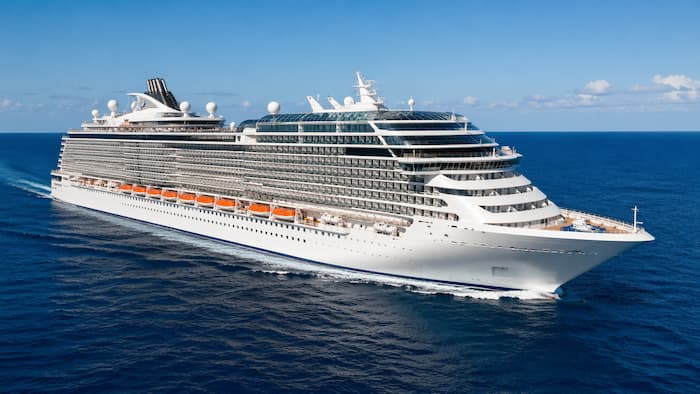
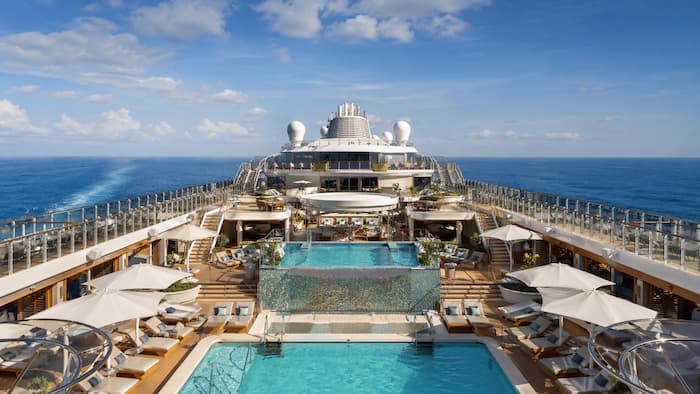
A cruise is not simply a means of transportation. It is not a flight that drops travelers at a destination, nor is it just a hotel stay on the water. From embarkation to disembarkation, the entire span of time is the product. The ship’s spaces, services, atmosphere, dining, entertainment, rhythms of movement, and shore experiences are all consumed as one integrated journey. Yet for years, much of Korea’s travel industry has broken that experience into pieces and reduced it to what is essentially a room sale: a certain number of nights at a certain price.
That is where the market began to warp.
Before consumers are taught what a cruise actually is, they are handed a price sheet. Before they hear about the character of the cruise line, the atmosphere on board, or the different pace of the trip, they are pushed to ask simpler questions: How much does it cost? How many ports does it visit? Why is this itinerary more expensive than that one? Those became the dominant questions because that is how the industry chose to sell the product. Price came before explanation. Itinerary came before experience. As a result, cruises in Korea came to be seen as an expensive trip you try once, not a form of travel you return to.
This is not merely a problem of sales technique.
It points to a deeper failure in the way the product itself has been understood.
Many Korean travel agencies have not treated cruises as something to shape, interpret, and build into a travel culture. Instead, they have mostly treated them as outside products created elsewhere: schedules designed by foreign cruise lines, cabins allocated to intermediaries, and air tickets or limited land arrangements added on top like a conventional package. In other words, the industry has largely functioned as a distributor, not as a builder of a market. That kind of structure can generate transactions, but it does not generate depth. It can produce bookings, but not memory. It can move product, but it does not build a loyal base of repeat customers who understand the differences among cruise lines and return for more.
And the problem does not stop there.
The more comfortable agencies become with simply selling cabins, the less they feel compelled to teach customers what they are buying.
Cruise is unfamiliar to first-time travelers. People need to know which cruise lines feel lively and energetic and which feel calm and refined. They need to know what works best for families, older travelers, independent-minded travelers, or people seeking food, entertainment, rest, or scenery. They need to understand the difference between an inside cabin and a balcony cabin, the difference between a voyage centered on the ship itself and one focused more heavily on ports of call. Without that level of explanation, consumers cannot make meaningful choices. Yet in Korea, that kind of careful translation has too often been skipped. And when explanation disappears, price becomes the only language left. Once that happens, cruises start to look like an expensive and vaguely inefficient product.
At the center of this cycle is not simply difficulty, but attitude.
The fact that cruises are harder to explain is not an excuse. It is the very reason they should be sold with more care.
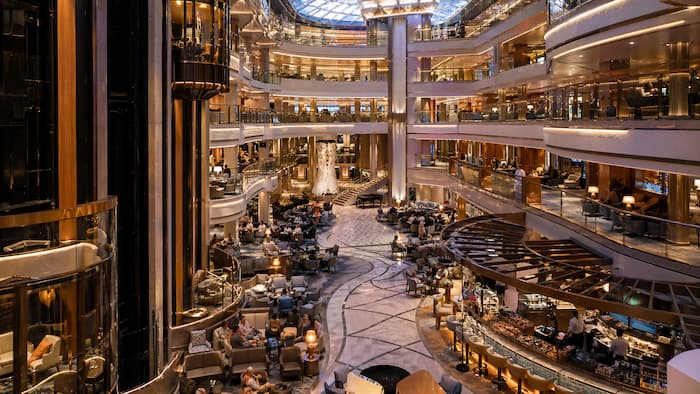
A cruise was never going to behave like a mass-market airline ticket. In the early stages of any market, explanation, persuasion, exposure, and education are essential. Yet much of the industry chose not to invest the time and cost required to build that understanding. It preferred products that delivered quicker reactions and easier conversions. The problem was not that cruises were too difficult. The problem was that the industry lacked patience for a market that takes time to cultivate.
Korean travel companies have long been good at gathering customers.
They have been far less skilled at building culture.
In the heyday of the package-tour business, the central question was how quickly seats and rooms could be filled. That habit never really disappeared. The same mindset still lingers in the way cruises are often marketed: limited cabins, limited-time discounts, early booking offers, a shrinking block of inventory that needs to be moved before the season ends. But cruises are poorly suited to that hurried language. People buying a cruise are not simply purchasing transport or accommodation. They are buying time, atmosphere, flow, and experience. Yet the industry has often continued to sell the product as if it were little more than airline inventory with a higher price tag.
That is why consumers so often arrive at the wrong conclusion.
Wouldn’t staying on a ship for that long feel confining?
If the ship only stops briefly at each port, why is it so expensive?
Wouldn’t the same money be better spent at a luxury hotel on land?
These are not unreasonable questions, and they do not arise because consumers are ignorant. They arise because the industry has failed to give them a better framework. The value of a cruise does not lie in the number of miles traveled or cities checked off a list. It lies in the ability to enjoy changing landscapes and services every day without constantly unpacking and repacking, without repeatedly transferring between airports, hotels, and trains, and without losing the continuity of the journey. If that essential value is never communicated, the consumer will always retreat to the price tag.
Travel agencies have missed something else as well.
Cruise is not a one-time product. It is a market built on repeat customers, longer itineraries, better cabins, and more specialized choices.
A first-time traveler can begin with a shorter introductory itinerary. The second trip may involve a stronger cruise line preference, a longer route, a better room, or a more distinctive destination. That is where the true strength of cruise lies. People who cruise once can become people who cruise repeatedly. They begin to compare brands, remember the character of different ships, and choose future trips according to family size, age, interests, and comfort. That is how a market thickens. But in Korea, there has been surprisingly little evidence of a carefully built path from first-time cruiser to returning customer. Agencies have been more focused on selling whatever cabins they have at the moment than on creating a sequence that turns first purchases into lasting habits.
As a result, the Korean cruise market has struggled to create momentum that leads people back.
That cannot be blamed only on frontline sales staff.
The problem lies in the broader structure of the industry.
Selling cruises well requires dedicated personnel, longer consultation times, serious product training, and ideally, salespeople who have actually experienced cruising firsthand. But the Korean travel business has long been shaped by fast turnover and short-term performance pressure. In that environment, cruises naturally fall down the priority list. A market that requires explanation, experience, and time is difficult to nurture inside organizations that are constantly being pushed to generate immediate revenue. That is why cruises have too often remained stuck in the category of “promising but troublesome products” instead of becoming a serious strategic priority.
Another issue compounds the problem.
The industry has far too often confined cruises to the image of a senior-focused product.
To be clear, cruises do offer many features that appeal strongly to older travelers: ease of movement, stable dining, onboard convenience, and minimal baggage stress. But once those strengths are treated as the whole story, the market begins to shrink itself. The travelers who may be most receptive today are often people in their 30s and 40s — people with extensive overseas travel experience, familiarity with resort-style spending, and a willingness to combine food, leisure, entertainment, and rest into one coherent trip. Families traveling with children may also be natural customers. Yet Korean marketing has leaned for too long on the image of a relaxed retirement-style vacation. Once that happens, cruise starts to look dated, distant, and irrelevant — something for someone else.
When the language of the market grows old, the market itself begins to age.
That is a simple truth the industry has ignored for too long.
More troubling still is the fact that some agencies continue to view cruise merely as an extension of old-fashioned group package travel. But the core of cruising lies in the balance between freedom and structure. If that is buried beneath the rigid rhythms of bus-led land tours — rushing off the ship, moving in groups, listening to hurried explanations, reboarding on a fixed schedule — much of cruise’s appeal disappears. At that point, travelers may understandably ask why they should not simply take an ordinary package tour instead. If the freedom, ease, and onboard rhythm of cruising are lost, the product loses what makes it distinct.
In the end, the reason Korean travel agencies have not sold cruises properly is clear enough.
They have prioritized moving cabins over helping travelers understand the value of the experience. They have grown accustomed to clearing seasonal allotments rather than cultivating a market. They have focused more on securing one immediate booking than on designing a first experience strong enough to bring the customer back.
That is why cruise sales in Korea have so often felt less like a travel proposal and more like inventory distribution.
That needs to change.
If the industry wants to sell cruises properly, it must stop leading with price and itinerary alone. It must begin by explaining who the trip is for and why. It must explain how cruise lines differ, how cabins shape the experience, and which itineraries are manageable for first-time travelers. Only then can consumers begin to see a cruise not as an expensive, unfamiliar product, but as a form of travel they may want to return to once they understand it.
There are many reasons the Korean cruise market has grown slowly.
But at least one of them is unmistakable. For too long, the industry has treated cruise not as something to develop into a lasting travel culture, but as a block of rooms that needs to be sold. And when a market that should be built around experience is reduced to moving cabins, bookings may happen, but culture does not. In Korea, cruises have remained expensive trips people try once, rather than a travel habit that takes root and grows.
Next in the series
Why Busan, Incheon, and Jeju Have Not Become True Cruise Hubs
Ships are arriving, but the market is not taking root.
The next article looks at why Korea’s major cruise ports still struggle to move beyond arrival statistics and become real hubs where passengers stay longer, spend more, and begin their journeys again.
About this series
Cruise Series | Why Korea’s Cruise Market Still Has Not Fully Taken Shape
This four-part series examines why cruise remains thin, fragmented, and underdeveloped in one of the world’s most active outbound travel markets. The problem is not simply demand. It is the failure to build the right structure, language, distribution model, and port strategy needed for cruise to take root as a mainstream travel culture in Korea.
Series lineup
Part 1 Why Korea’s Cruise Market Still Has Not Fully Taken Shape
Part 2 Why Korean Travel Agencies Still Sell Cruises Like Cabin Inventory
Part 3 Why Busan, Incheon, and Jeju Have Not Become True Cruise Hubs
Part 4 How Korea’s Cruise Market Should Be Rebuilt from Here