


이가온 기자 ㅣ 여행레저신문
Part 1. The Paradise We Knew Is Dead: Strategic Arrogance and Brand Suicide
Jungchan Lee | Publisher, The Travel News 여행레저신문
April 20, 2026
Philip Kotler, the father of modern marketing, has long made one point unmistakably clear: real marketing is not the act of pushing inventory. It is the discipline of creating and delivering value the customer may not yet know how to articulate. In hospitality, that value is never just the room, the flight seat, or the beach. It is emotional payoff. It is distance from the ordinary. It is atmosphere, status, memory, and the feeling that one has entered a different world. The moment a destination can no longer deliver more psychological benefit than the price required to reach it, the market begins to discard it.
That is the real crisis of Saipan.
This is not, at its core, a story about aging buildings. It is not simply a story about weaker demand, fewer flights, or a difficult global environment. It is a story about what happens when a premium destination stops managing its value proposition and begins behaving like a warehouse of saleable rooms. Saipan did not lose only momentum. It lost hierarchy. It lost mystique. It lost the ability to explain, convincingly and proudly, why travelers should still pay a premium to go there.
For Korean travelers, especially in the mid-1990s and early 2000s, Saipan was never just another tropical island. It was one of the clearest premium leisure products in the market. For honeymooners, for families, and for first-time international vacationers, Saipan stood for reliability, aspiration, and reward. It was close enough to be convenient, yet distinct enough to feel exotic. It offered a rare combination: a short-haul flight and a genuine sense of escape. In marketing terms, that was powerful positioning. In brand terms, it built deep equity.
What made Saipan strong back then was not only the sea.
It was the total package of separation. The island created distance from daily life the moment the traveler arrived. The resort zones felt organized. The service standard, especially at flagship properties such as PIC and other major resorts, supported the illusion of order, care, and value. The destination still felt foreign. That mattered. People were not paying only for water, palm trees, and sunshine. They were paying for a premium stay experience—what the industry would call experience value—wrapped in the emotional reward of “I have gone somewhere special.”
That is how destinations become durable brands.
They do not win because they are beautiful. Beauty is only the raw material. They win because beauty is curated into a coherent product: service, atmosphere, pace, signage, retail, food, accommodation, circulation, and memory all working in the same direction. Saipan once understood this. Or at least, it once benefited from people who did.
Today, however, the destination presents a different picture. And the most painful part is that the damage was not inevitable.
From a destination-marketing standpoint, one of the most consequential failures appears to have come from the long-running strategic misjudgment of the Northern Mariana tourism authorities and their agency-side partner, AVIAREPS. The problem was not one bad campaign, one weak season, or one poor media buy. The problem was philosophical. They seem to have mistaken access for desirability, familiarity for loyalty, and tactical sales activity for brand stewardship. That is not a minor error. That is how premium destinations quietly die.
A destination authority exists to protect long-term brand value, not merely to keep short-term traffic moving. A capable representation agency is supposed to sharpen market intelligence, not flatten the product into whatever is easiest to sell this quarter. Yet Saipan appears to have spent too many years leaning into exactly the wrong instincts: trade dependence without renewal, convenience without distinction, and market comfort without strategic repositioning.
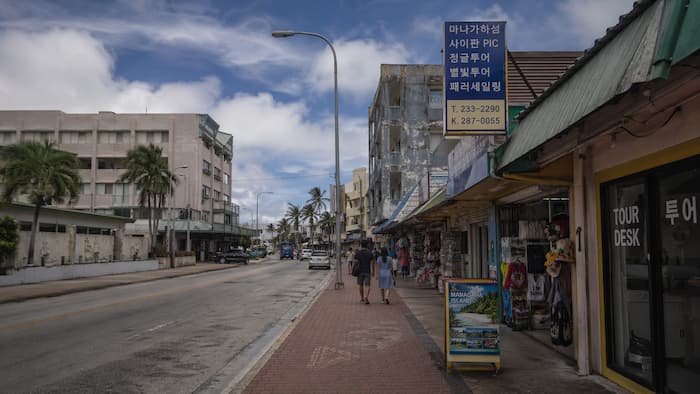
The result is visible on the ground.
Walk through Garapan today and the central problem is impossible to miss. The destination no longer creates enough distance from the traveler’s ordinary life. What one hears too often is not the rhythm of a foreign place but the overfamiliar soundscape of a Korean outbound bubble. Korean signs, Korean-language sales desks, Korean-targeted convenience messaging, and an atmosphere of over-adaptation have diluted the island’s foreign identity. This is not a complaint about Korean travelers. Korean visitors helped build Saipan’s success. The problem is that the destination’s managers allowed service adaptation to slide into over-localization.
That distinction matters.
Localization can improve comfort. Over-localization can destroy destination appeal. A successful international destination must be legible, yes—but it must remain distinct. Travelers do not spend heavily to encounter an overseas version of their own neighborhood. They pay for difference that still feels safe. Saipan, in too many visible ways, seems to have surrendered that balance. The old sensation of arrival—of entering a place with its own mood, tone, and order—has weakened. Once that happens, the traveler begins asking the most dangerous question in tourism: Why am I paying this much to come here?
That is the question Saipan now struggles to answer.
Some defenders of the status quo will say the issue is convenience, not identity. But that is precisely the trap. The language of convenience has too often been used to justify strategic laziness. Convenience is not a brand. Ease is not a premium proposition. Any destination can become easier. Very few can remain aspirational while doing so. The destinations that endure are the ones that know how to reduce friction without erasing foreignness. Saipan, by contrast, seems to have reduced friction in ways that also stripped away mystique.
This is where the tourism authorities and AVIAREPS deserve serious scrutiny from a professional standpoint. If your long-term Korea strategy produces a destination that feels increasingly familiar, increasingly transactional, and increasingly easy to discount, then you are not protecting the brand. You are consuming it. You are spending brand equity faster than you are replenishing it. That is not promotion. That is liquidation with a smile.
The other major wound came from pricing and distribution.
Hospitality is not a mass commodity business. A hotel room is not a T-shirt. A resort destination is not detergent. When a premium leisure destination begins relying too heavily on discount-heavy channels, home-shopping-style promotions, and sale-first distribution logic, it does not merely increase visibility. It rewires consumer perception. In the short run, numbers may look acceptable. Rooms may fill. Packages may move. Trade partners may applaud. But beneath the surface, something far more damaging begins: brand dilution.
Once a destination is repeatedly framed as “cheap enough to try” rather than “valuable enough to choose,” its status begins to fall. That is the logic of brand erosion. The issue is not simply discounting. The issue is what repeated discounting teaches the market. It teaches the customer not to desire the destination, but to wait for a lower price. It teaches intermediaries that price movement matters more than positioning. It weakens rate integrity. It destabilizes the perceived hierarchy of the entire product.
That is how premium customers quietly leave.
The most profitable customers are often not the loudest. They do not post manifestos when a destination loses its character. They simply stop coming. They move to alternatives that feel cleaner, sharper, better managed, or more aspirational. When that happens, the destination is left with weaker pricing power, more dependence on volume, and less room for reinvestment. Then the physical product ages faster, service slips further, and managers become even more addicted to tactical discounts. This is not a temporary sales issue. It is a structural downward spiral.
Saipan has shown too many signs of this cycle.
The island’s decline, therefore, should not be misunderstood as a natural aging of a mature product. It is more specific than that. Saipan appears to have passed through the maturity stage of the product life cycle without doing the hard work of repositioning. It needed brand renovation. It needed sharper segmentation. It needed a deliberate decision about what kind of customer it still wanted to win, and what kind of customer it should stop chasing at any cost. Instead, too much of the logic seems to have remained trapped in legacy trade dependence and short-term room-filling behavior.
That is where “strategic arrogance” enters the story.
Destinations do not usually collapse because they lack data. They collapse because decision-makers believe they already understand the market well enough to ignore warning signs. They collapse because long familiarity breeds intellectual laziness. They collapse because criticism from the field is treated as noise instead of intelligence. In that sense, Saipan’s problem is not only operational. It is managerial. It is strategic. The market changed, customer expectations changed, competing destinations changed, and yet too much of Saipan’s external-facing strategy appears to have remained stuck in old assumptions.
That is why the island now feels less like a premium short-haul escape and more like a compromised product still living off memory.
The tragedy is that Saipan still has assets. The sea did not disappear. The climate did not disappear. The geographic advantage relative to the Korean market did not disappear. Even the brand name has not fully vanished from the emotional memory of middle-aged Korean travelers. But assets by themselves do not rescue a destination. Assets must be reassembled into a new offer. That requires discipline. It requires admitting what has failed. And it requires tourism authorities and agencies alike to stop congratulating themselves for activity that never rebuilt the destination’s core value proposition.
Saipan does not need more cheerful slogans masking strategic decay. It does not need more short-term campaigns that confuse visibility with recovery. It needs a cold diagnosis.
Its central problem is not that the island became less beautiful. Its central problem is that the destination’s managers allowed the product to become less meaningful, less distinct, and less premium in the eyes of the market. That is the difference between a destination facing headwinds and a destination committing brand suicide.
A recovery is still possible. But only if the first step is honesty.
The island must confront the damage done by over-localization, price-led channel strategy, weak brand protection, and a stale market approach that kept leaning on old trade habits long after the market had evolved. Until that admission happens, every discussion of revival will remain cosmetic. A destination cannot reinvent itself while pretending its deepest wounds are only cyclical.
Part 2: Geopolitical Militarization and the Economics of Collapse
The next installment examines the forces outside the island itself: the destruction of Saipan’s industrial base, the militarization of Tinian, shifting regional security dynamics, and the structural economic pressures that deepened the tourism crisis.
여행레저신문 Copyrights ⓒ The Travel News. 무단전재 및 재배포 금지.