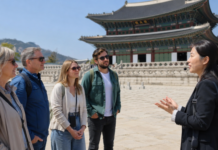

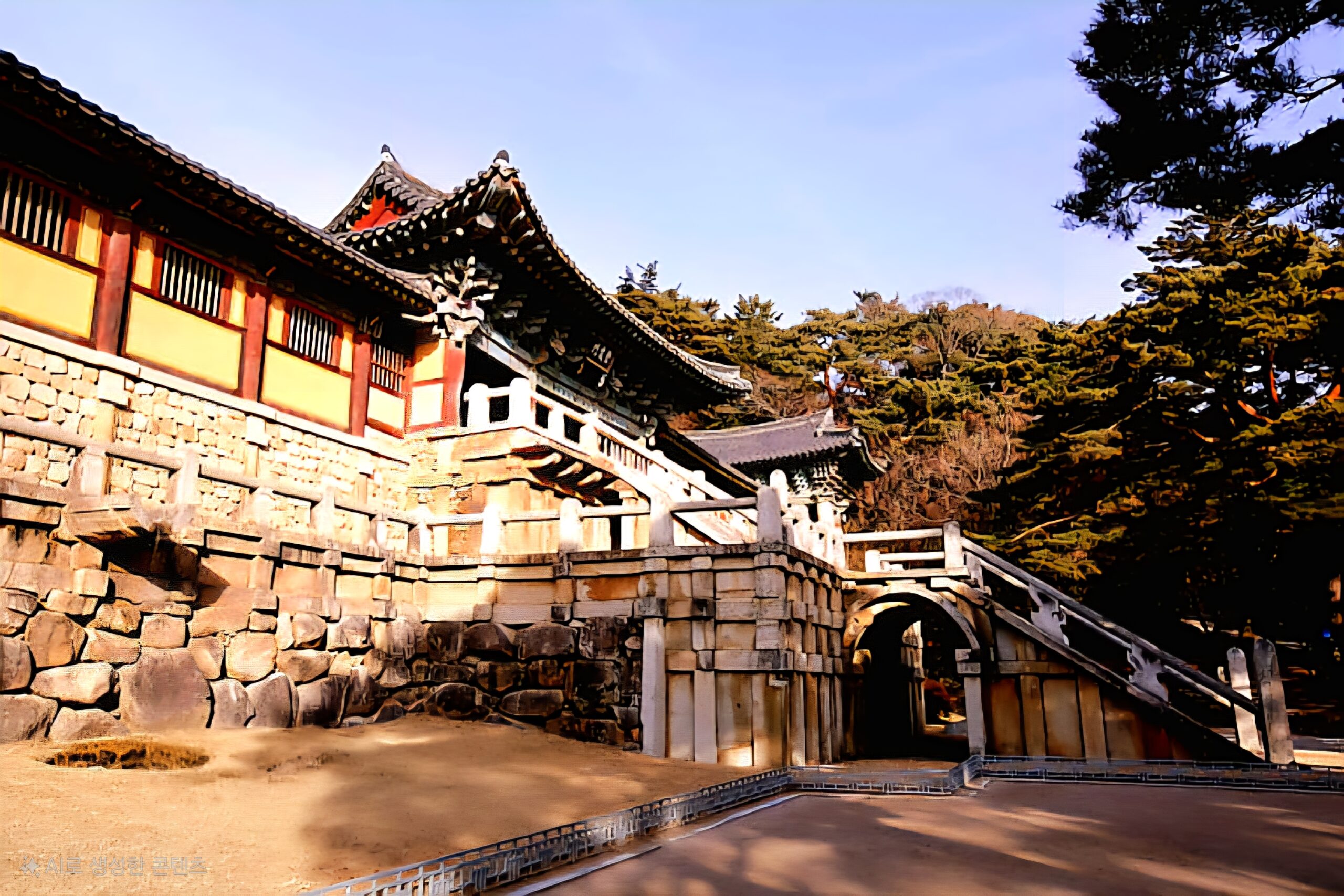
Most travelers to Korea begin — and end — their journey in Seoul. The capital dazzles with neon lights and cutting-edge trends, but it is far more than a modern metropolis. For over 600 years, since the founding of the Joseon dynasty in 1392, Seoul has been Korea’s beating heart. Within its streets stand grand palaces like Gyeongbokgung and Changdeokgung, the royal shrine of Jongmyo, and countless sites that earned recognition as UNESCO World Heritage.
Yet to understand Korea’s soul, you cannot stay in Seoul alone. The story stretches further back — not six centuries, but a full thousand years earlier. That story belongs to Gyeongju, the ancient capital of the Silla Kingdom.
Gyeongju: Korea’s Eternal City
Nestled in the southeast, about 2.5 hours by train from Seoul or just an hour from Busan, Gyeongju is often called the “Kyoto of Korea.” For nearly a millennium (57 BCE – 935 CE), it was the seat of kings, monks, and artisans who shaped a golden age of Korean civilization.
Today, Gyeongju is a living museum. Royal tombs rise like grassy mounds, stone observatories peer into the heavens, palace ponds shimmer beneath the moon. Here, history is not confined within palace walls but scattered across the entire landscape.
Bulguksa: A Pure Land on Earth
Among Gyeongju’s treasures, Bulguksa Temple shines brightest. Built in the 8th century, it was designed not just as a temple, but as a vision of paradise. The statesman Kim Daeseong, moved by filial devotion, vowed to construct Bulguksa for the parents of his past life, and the nearby Seokguram Grotto for the parents of his present life.
Though he died before its completion, the dream endured. Bulguksa rose as a masterpiece of stone and wood, its terraces and pagodas symbolizing a Buddhist Pure Land. Together with Seokguram, it was inscribed as a UNESCO World Heritage Site in 1995.
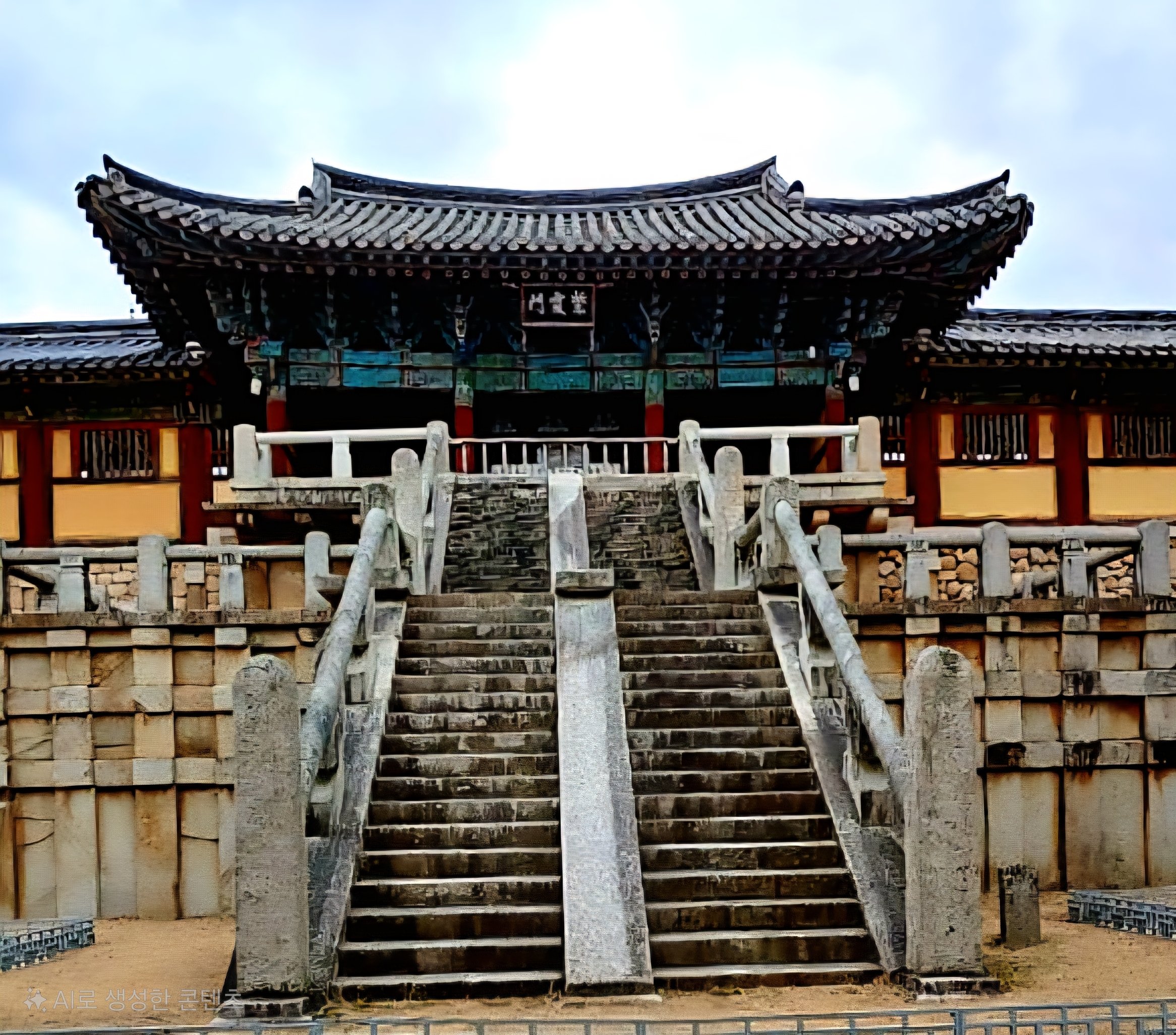 Cheongungyo & Baegungyo: Walking on Clouds
Approaching Bulguksa, you face the twin stairways of Cheongungyo (Blue Cloud Bridge) and Baegungyo (White Cloud Bridge). Sixteen steps on one, eighteen on the other — thirty-four steps that lead from the earthly world to the sacred.
Unlike ordinary stairways, they are built as arches, stone rainbows rising into the sky. Centuries ago, a pond lay below; water cascaded down, casting mists that glowed in sunlight, painting real rainbows under the bridges. Pilgrims believed they were climbing clouds, crossing into heaven itself.
Even today, though the pond is gone, the feeling remains. Standing at the base, you sense that these are not mere steps but a passage — from sorrow to hope, from the mundane to the eternal.
Why You Must Go
Visiting Seoul shows you six centuries of royal history. But stepping into Gyeongju takes you deeper, into a civilization that dreamed of eternity long before Joseon. And within Gyeongju, Bulguksa and its rainbow bridges capture that dream in stone.
When planning your journey to Korea, don’t stop at the capital. Go to Gyeongju. Stand before the arches of Cheongungyo and Baegungyo, and take those 34 steps. For over a thousand years, they have carried people — kings, monks, travelers — upward, into a paradise imagined on earth.
The Korea Travel News l Jungchan Lee