

Saipan’s decline has moved beyond tourism marketing
Jungchan Lee l The Travel News
Saipan’s tourism crisis is no longer confined to visitor numbers, hotel promotions or travel agency sales. It is now visible in Garapan’s weakened commercial district, the exit of global hotel and retail brands, the collapse of a former industrial base and the renewed military importance of neighboring Tinian.
The first stage of Saipan’s decline was the loss of its premium destination identity. The island once sold a clear promise to travelers from Korea and Japan: a Pacific resort experience with distance, status and a sense of separation from ordinary life. Over time, that identity weakened. Excessive localization, discount-driven distribution and poor brand control turned a high-value resort destination into a price-sensitive room product.
The second stage is more serious. While Saipan’s tourism brand was losing value, the island’s wider economic structure was also narrowing. The garment industry disappeared. Hyatt Regency Saipan closed. DFS withdrew from Garapan. Tinian returned to the U.S. military map. These changes show that Saipan is no longer dealing with a simple tourism downturn. It is facing a structural crisis involving industry, investment, infrastructure and regional security.
Garment industry collapse removed a major economic base
Tourism is not the proper starting point for understanding Saipan’s present weakness. The garment industry is.
In the 1990s, the Commonwealth of the Northern Mariana Islands had a large apparel manufacturing sector. Saipan’s political status gave manufacturers favorable access to the U.S. market, and the industry became one of the main pillars of the local economy. Apparel production supported jobs, housing demand, transportation, local retail, tax revenue and daily consumption.
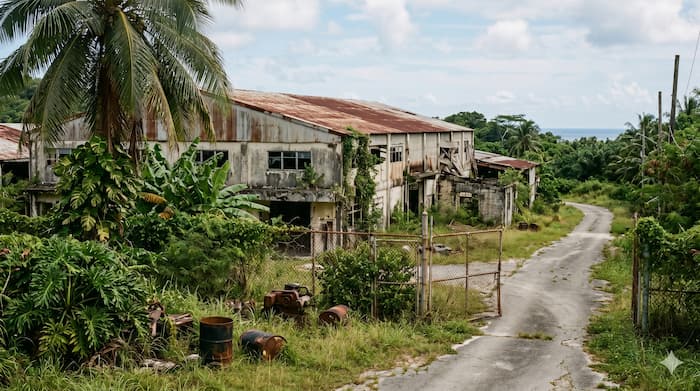
That model began to collapse after the global textile quota system changed in the mid-2000s. Once quota protections weakened, Saipan’s apparel industry faced stronger competition from lower-cost production centers in Asia. Production moved elsewhere. Factories closed. An industry that had supported a large part of the island’s economy disappeared.
The effect was broad. Saipan did not simply lose factory employment. It lost one of its major economic engines. The collapse of the garment sector made tourism more important, but it also made tourism policy more urgent. The island needed to rebuild destination value, diversify demand and protect pricing power.
That did not happen with sufficient discipline. Saipan continued to rely on a narrow distribution model built around package sales, repetitive beach imagery, familiarization trips with limited strategic value and short-term volume targets. That model kept some traffic moving, but it did not rebuild competitiveness. It weakened pricing power, reduced brand discipline and left the island exposed when international brands began to withdraw.
Hyatt’s exit exposed the weakness of the resort market
The closure of Hyatt Regency Saipan was a major warning.
Hyatt Regency Saipan ceased operations on June 30, 2024, and the property no longer operated as a Hyatt-branded hotel after that date. The closure was not only the loss of one hotel. Hyatt had long supported Saipan’s upper-end resort image.
A global hotel brand gives a destination more than rooms. It supports air demand, weddings, meetings, restaurants, employment, investor confidence and consumer trust. When such a brand leaves, the market receives a clear signal. The destination is no longer producing the level of return, demand and confidence required for sustained reinvestment.
For Saipan, the timing mattered. The island had already suffered from brand dilution caused by discount-led sales, aging facilities and weak product renewal. Hyatt’s departure made that weakness visible. The question was not whether Saipan still had beaches. It did. The question was whether Saipan could still sustain a premium resort economy. Hyatt’s exit made that question unavoidable.
DFS withdrawal weakened Garapan’s visitor economy
The withdrawal of DFS delivered a second warning.
Duty Free Saipan Ltd., operator of T Galleria in Garapan, said it would close by April 30, 2025, after nearly five decades in the market. For a resort island, the loss of a major duty-free operator is not a minor retail event. It changes the economics of visitor spending.
Duty-free retail supports foot traffic, attracts higher-value travelers, strengthens commercial districts and extends spending beyond hotels and restaurants. When DFS left Garapan, Saipan lost more than a store. It lost one of the remaining symbols of its old premium tourism economy.
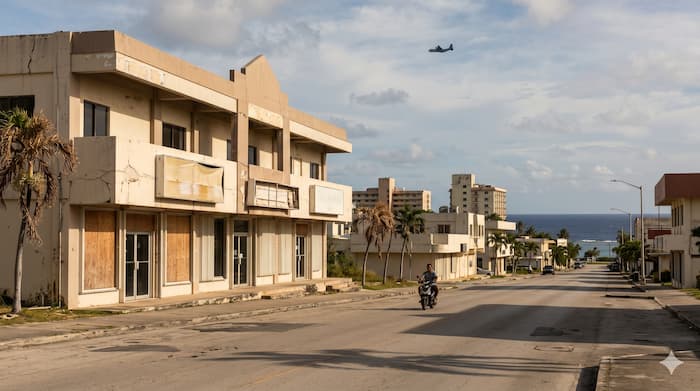
Garapan was supposed to function as the island’s visitor center. Instead, it has become a visible sign of underinvestment and weak destination management. A serious resort destination needs retail, dining, nightlife, cultural content, marine activities and walkable streets. Without those layers, the product becomes thin.
The unfinished Imperial Pacific casino project adds to the damage. It remains a public reminder of failed planning and misplaced confidence in speculative capital. Saipan did not build a durable tourism economy around quality, experience and yield. It allowed short-term capital, discount sales and aging infrastructure to shape the market.
That is not destination management. It is neglect.
Tinian’s military revival changes the regional context
While Saipan’s tourism economy weakened, the strategic value of the Northern Mariana Islands increased.
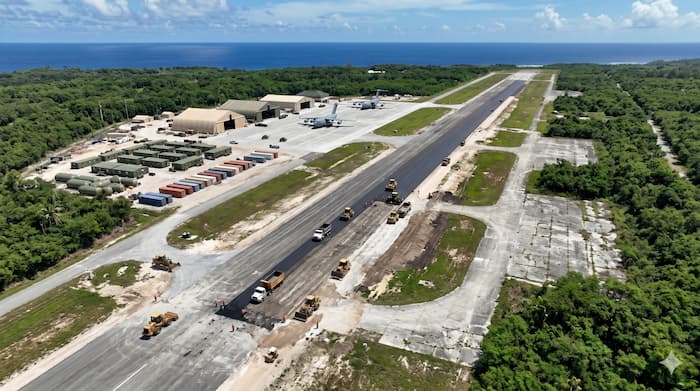
Tinian is central to that shift. North Field was one of the most important American airfields of World War II. After decades of limited use, the United States has begun restoring the site’s military relevance. The rehabilitation of Tinian North Field reflects a broader defense requirement in the Indo-Pacific.
In an era of long-range missiles and rising U.S.-China tension, the military cannot rely only on large fixed bases such as Guam. It needs dispersed operating locations across the Pacific. Tinian provides one of those locations. This does not end Saipan’s role as a tourism destination, but it changes the context in which the destination must be understood.
The Northern Mariana Islands are now viewed through two lenses: tourism and military strategy. Saipan’s destination planning cannot ignore either one. A tourism strategy built only around beaches, family packages and old honeymoon memories is outdated. The island now needs a more serious market narrative that includes Pacific history, World War II memory, marine tourism, golf, education, long-stay travel and the changing security geography of the region.
That requires policy-level planning. It cannot be done with recycled promotional language.
Saipan failed to redesign its tourism product
Saipan still has strong tourism assets. Managaha Island, the Grotto, Banzai Cliff, Suicide Cliff, Bird Island, Lau Lau Beach and Obyan Beach remain valuable. The island has marine resources, war history, family resort potential, golf, diving and proximity to the Korean market.
The problem is that these assets have not been organized into a modern tourism product. A destination is not a list of attractions. It is a market proposition.
Saipan should have rebuilt that proposition after the collapse of its old economic model. It should have treated tourism as industrial policy after the garment sector declined. It should have diversified demand after Japanese travel weakened and Korean market dependence increased. It should have developed separate strategies for families, golfers, divers, school groups, senior travelers, long-stay visitors and small meetings.
It should have protected rate integrity. It should have rebuilt Garapan as a functioning visitor district. It should have responded to the loss of Hyatt and DFS by restoring premium value. It should have treated war history and Pacific geography as serious tourism content.
Instead, the island stayed with a narrow sales model. Package distribution remained too dominant. Beach imagery remained too repetitive. Familiarization trips produced limited strategic value. Short-term volume targets often took priority over long-term brand recovery. That approach produced temporary traffic. It did not rebuild competitiveness.
Recovery requires management, not slogans
Saipan cannot return to the 1990s. The visitor market has changed. The island’s economic base has changed. Regional security conditions have changed. The old resort formula no longer works.
Recovery is still possible, but it requires a different operating model. Saipan must rebuild premium value through product quality, not advertising claims. It must restore rate discipline. It must reduce dependence on low-margin package sales. It must rebuild Garapan as a real visitor district. It must develop higher-value marine, golf, heritage, education and long-stay products. It must interpret war history and Pacific geography as marketable but responsible tourism content. It must recognize Tinian’s military role and place that reality inside a broader destination strategy.
The conclusion is direct. The death of paradise was a branding failure. The crisis after paradise is an economic and strategic failure. Saipan does not need another slogan. It needs management, investment, product design and disciplined repositioning.
Until that happens, recovery will remain a press release.
[The Travel News Special Series] Saipan Tourism at the Edge: Conditions for Revival
여행레저신문 Copyrights ⓒ Travel Leisure Newspaper. All rights reserved.