[Travel & Leisure News = Manjae Lee]
For eight days this October, Suwon turns back the clock to the age of King Jeongjo.
Royal processions fill modern streets. Hwaseong Haenggung glows after dark. Historic spaces become stages for music, movement and large-scale nighttime performances. Across Suwon Hwaseong, one of Korea’s most remarkable royal stories returns to the city in which much of it unfolded.
The Suwon Hwaseong Cultural Festival 2026 runs from Oct. 4 to 11 across Hwaseong Haenggung and the surrounding Suwon Hwaseong area.
But the festival makes more sense when viewed not simply as a collection of performances, but as a journey. At the center of that journey is King Jeongjo.
A king’s journey, retold across a city
In 1795, King Jeongjo undertook an extraordinary royal journey to Hwaseong. The procession accompanied his mother, Lady Hyegyeong, and commemorated her 60th birthday while also taking the king to the tomb of his father, Crown Prince Sado.
The journey became one of the defining episodes associated with Jeongjo and Hwaseong. More than two centuries later, Suwon uses that history as the narrative backbone of its signature cultural festival.
Rather than confining the story to a museum or a single stage, the festival spreads it across the historic city. Visitors move between fortress gates, palace courtyards, old military grounds and nighttime performance spaces. History is not simply displayed here. It moves through the city.
The royal procession returns to Suwon
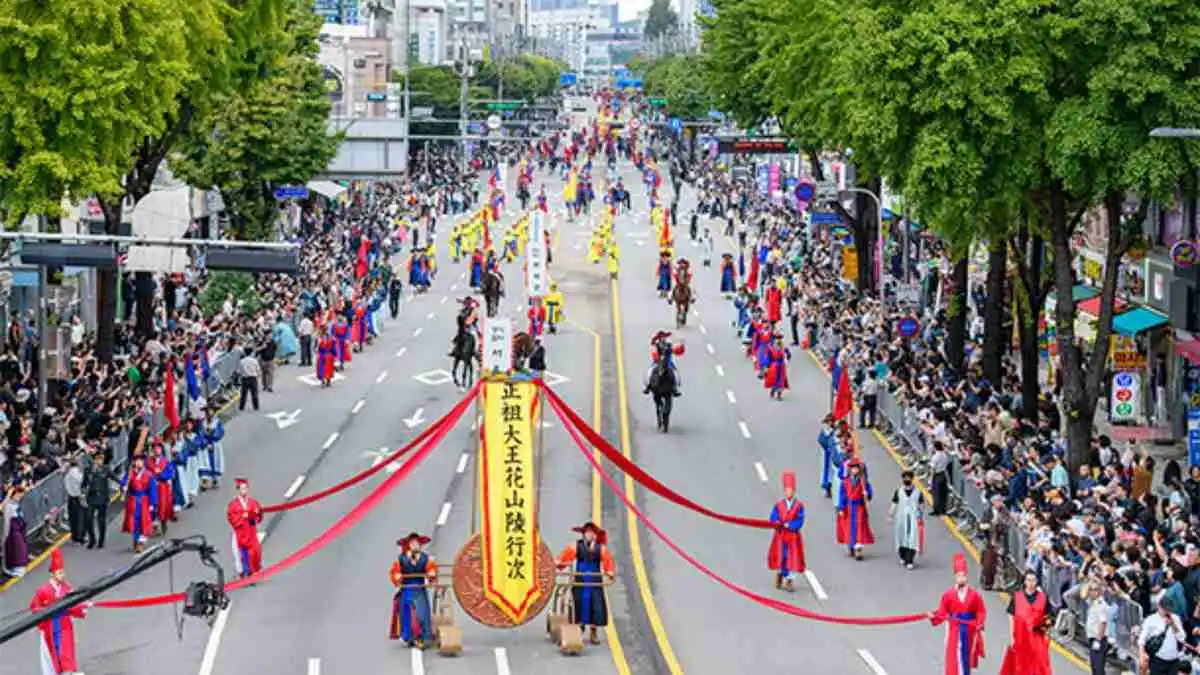
The most immediately recognizable image of the festival is the King Jeongjo Royal Procession.
Traditional guards, banners, ceremonial costumes and mounted participants move through modern Suwon as crowds line the route. The scale is important. This is not designed as a small historical demonstration but as a contemporary recreation of the spectacle and symbolism surrounding a royal journey.
Janganmun, the great northern gate of Suwon Hwaseong, gives the procession one of its most dramatic settings. Joseon-era costumes passing beneath the monumental stone and timber gate create the kind of scene that explains the festival even before a visitor knows the history behind it.
The contrast is part of the experience. Contemporary Suwon remains visible all around the procession, allowing the past to pass directly through the present.
When Hwaseong Haenggung comes alive after dark
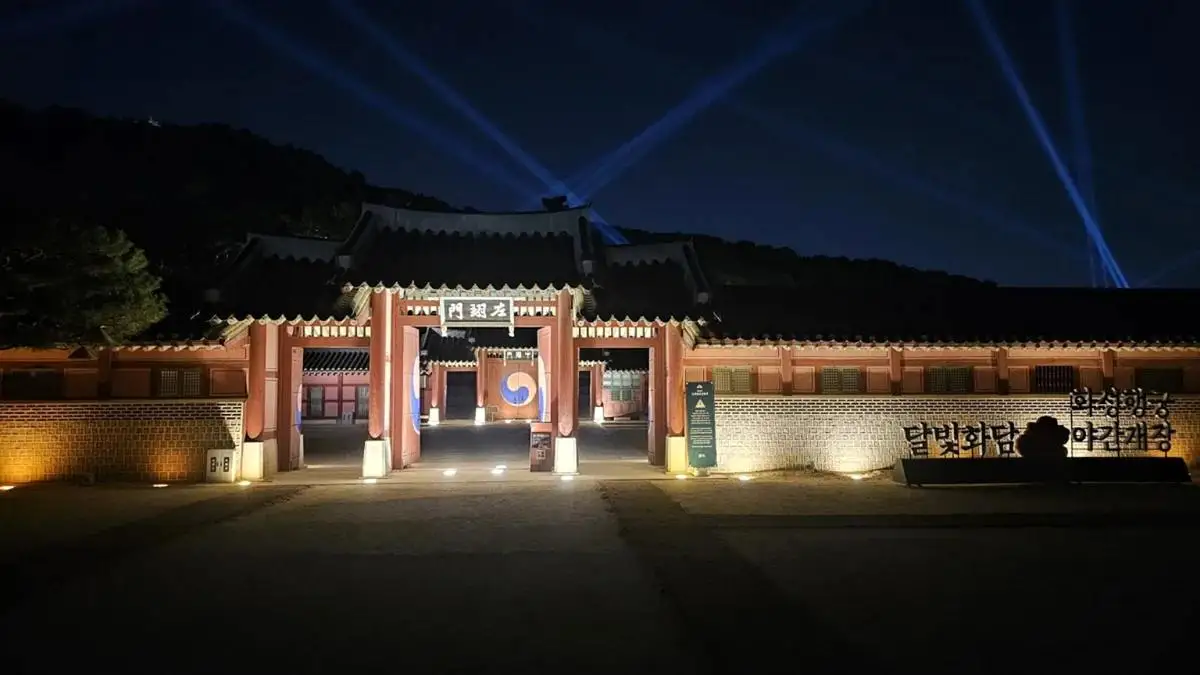
During the day, Hwaseong Haenggung is one of Suwon’s best-known historic sites. After sunset during the festival, its atmosphere changes.
Illuminated gates, palace walls and the surrounding nightscape turn the former royal residence into an experience that feels markedly different from a daytime heritage visit.
The appeal is not simply brighter lighting. Darkness removes some of the distractions of the modern city. Architectural lines become sharper, courtyards quieter and the relationship between the palace and the surrounding fortress more apparent.
For travelers, this is one reason not to leave Suwon after an afternoon visit. The city’s historical landscape is arguably at its most atmospheric once the sun has gone down.
When water and light become a stage
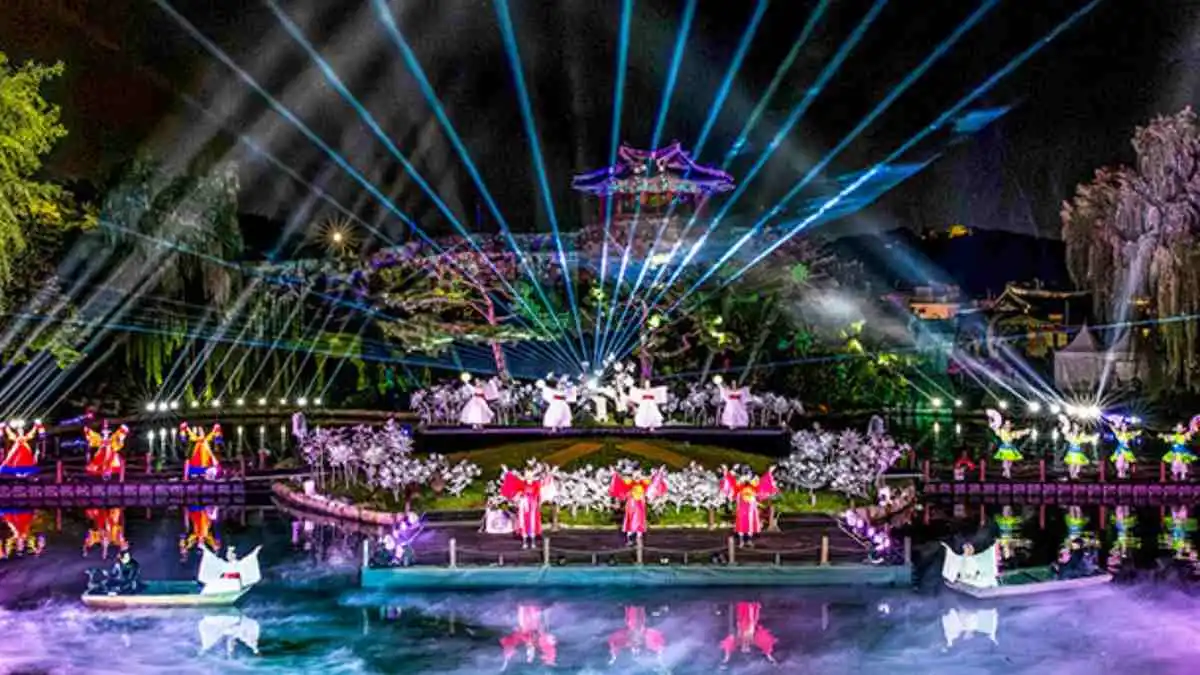
The festival’s nighttime programming pushes the historical setting beyond conventional reenactment.
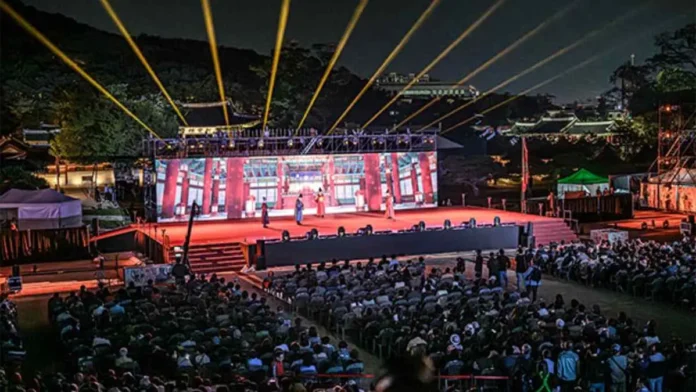
Water, light, music and traditional performance are combined on a scale that turns the surrounding landscape into part of the production. Reflections extend the stage across the water while beams of light rise above historic architecture.
For international visitors who may know little about Joseon history before arriving, these visual performances provide an immediate way into the festival. Understanding every historical reference is not necessary. The architecture, costumes, music and landscape carry much of the story themselves.
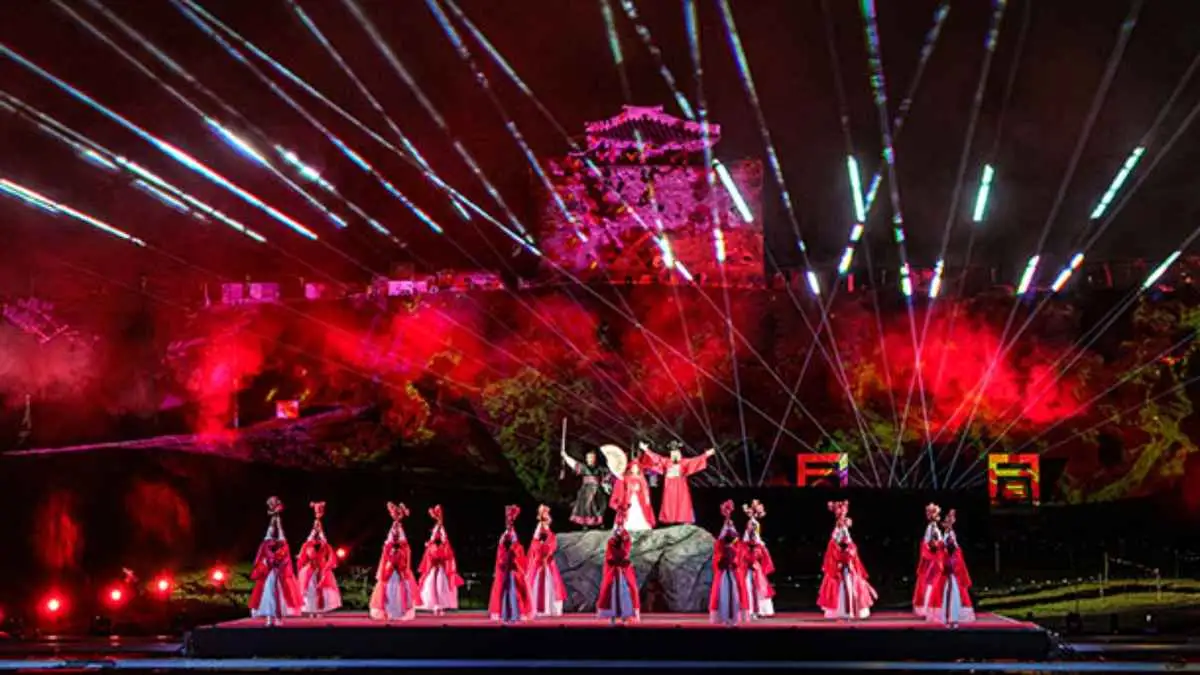
Jeongjo returns to the stage
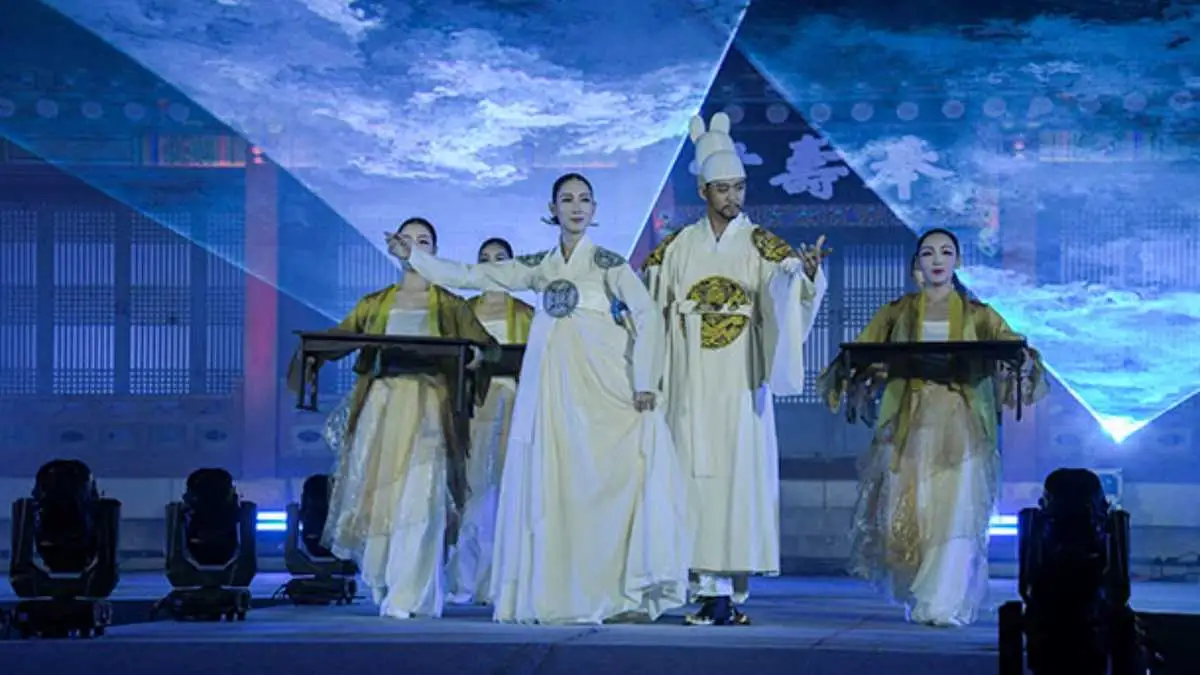
The festival also approaches history through theatrical storytelling.
King Jeongjo, members of the royal court and figures drawn from the period appear in performances that turn episodes of the past into human drama. That matters because the story of Hwaseong is inseparable from Jeongjo himself.
He was a king shaped by the death of his father, devoted to his mother and determined to strengthen royal authority. Hwaseong was therefore more than a fortress project. It represented political ambition, military thinking and a different vision of royal power.
On stage, those large historical themes become faces, movement and conflict.
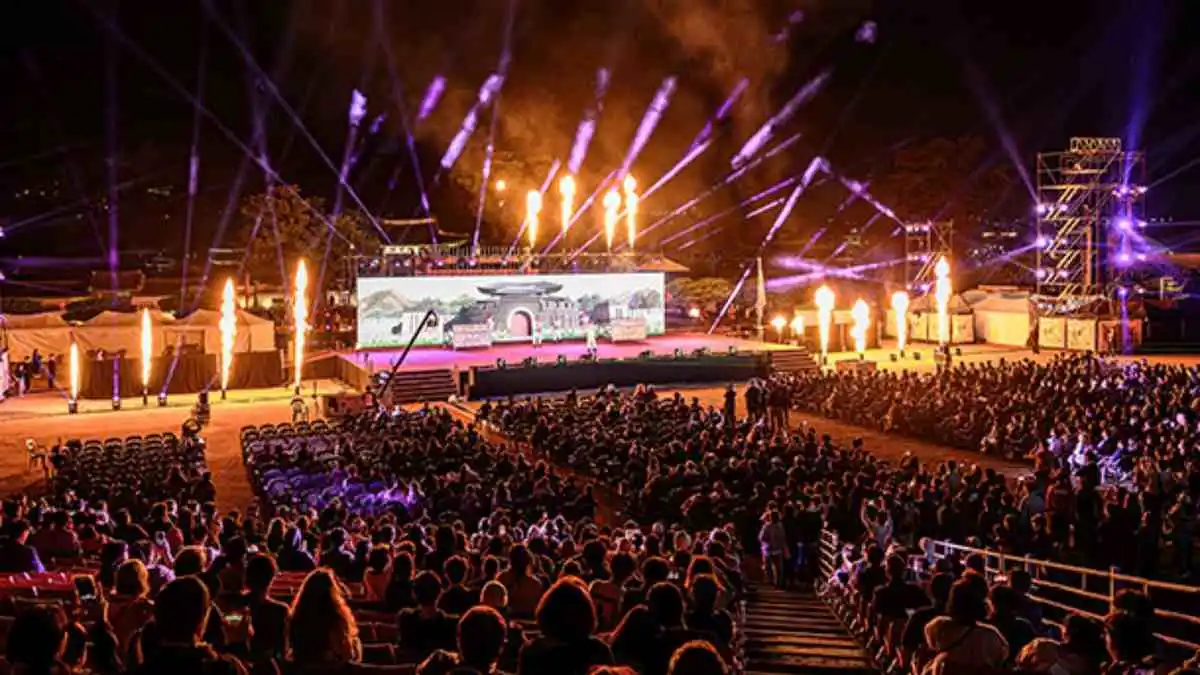
After dark, the scale changes
As evening deepens, the festival becomes increasingly theatrical.
Large ensembles, traditional costumes, sweeping beams of light and dramatic staging transform historic spaces into outdoor theatres. Some performances emphasize royal ceremony; others draw on military imagery and the spectacle associated with the fortress city.
The changing settings prevent the night from feeling like a single repeated show. Palace, fortress, water and open performance grounds each reveal a different side of Suwon’s historical identity.
Why eight days matter
The festival’s eight-day run changes the way travelers can approach Suwon.
A one-night event encourages visitors to chase a headline performance and leave. An extended festival allows the city itself to become the destination.
A traveler can walk the fortress during the afternoon, enter Hwaseong Haenggung before sunset, watch the old city change with the light and then continue into the nighttime program. The experience becomes less about checking attractions off a list and more about allowing several layers of Suwon to unfold over the course of a day.
More than a UNESCO fortress
Suwon Hwaseong is often introduced to international travelers first as a UNESCO World Heritage site. That is accurate, but incomplete.
World Heritage status can sometimes turn a living place into a checklist: photograph the walls, visit the palace and move on.
The Suwon Hwaseong Cultural Festival offers another way to encounter the city.
For eight days, streets become processional routes, palace courtyards become stages and the fortress becomes the backdrop to a story that has survived for more than two centuries.
More than 230 years after Jeongjo made his journey to Hwaseong, Suwon is still telling the story.
The difference is that this time, travelers can walk through it.
Copyright © 여행레저신문 All rights reserved.