
At tourism events around the world, a familiar scene is becoming increasingly common.
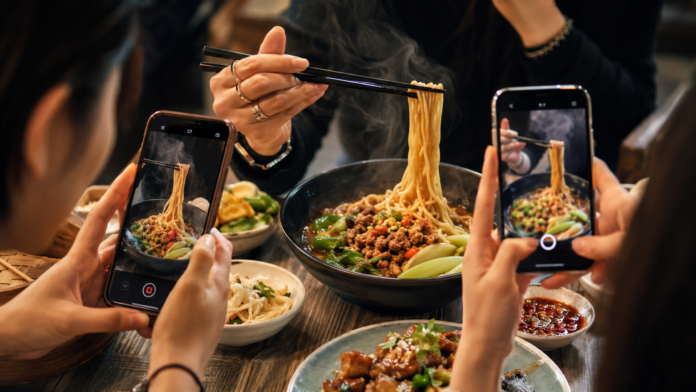
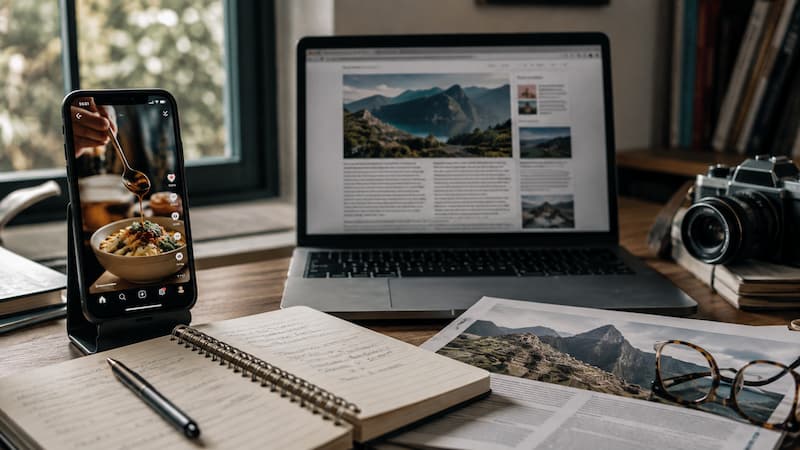
A dish arrives at the table and smartphones immediately rise above it. Noodles are lifted carefully with chopsticks. Steam is captured against the light. Sauces are poured again for another take. Someone turns the plate slightly so the food looks better on a vertical screen.
Within minutes, the material needed for an Instagram Reel, TikTok video or YouTube Short has been created.
There is nothing inherently wrong with this. Social media has transformed tourism marketing, giving destinations, hotels and restaurants direct access to potentially large audiences without relying entirely on traditional media.
But after attending several tourism events and overseas assignments in recent months, one question has become increasingly difficult to ignore.
What exactly is being promoted — the destination, or the creator?
The same camera, but a different purpose
This is not an argument from someone standing outside the world of social media.
The author began producing online content before 2010, starting with Naver blogs and later expanding to YouTube, Facebook and Facebook Pages, Instagram, Threads and TikTok. Today, he manages or contributes to close to 20 social-media accounts while also running a news organisation producing journalism, photography and video.
Working on both sides makes one difference particularly clear.
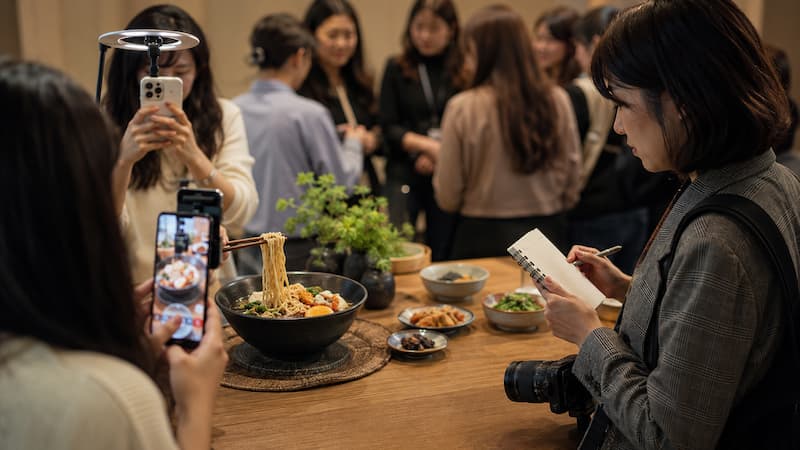
A creator and a journalist may arrive at the same event carrying cameras, but they are not necessarily there for the same reason.
A creator is, quite reasonably, producing content for his or her own audience.
For a food creator, a bowl of noodles may be valuable because of its colour, texture and movement. The shot of noodles being lifted from a bowl may be more useful than a ten-minute explanation of how that dish developed historically.
For a travel influencer, personality is often central to the product. Viewers follow a particular person because they like that person’s face, humour, style, reactions and way of travelling.
That is the business model.
But it is not necessarily the business model of a tourism board.
A destination does not invite a creator simply to make the creator more famous. A restaurant does not host an influencer because it wants the influencer’s face to become more recognisable.
The destination needs to be remembered. The restaurant needs to be remembered. The product needs to be remembered.
That distinction is easy to lose.
What does an influencer actually influence?
The word “influencer” itself deserves closer examination.
There is no doubt that successful creators influence people. But tourism marketers should ask a second question: what are they influencing them about?
If a viewer remembers the creator’s clothes, face, reaction or personality but cannot explain what was special about the destination, the content may have succeeded brilliantly as personal branding while achieving far less for the destination.
The test for tourism marketing should therefore go beyond views.
After watching the content, does someone simply think, “That influencer went there”?
Or do they ask:
Why is that place different? Why is that food special? Why should I go there?
The second response is much more valuable to a destination.
Journalism begins where ‘it tastes good’ ends
A journalist approaches the same bowl of noodles differently.
“Tasty”, “chewy” or “famous locally” may be useful descriptions, but they are not enough to build a substantial travel story.
The questions begin there.
Why has this type of noodle become associated with this region? Why is its texture different? How is the broth made? Why is a particular type of miso used rather than another? How do the noodles, broth and toppings work together? When did local people begin eating it this way? And how does the dish fit into the history and everyday culture of the city?
The same principle applies to almost any food.
Calling a sake “the best in the region” tells a serious reader surprisingly little. “Best” is subjective.
What rice is used? How is it polished? How is it brewed? What distinguishes its aroma, acidity and texture? At what temperature is it best served? What food is it designed to accompany?
Or consider durian.
A short video of someone tasting durian can be entertaining. But durian is found across Southeast Asia. A more enduring story asks why particular Malaysian varieties such as Musang King developed such a reputation, what distinguishes their texture and flavour, where they are grown and why consumers are willing to pay more for them.
That information changes an experience.
Food becomes more interesting when people understand what they are eating.
History, technique and culture do not make a travel story less attractive. They can be the very things that make it compelling.
A journalist travels to record
There is another practical difference.
A creator generally travels to produce material for his or her own channel.
A journalist travels to understand somebody else’s story well enough to explain it accurately to readers.
Recently, reaching one regional food event required about an hour of travel in one direction and two hours on the return journey. That was three hours on the road before the time spent at the event itself.
For a newsroom, that is a significant investment of time.
The value is not simply in obtaining another photograph of a plate of food. It lies in meeting the people involved, asking questions, testing claims, understanding context and producing a record that can remain accessible long after the event has finished.
That is why journalists need something different from creators.
They need access to information.
If journalists are invited, let them ask questions
Some tourism programmes now appear to have been designed almost entirely around social-media production.
There is a brief presentation, followed by photography, tasting and movement to the next activity.
What is sometimes missing is one of the most basic elements of reporting: questions.
Why is this significant? What makes it different? Can you provide the figures behind that claim? Is there additional historical information? Who can explain the production process?
For a journalist, these are not optional extras. They are how information becomes journalism.
The same problem increasingly applies to photography.
Tourism events can produce vast quantities of video while leaving surprisingly few usable editorial photographs.
Images may largely show invited participants eating, posing or experiencing an attraction. Such pictures are useful for reporting on the familiarisation trip itself.
They are much less useful six months later when an editor wants to publish a story about the destination, restaurant or cultural tradition.
If the same invited participants repeatedly appear in photographs, the subject of the coverage gradually changes.
The visitor becomes the attraction.
A few minutes of dedicated press photography, high-resolution editorial images without participants blocking the subject, basic background material and proper question-and-answer time would solve much of this.
It is not special treatment for journalists.
It is simply allowing them to do the job they were invited to do.
The difference between attention and memory
Social media has one extraordinary advantage: speed.
A Reel, Short or TikTok video can reach enormous audiences very quickly. It can create desire almost instantly.
But much social-media content also has a short visible life. New videos arrive continuously and older posts rapidly move down the feed.
Journalism can operate on a different timescale.
Some Okinawa travel content the author began producing around 2011 has accumulated close to four million views over the years and continues to be discovered today.
Its value did not depend on one viral weekend.
Readers continued to find it because the material contained information they were searching for — history, culture, food, transport, places to visit and practical travel guidance.
When factual information changes, it can be updated.
The article then continues to work.
A useful story can attract readers next week, next year and, in some cases, a decade later.
The greatest advantage of a well-researched article may not be its first day’s traffic. It may be time.
That matters in tourism marketing because destinations are not normally promoting something that disappears tomorrow.
A city, cultural tradition, restaurant or regional cuisine may need to be discovered repeatedly by new generations of travellers.
Tourism needs both — but not for the same job
None of this means tourism organisations should choose journalism instead of influencers.
That would misunderstand the argument.
Creators can be exceptionally good at creating attention. They can make a place feel immediate, attractive and accessible. They can turn a dish, street or hotel room into something millions of people suddenly want to experience.
Journalism does something different.
It investigates the subject, asks why it matters, explains it accurately and leaves a record.
The two can work extremely well together precisely because their strengths are different.
Give creators access to experiences and visually compelling moments.
Give journalists history, facts, figures, experts, photography opportunities and time to ask questions.
Do not assume that because both are carrying cameras, they need the same programme.
The real measure of tourism promotion
Tourism marketing will naturally continue to count views, videos, posts and followers. Those numbers matter.
But they should not be the final measurement.
A better question is what audiences learned about the destination, what they remembered, whether they understood why the experience was distinctive, whether the content gave them a reason to travel, and what reliable information remains available when the campaign has disappeared from social-media feeds.
The creator is not the ultimate subject of tourism promotion.
Neither is the journalist.
The destination is. The food is. The travel product is.
Whatever was meant to be promoted should remain the star.
여행레저신문 Copyrights ⓒ The Travel News. 무단전재 및 재배포 금지.