KUALA LUMPUR — Malaysia illuminated its own distinctive light once again.
The cultures of different regions, ethnic communities, languages and faiths gathered at Merdeka Square in Kuala Lumpur, each retaining its own colour while contributing to a larger and more radiant image of the nation.
Held from 24 to 26 July 2026 at one of Malaysia’s most symbolic public spaces, Citrawarna 2026 offered far more than a spectacular display of dance and traditional costume.
It presented a vivid picture of how Malaysia’s many cultures form one country, and how diversity can become a source of unity, confidence and future growth.
The name Citrawarna combines the Malay words citra and warna, conveying the ideas of image, character and colour. Internationally, the event is presented as the Colours of Malaysia.
Since its launch in 1999, Citrawarna has grown into one of Malaysia’s most recognisable cultural tourism events, introducing the country’s heritage, arts, traditions and people to audiences at home and abroad.
In 2026, the festival returned to Merdeka Square as a major cultural platform for Visit Malaysia 2026, placing the diversity of the entire nation at the centre of its tourism story.
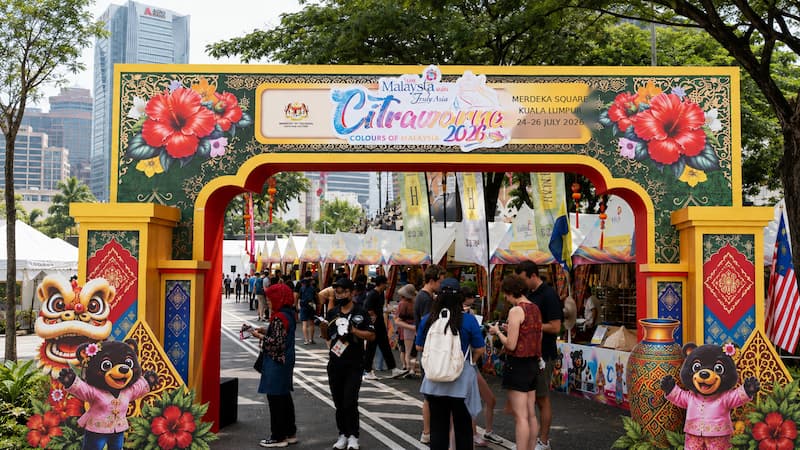
All the colours of Malaysia at Merdeka Square
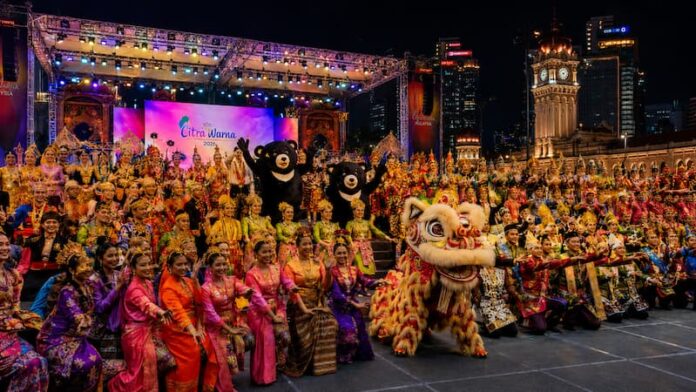
The festival reached its height on the evening of 25 July with the official opening ceremony and Citra Perarakan, the Colours of Parade.
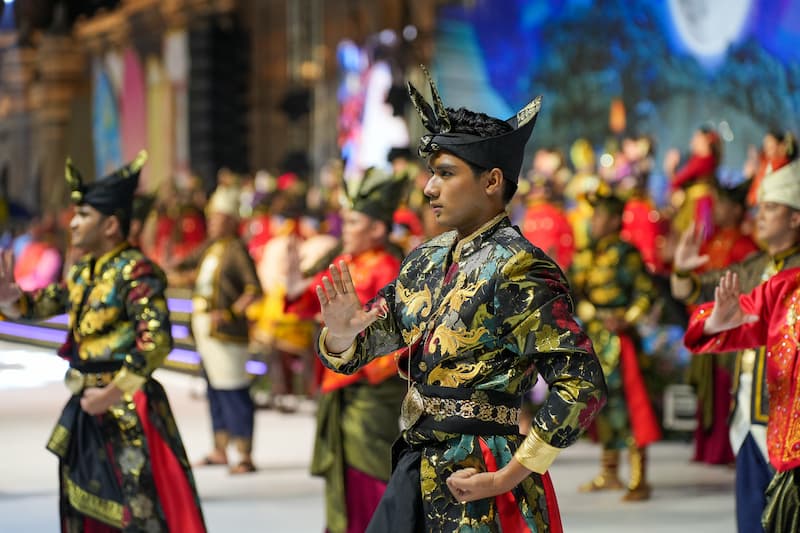
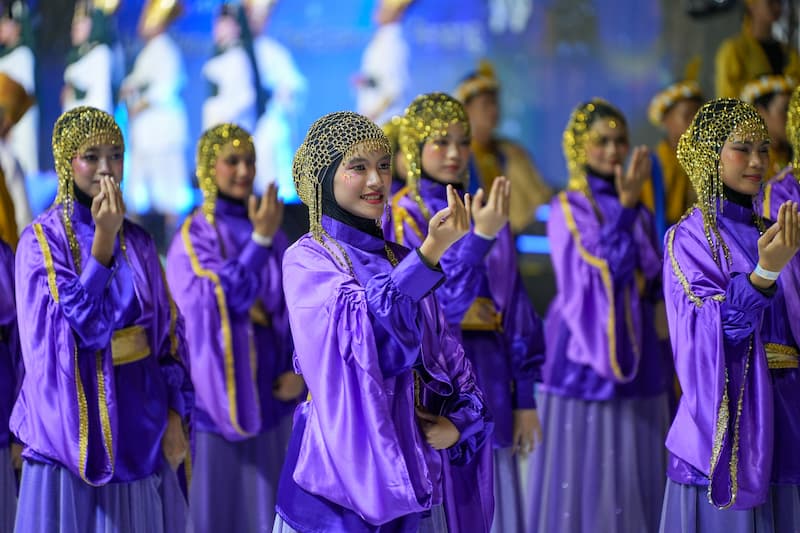
Around 3,500 dancers and performers representing Malaysia’s 13 states, the federal territories of Kuala Lumpur, Putrajaya and Labuan, and a broad range of ethnic communities filled Merdeka Square.
Each delegation translated the history, legends, natural landscapes and everyday traditions of its home region into distinctive costume, music and movement.
Graceful hand gestures expanded into vast formations as drums reverberated across the square. Traditional rhythms blended with contemporary music, lighting and stage production, creating a performance rooted in heritage yet fully alive in the present.
Costumes, headdresses, footwear and ceremonial objects varied across regions and communities. Red, gold, blue and green moved continuously beneath the lights, producing an image of Malaysia in which different colours gained strength through their proximity to one another.
Light creates colour when it meets the surface of an object. What we see depends upon how that light is absorbed and reflected.
Human societies possess their own colours as well. Place of birth, language, faith, community, clothing and lived experience all shape identity.
Citrawarna demonstrated Malaysia’s ability to acknowledge those distinctions and bring them together within a shared national vision.
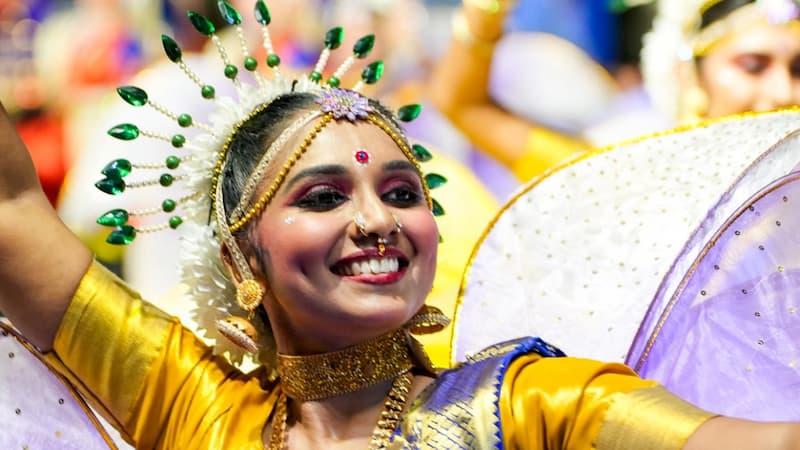
Diversity becomes a national strength
In any multicultural society, diversity requires care, mutual respect and sustained effort.
At Citrawarna 2026, it became a language of belonging and a source of national energy.
Thousands of performers, elaborate traditional dress, disciplined formations and powerful music carried one clear message across Merdeka Square: Malaysia’s communities possess different histories and identities, yet they build the country together.
Prime Minister Anwar Ibrahim attended the opening ceremony, alongside Tourism, Arts and Culture Minister Tiong King Sing and other dignitaries.
Their presence reinforced the national significance of Citrawarna as both a cultural celebration and a statement of Malaysia’s international tourism ambition.
The setting added another layer of meaning.
Merdeka Square occupies a central place in Malaysia’s modern history. It was here that the end of British colonial rule and the birth of an independent nation were proclaimed in 1957.
In 2026, the square again became a place of national declaration — this time through culture, performance and the shared confidence of a diverse society.
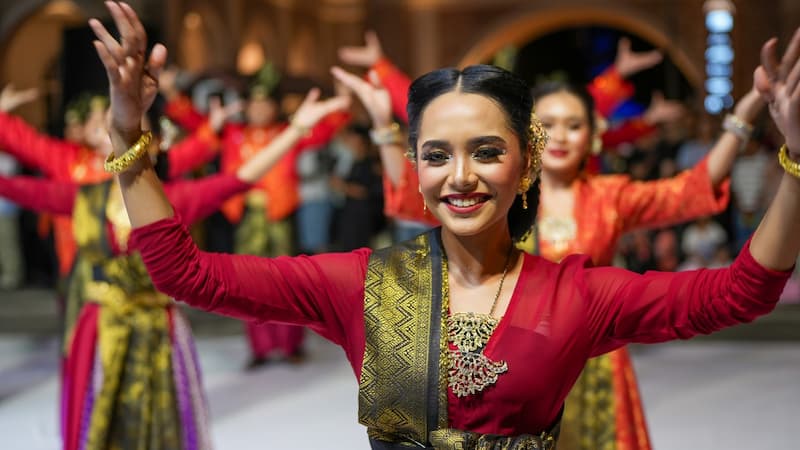
A national cultural celebration returns to Merdeka Square
Citrawarna has appeared in different locations and formats since its creation in 1999. The 2026 edition restored Merdeka Square to the centre of the celebration with a large-scale national cultural parade.
Its theme, “Ritma Warisan, Nadi Nusa dan Bangsa”, may be understood as “The Rhythm of Heritage, the Pulse of the Homeland and the Nation”.
The phrase captured the purpose of the festival. Heritage became a living rhythm, connecting the cultural memory of the past with the energy of contemporary Malaysia and its aspirations for the future.
Citrawarna 2026 was organised around four principal components.
Citra Perarakan formed the centrepiece with its large-scale cultural parade. Citra Rasa introduced foods from across Malaysia. Citra Budaya offered traditional performances and community participation, while Citra Seni presented arts, crafts and creative demonstrations.
International visitors, media representatives and tourism professionals also attended. Tourism Malaysia’s Mega Familiarisation Programme brought together 55 participants from 13 Asia-Pacific markets, including South Korea, to experience Citrawarna and a wider selection of Malaysian tourism products.
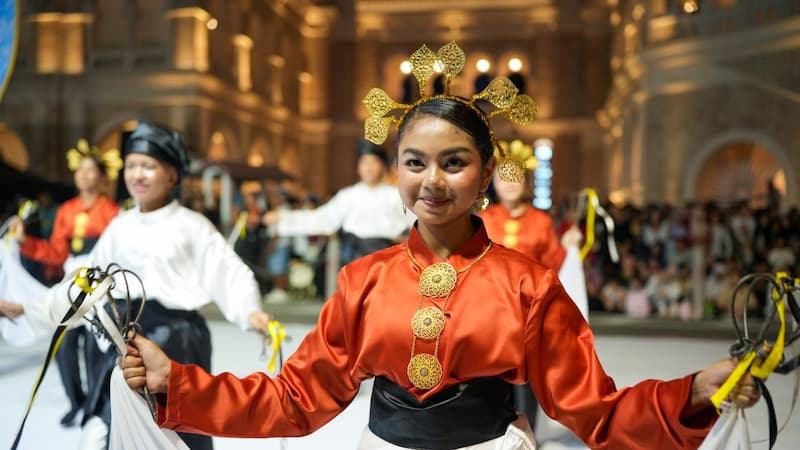
Where travellers can meet the whole of Malaysia
International travellers often encounter Malaysia through individual destinations.
They may experience Kuala Lumpur through its skyscrapers and shopping districts, Penang through its food, Langkawi through its beaches, or Sabah through its sunsets and natural landscapes.
A short journey rarely reveals the full cultural range of Malaysia’s 13 states, three federal territories and many ethnic communities.
Citrawarna brings those separate impressions together.
Through regional dance, music, food, costume and storytelling, visitors gain a concentrated view of Malaysia as a country shaped by many cultural traditions.
This makes Citrawarna one of the most effective ways to understand the nation within a limited period of time.
It introduces Malaysia through movement, sound, colour and human expression rather than through explanation alone.
The scale and energy of the festival were difficult to contain within photographs or video. Thousands of performers moved across the square as drums, music and cheers rose through the night.
Local spectators watched with visible pride as performers represented their home states and communities. For international visitors, Malaysia’s cultural diversity appeared in immediate, living form.
 A cultural festival with real tourism value
 A cultural festival with real tourism value
Citrawarna also holds clear potential as the centrepiece of an international travel product.
A visit to the festival can be connected with Kuala Lumpur’s historic districts, city hotels, Malaysian cuisine, traditional crafts, shopping and regional excursions.
For tour operators in South Korea and other overseas markets, the strongest itinerary would place Citrawarna at the heart of a wider journey rather than treating it as a single evening attraction.
The festival can provide the emotional high point, while surrounding experiences allow travellers to explore the country in greater depth.
To fulfil that potential, future dates and principal programmes should be confirmed and promoted internationally well in advance.
Airline seats, hotel allocations and group itineraries require months of preparation. Early information would allow tour operators and independent travellers to build Citrawarna into their plans and strengthen its position on the international cultural tourism calendar.
Citrawarna is Malaysia’s light
 Citrawarna is Malaysia’s light
Citrawarna is the light of Malaysia.
That light falls upon the Malay, Chinese, Indian and Indigenous communities, as well as the people and cultures of every state and federal territory.
Each contributes a distinct colour. Together, they create an image found nowhere else in the world.
At Merdeka Square in 2026, heritage became a contemporary national force. Diversity became unity, and unity became an expression of confidence in Malaysia’s future.
The 3,500 performers created more than a magnificent parade.
They showed how different communities can form one nation, how cultural tradition can become a modern tourism asset, and how Malaysia wishes to present itself to the world.
Through Citrawarna 2026, Malaysia shone once more.
Its light carried the colours of diversity, the warmth of unity and the energy of a nation moving confidently towards the future.
여행레저신문 Copyrights ⓒ The Travel News. 무단전재 및 재배포 금지.