
이만재 기자 ㅣ 여행레저신문
In destination marketing, the loudest campaign is not always the most successful. Sometimes the strongest brands are built not through spectacle, but through discipline, consistency and the simple habit of never disappearing from the conversation.*
There is an old assumption in tourism marketing that success belongs to those with the biggest advertising budgets, the largest exhibition booths or the most spectacular promotional campaigns. The Israel Ministry of Tourism’s office in Korea quietly challenges that assumption.
Its Seoul office is remarkably small. At its core are only two professionals responsible for maintaining Israel’s presence in one of Asia’s most competitive outbound travel markets. Yet few foreign tourism organizations communicate with the Korean travel industry as consistently as Israel does. Week after week, journalists receive carefully prepared story ideas, travel companies discover new product angles, and industry partners are introduced to fresh perspectives on a destination many believe they already know. Media inquiries are answered promptly, published stories are acknowledged with genuine appreciation, and relationships are nurtured with professionalism rather than convenience. None of these actions is dramatic on its own, yet together they create something far more valuable than publicity.
They create trust.
That may sound like an ordinary word, but trust is perhaps the rarest currency in destination marketing today. The tourism industry often celebrates viral campaigns, celebrity influencers and spectacular digital reach, yet those achievements are frequently measured in days or weeks. Destinations, however, are built over years. They survive not because people notice them once, but because they remain present in the minds of travelers long after individual campaigns have disappeared.
But destinations are not brands that survive on attention alone.
They survive on memory, and memory is rarely created by a single campaign, however polished or expensive it may be. It is built through repeated encounters with meaningful stories, timely information and professional relationships that quietly reinforce confidence in a destination. Every thoughtful press release, every useful interview, every conversation with the travel trade becomes another layer of familiarity. Over time, those individual moments accumulate into something much larger than publicity—they become credibility. That is precisely where Israel’s tourism office in Korea has distinguished itself. Its communication does not simply remind the market that Israel exists; it continually broadens the market’s understanding of what Israel can offer.
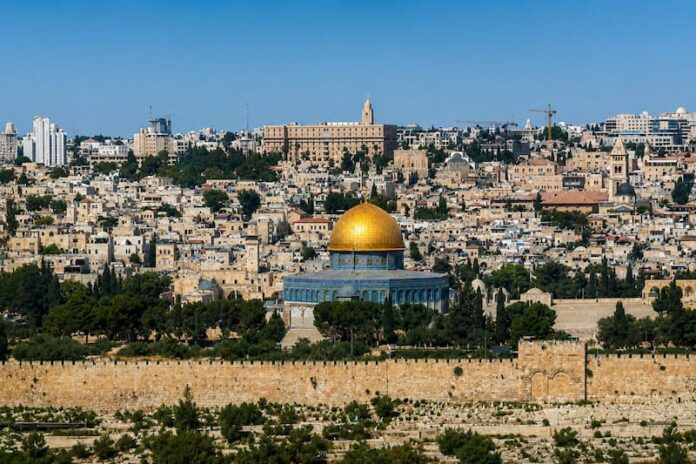
For many Korean travelers, Israel has long been viewed almost exclusively through the lens of biblical pilgrimage. That perception is understandable. Jerusalem, Nazareth and the Sea of Galilee carry spiritual and historical significance unmatched by almost any destination on earth. Yet the Korea office has consistently worked to widen that narrative. Through a steady flow of editorial material, Israel has also been presented as a destination of archaeology, gastronomy, wine, desert landscapes, Mediterranean coastlines, hiking trails, contemporary cities and living culture. Rather than replacing the country’s pilgrimage identity, this approach has expanded it, allowing journalists and travelers alike to see a far more complete picture of the destination.

This consistency becomes even more remarkable when viewed against Israel’s geopolitical reality. Few destinations operate under circumstances as challenging. Regional conflict repeatedly interrupts tourism recovery, international headlines often overshadow everything else, and periods of optimism can quickly be replaced by uncertainty. Many organizations confronted with such conditions would understandably reduce promotional activity and wait for calmer times. Israel’s tourism office has largely chosen the opposite path. It has continued speaking with the market because it understands a simple truth: the greatest danger for any destination is not merely crisis, but silence. A destination that disappears from public conversation risks disappearing from future travel consideration as well.
The planned launch of EL AL Israel Airlines’ direct Tel Aviv–Seoul service further reinforces that long-term commitment. A new intercontinental route is never simply an aviation announcement; it is a declaration of confidence in a market’s future potential. Airlines invest where they believe demand can grow, and tourism organizations invest where they believe relationships can mature. Infrastructure and storytelling therefore become two sides of the same strategy, each strengthening the other over time.
That philosophy was clearly visible during SITF 2026. Throughout the exhibition, Israel’s pavilion remained among the busiest meeting points on the floor. Conversations extended well beyond traditional pilgrimage specialists, attracting independent travel planners, niche operators and professionals looking for new destination experiences. The atmosphere suggested something more significant than successful appointments. It reflected years of patient market cultivation, demonstrating that sustained communication ultimately creates commercial opportunity.
Perhaps that is the greatest lesson Israel’s tourism office offers the global travel industry. Budgets matter. Advertising matters. Influencers matter. Yet none of them can replace the value of remaining consistently present, consistently professional and consistently willing to tell new stories about the same destination. Tourism is not simply the business of promoting places. It is the business of earning trust, nurturing curiosity and ensuring that when travelers begin dreaming about their next journey, your destination is already part of that conversation.
In that respect, Israel’s tourism office in Korea has achieved something that many organizations with far greater budgets continue to pursue. It has demonstrated that the quiet power of consistency is often stronger than the loudest campaign, and that lasting destination brands are built not by occasional spectacle but by the patient discipline of showing up, telling meaningful stories and never allowing the conversation to end.
여행레저신문 Copyrights ⓒ The Travel News. 무단전재 및 재배포 금지.