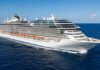

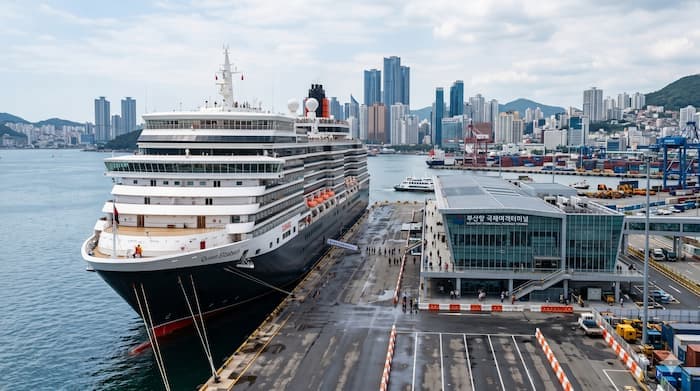
Korea has ports, ships and tourism assets. What it still lacks is a working cruise economy.
Korea’s cruise problem is not a shortage of ports.
Busan, Incheon and Jeju all have the basic conditions that many countries would want: modern terminals, recognizable destinations, access to major tourism markets and a place on Northeast Asian cruise itineraries. Cruise ships have called at these ports for years. Local governments have welcomed them. Passenger numbers have been reported. Ceremonies have been held.
Yet none of the three cities has become a true cruise hub in the way Shanghai, Keelung or several Japanese ports have tried to become.
The difference is not only the number of ships. It is what happens before and after a ship arrives.
A port call is not a cruise industry. A welcome event is not a market. A cruise hub is built when passengers board, stay, spend, return and recommend. It requires cruise lines, travel agencies, hotels, airlines, restaurants, retailers, local tour operators and city governments to work around the same traveler. Korea has often treated these pieces separately.
The global cruise market is already moving again. CLIA reported a record 34.6 million ocean-going cruise passengers worldwide in 2024, up 9 percent from 2023. Asia also recovered, with 2.6 million passengers in 2024, a 13 percent increase from the previous year.
Korea should have been better positioned to benefit from that recovery. It is one of Asia’s strongest outbound travel markets. It has port cities with tourism appeal. It has consumers who already spend heavily on overseas travel. But cruise growth has remained thinner than the country’s travel power would suggest.
The question, then, is not whether Korea has cruise ports. It does. The question is why those ports have not produced a stronger cruise business.
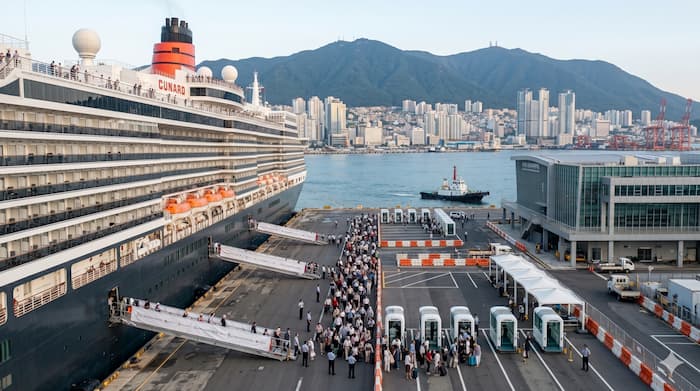
China turned Shanghai into a point of departure
China’s cruise recovery has been built around a clear idea: the country should not merely receive foreign cruise ships. It should put Chinese travelers on ships departing from Chinese ports.
Shanghai has been central to that effort. Adora Magic City, widely described as China’s first domestically built large cruise ship, made Shanghai a major home port. Adora Cruises said that in 2025 its two ships, Adora Magic City and Adora Mediterranea, would operate nearly 170 international routes, while Adora Magic City alone was scheduled for more than 80 Shanghai-based sailings of four to seven nights.
That matters because it shows how China views cruising. It is not just about a foreign ship visiting a pier. It is about ships, ports, consumers, tour programs, local spending and national travel demand working together.
Shanghai has not treated cruising as a side event in the port calendar. It has treated cruising as part of urban tourism and consumer travel. Chinese passengers board in Shanghai, sail to Japan, Korea or Southeast Asia, and return with cruise travel placed inside their own travel habits.
Korea has not done that with the same intensity. Busan and Incheon could serve as departure cities for Korean travelers. They could become places where Korean families, couples and older travelers begin short Northeast Asian cruises. But too often the discussion has focused on whether a ship calls at a Korean port, not whether a Korean traveler begins a cruise there.
That is the first gap.
Korea has ports where ships can arrive. It has not yet built a strong habit of having its own travelers depart from them.
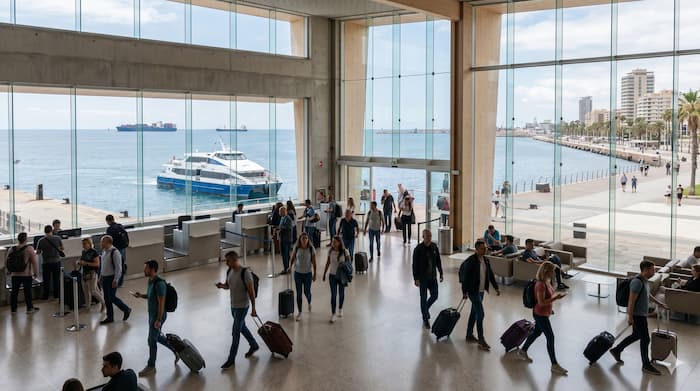
Taiwan made Keelung a boarding city
Taiwan offers a closer lesson for Korea.
The island is smaller than Korea. Its population is smaller. But it has used Keelung, near Taipei, in a more practical way. Keelung has been developed not only as a port that receives ships, but as a place where Taiwanese passengers board for short regional itineraries, especially to Japan.
The Port of Keelung reported 219 cruise ship calls and 993,000 international cruise passengers in 2025. It also cited records in foreign passengers, fly-cruise passengers and maiden calls.
The strength of Keelung is not only the figure. It is the convenience of the product.
Keelung is close to Taipei. It can draw from a major metropolitan market. It can connect passengers to short Japan routes. It can also receive international passengers who fly into Taiwan and board a ship. This is the kind of practical relationship between port, city, airport, travel agency and cruise line that Korea still needs to strengthen.
Busan has access to Japan and the southern sea routes. Incheon has the Seoul metropolitan area and one of the world’s major airports. Jeju has a strong tourism brand. But these advantages have not been turned into a regular cruise habit for Korean travelers.
Taiwan has tried to make Keelung a place where people board.
Korea has too often treated Busan, Incheon and Jeju as places where ships arrive.
That difference is not small.
Japan connects ports with places people want to visit
Japan has taken a different but equally important approach. It has built cruise appeal around the strength of its destinations.
Yokohama, Kobe, Nagasaki, Fukuoka, Osaka and Hokkaido are not just ports. They are cities and regions with food, shopping, history, scenery and recognizable local identities. For cruise lines, Japan is not simply a stop on a map. It is a product that can be sold.
Japan’s cruise recovery has also been visible. In 2025, international cruise travelers to Japan reportedly reached 1.8 million, with foreign cruise ship calls also rising. Earlier reporting had noted a strong rebound from 2023 to 2024 and a target of 2.5 million international cruise passengers and more than 2,000 port calls in 2025.
The lesson is not that Korea should copy Japan. It is that cruise passengers need more than a pier.
Cruise passengers have limited time. Their shore time is fixed. Some travel in groups, some independently. They need clear routes, reliable transport, food options, shopping, local interpretation, multilingual support and tours designed for a short stay.
Korea has the raw material. Busan has food, shopping, cinema, coastal scenery and K-culture. Incheon has airport access, port history and the Seoul metropolitan area. Jeju has nature, leisure and strong name recognition. But the question is whether these assets have been shaped around the actual cruise passenger.
A general tourist can wander. A cruise passenger cannot. A general tourist can spend three days in a city. A cruise passenger may have only several hours. That changes everything.
A cruise city must be ready for the clock.
Busan has the best conditions but has not become a strong departure city
Busan is the Korean city closest to becoming a serious cruise center.
It has a major port. It has a maritime identity. It is close to Japan. It has hotels, food, shopping, beaches and a growing international profile. If any Korean city could become a departure point for regional cruises, Busan should be first in line.
But Busan has not yet become a regular starting point for Korean cruise travelers.
To do that, three things are needed.
First, there must be reliable, repeated itineraries that consumers and travel agencies can understand. Second, the city must offer pre- and post-cruise stays: hotels, dining, shopping and local travel before boarding or after arrival. Third, sales channels must connect Seoul, the southeast region and other Korean consumers to Busan departures in a convenient way.
A port facility alone cannot do that.
A real departure city is built by repeated schedules, trained sellers, good ground services and travelers who know that the city is where a cruise begins. Busan has many of the ingredients. What it needs is a stronger product rhythm.
Incheon has the airport and the capital region, but the advantage remains underused
Incheon’s opportunity is different.
It has the Seoul metropolitan market behind it. It has Incheon International Airport. It has hotels, shopping and access to Seoul. It could support cruise products that combine air travel, city stays and cruise departures.
That is a significant advantage.
For Korean travelers, Incheon could become a convenient gateway for cruise itineraries tied to short regional routes or fly-cruise programs. For foreign travelers, it could combine a Seoul visit with a cruise departure or arrival. Few port cities have that kind of airport and capital-region access.
But the cruise product has not been built strongly enough around those advantages.
Incheon should not be promoted only as a port. Its strength is the combination of airport, capital market, hotels and city tourism. If cruise lines, hotels, airlines and travel agencies worked around that advantage, Incheon could support more sophisticated cruise packages than a simple port call.
The point is not to say Incheon lacks potential. The point is that the potential has not been used fully.
Jeju has name value but must do more with short stays
Jeju is already familiar as a cruise destination in Northeast Asia. Its natural scenery, shopping, food and resort image make it attractive to foreign cruise passengers. Its location also fits regional itineraries connecting China, Japan and Taiwan.
But Jeju’s challenge is clear: cruise passengers often stay briefly.
If passengers leave the ship, visit only a narrow shopping route and return, the benefit to the island remains limited. Jeju needs shore programs that fit the cruise clock but still give passengers a real sense of place.
That means tighter transport, better short tours, local food, smaller premium options, multilingual guidance and routes that spread spending beyond a few predictable stops. The goal should not simply be to count how many passengers disembark. It should be to ask what they experienced, where they spent and whether they would consider returning.
Jeju also has another possible role. It could be linked to Korean outbound cruising as part of a short regional itinerary or as a pre- or post-cruise leisure stay. But that requires cooperation among cruise lines, airlines, hotels, travel agencies and local authorities.
Jeju has the name. It now needs a more careful use of the passenger’s time.
Korea’s weakness is not the port. It is the missing fit between port, traveler and city.
Busan, Incheon and Jeju do not suffer from the same problem. But they share one weakness: the port, the traveler and the city have not been made to work together well enough.
A cruise port city is not simply a place where a ship docks. It must move people smoothly, help them spend well, give them a reason to remember the city and make it easy for them to choose another cruise later.
That requires airlines, hotels, travel agencies, restaurants, retailers, tour operators and cruise lines to think beyond the ship call.
Korea has often fallen short here. Local governments have counted ship calls. Travel agencies have sold cabins. Cruise lines have treated Korea unevenly. Port cities have not always focused enough on what passengers actually do after they step off the ship.
The result has been a fragmented cruise experience. Ships have arrived. Products have been sold. But the stronger bond among port, city, traveler and cruise line has not fully developed.
A cruise hub is built by operations, not by name
China, Taiwan and Japan show different paths. China has used Shanghai to rebuild a departure market. Taiwan has made Keelung a practical boarding city. Japan has tied ports to places with strong tourism appeal.
Korea now has to choose a clearer path of its own.
Busan should become a more regular cruise departure city. Incheon should use the capital region and airport more aggressively. Jeju should turn short port calls into better visitor experiences and wider local spending.
Korea should also stop separating outbound and inbound cruise policy too sharply. A strong cruise country can do both. Koreans can board ships from Korean ports, and foreign passengers can visit Korean port cities. Cruise lines need to see Korea as both a source market and a destination.
That will not happen through port announcements alone.
It will happen when a Korean traveler knows where to board, a travel agent knows how to explain the product, a cruise line sees reliable demand, and a city is ready to receive passengers properly.
Korea does not need to ask whether it has ports.
It needs to ask whether its ports are ready to become places where cruise travel actually begins.
Travel Leisure Newspaper Copyrights ⓒ Travel Leisure Newspaper. All rights reserved.
여행레저신문 Copyrights ⓒ Travel Leisure Newspaper. 무단전재 및 재배포 금지