
이가온 기자 ㅣ 여행레저신문
Tunisia is not yet one of the most familiar destinations for Korean travellers. But that does not mean it is without appeal. In fact, Tunisia occupies a rare and interesting place in the Korean travel imagination. Even before becoming a popular mainstream destination, the name itself carries a positive impression.
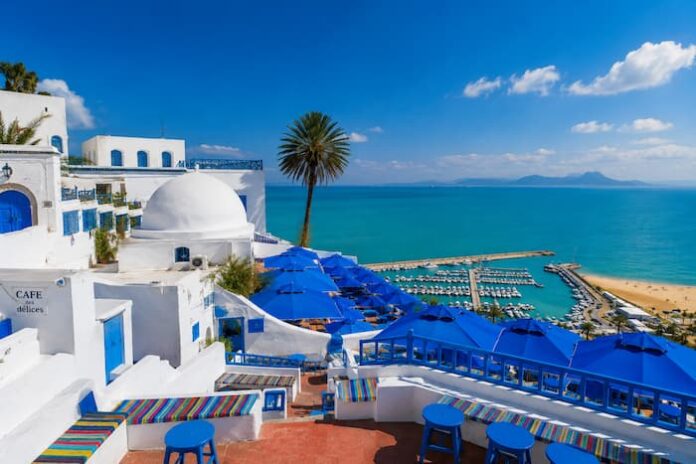
Many Koreans may not know Tunisia in detail, but the country often evokes images of Mediterranean sunlight, Carthaginian history, the Sahara, whitewashed towns, blue seas and the exotic atmosphere of North Africa. It is not yet widely visited, but it is rarely approached with indifference. Curiosity comes first. That may be one of Tunisia’s most valuable starting points in the Korean market.
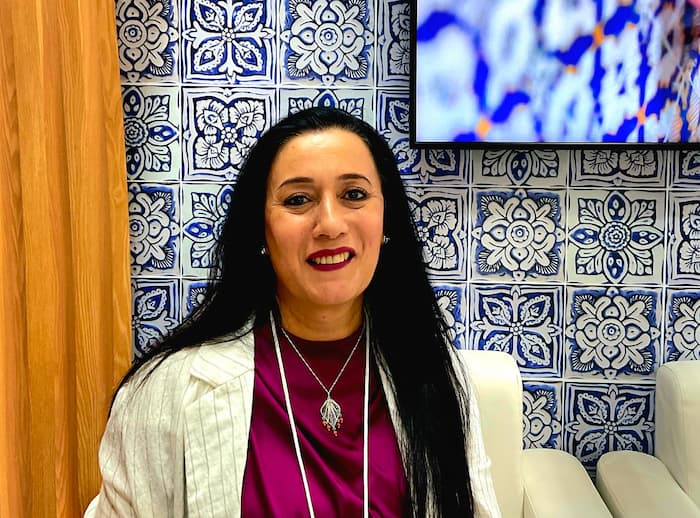
At the Seoul International Travel Fair, Raja Ammar, Senior Director of Promotion at the Tunisia Tourist Office, spoke about what Tunisia can offer to Korean travellers and why the country is paying closer attention to Korea. She represents the Tunisia Tourist Office, which operates under the Ministry of Tourism, and has worked across different international markets, including previous responsibilities linked to Tunisia’s tourism offices abroad.
Her message was calm but clear: Tunisia is ready to be discovered by Korean travellers.
“Our aim is to promote Tunisia in several markets that we are interested in,” Ammar said. “We are here because we are interested in the Korean market, and we believe we have a good product for Korean travellers.”
For many Koreans, long-haul travel has traditionally meant Europe, North America or, more recently, some emerging destinations in the Middle East and Africa. Tunisia offers something different. It is an African country, but it is also deeply Mediterranean. It belongs to North Africa, yet its history is tied to ancient Carthage, Rome, Arab civilisation, Berber traditions and modern Mediterranean life.
That mixture gives Tunisia a distinctive travel identity. It is not simply a beach destination, although its beaches are among its important assets. It is not only a desert destination, although the Sahara is one of its great experiences. It is not only a historical destination, although few countries can bring together Carthage, Roman ruins, medinas and Islamic architecture in such a compact space. Tunisia’s strength lies in the way all these elements exist together.
Culture everywhere between the Mediterranean and the Sahara
Ammar described Tunisia as a country of remarkable variety within short distances. In the north, travellers can find the Mediterranean Sea and mountain scenery. In the cities, history and culture appear in ruins, old quarters, markets and architecture. In the south, the landscape opens toward the desert.
“Tunisia is a very rich country with culture,” she said. “You can have the sea, the mountains, culture everywhere, and in the south, the desert.”
That phrase — culture everywhere — captures Tunisia well. In Tunisia, culture is not confined to museums or monuments. It appears in the streets of old medinas, in the remains of ancient cities, in local food, in seaside towns, in desert communities, and in the daily life of people who live between the Mediterranean and the Sahara.
For Korean travellers, this may become an important attraction. Korean outbound travellers are increasingly looking for destinations that offer more than simple sightseeing. They want a journey with history, atmosphere, local contact, food, landscapes and stories. Tunisia can offer all of these in one itinerary.
Carthage, medinas, beaches and desert journeys
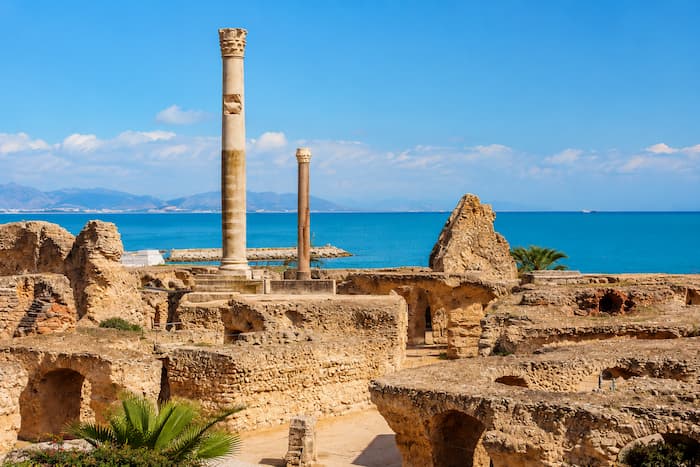
A journey may begin with the ruins of Carthage, where the memory of one of the ancient Mediterranean world’s great powers still remains. It may continue through Roman sites, Islamic urban quarters, coastal towns and traditional markets. It may move southward toward the Sahara, where the scenery changes completely and travellers encounter a different rhythm of life.
This is the kind of variety that allows Tunisia to appeal to travellers who do not want to stay in one place. Ammar noted that Korean travellers often like to move, discover and experience different parts of a country rather than remain in a single resort. Tunisia, with its compact geography and diverse landscapes, can respond well to that style of travel.
The country also has a strong cultural advantage. Ammar said she believes Korean travellers are particularly interested in culture, and that Tunisia has exactly that to offer.
“Korean people like culture,” she said. “This is what we have. This is what we can offer, along with other products. We have the beach, but travellers do not only have to relax on the beach. They can discover culture, meet local people and live a different experience.”
This point is important. Tunisia does not need to present itself to Korea only as a leisure destination. Its stronger message may be that it is a destination of experience. The beach, the desert, the medina, the historical sites, the food, the local people and the Mediterranean lifestyle all come together to create a journey that goes beyond conventional tourism.
A North African destination with a Mediterranean identity
Ammar also sees Tunisia’s North African identity as an opportunity. Interest in Egypt and Morocco has grown among Korean travellers in recent years, and Tunisia can benefit from wider curiosity about North Africa. It is part of Africa, but it is also the southern shore of the Mediterranean. That position gives it a sense of familiarity and discovery at the same time.
“We are in Africa, but we are in North Africa,” she said. “We are the south of the Mediterranean. Travellers can experience a different culture, a different lifestyle, something new and authentic.”
Tunisia’s current priority in Korea is visibility. The country has the product, but it still needs to become more visible to Korean consumers and the travel industry. Ammar was open about this. The goal is first to show what Tunisia is, what it can offer and why Korean travellers should consider it.
The number of Korean visitors to Tunisia was mentioned at around 30,000 a year. It is not yet a large figure compared with major mainstream destinations, but for a North African country in the Korean outbound market, it is a meaningful base. The challenge now is to turn awareness into choice.
Tunisia’s active engagement with the Korean market
At SITF, the Tunisia Tourist Office worked on both consumer and trade engagement. The booth introduced Tunisia to general visitors, but the mission was also to meet Korean travel agencies, online travel platforms, media and other industry partners. Ammar said Tunisia is interested in developing partnerships and preparing further B2B activities after returning home.
“When I go back to Tunisia from Korea, I will prepare plans for B2B events,” she said. “If we want to develop this market, we should move.”
That sentence reflects the purpose of Tunisia’s participation at the fair. This was not only a matter of being present at an exhibition. It was a step toward understanding the Korean market, meeting potential partners and preparing the next stage of promotion.
The Tunisia Tourist Office is also open to seminars, press conferences, press trips, influencer invitations and cooperation with media and travel industry partners. Without a permanent tourism office in Korea, direct participation in events such as SITF becomes especially important. It allows Tunisia to meet people, listen to questions and begin building the contacts needed for future activity.
Air access remains an issue for many long-haul destinations, but Ammar took a realistic view. Direct flights or regular connections would certainly help, but she does not see the absence of direct service as an absolute barrier. Travellers who truly want to discover a new destination will move through connecting cities if the destination is attractive enough.
“If they want to travel and discover new destinations, they go,” she said. “Of course, direct flights help, but people do not stop travelling because of connections.”
This is a useful perspective for Tunisia. Korean travellers already travel long distances to Europe, South America, Africa and the Middle East when the destination gives them enough reason to go. The task for Tunisia is to provide that reason clearly and repeatedly.
Safety and destination confidence are also important parts of the message. Like many countries in the region, Tunisia has at times been affected by broader perceptions of North Africa and the Middle East. But today, the Tunisia Tourist Office wants Korean travellers to see Tunisia as a safe, welcoming and rewarding destination.
Ammar said Tunisia can tell travellers that it is a safe country and that they do not need to worry. More importantly, Tunisia needs to provide reliable information so that Korean travellers can make informed decisions.
Ready to welcome Korean travellers
What came through most strongly in the conversation was Tunisia’s willingness to engage. Ammar was not simply listing attractions. She was listening to how the Korean market works, asking what Korean travellers look for and thinking about how Tunisia should become more visible.
Her final message to Korean travellers was warm and direct.
“I would like to say to Korean people that Tunisia warmly invites them to travel and discover a destination where history, culture, nature and hospitality come together,” she said. “We believe Tunisia is an unforgettable destination, an experience that goes beyond traditional tourism.”
She added that Tunisia welcomes Korean visitors throughout the year.
“They can visit Tunisia year-round,” she said. “All year, there is something to do, something to discover. Tunisia is ready to be the next destination for Korean people.”
That may be the most important message. Tunisia is not trying to be only another Mediterranean resort or another North African stop. It is presenting itself as a country where the Mediterranean and the Sahara meet, where ancient history and living culture exist side by side, and where travellers can move from sea to city, from ruins to desert, from relaxation to discovery.
For Korean travellers looking beyond familiar routes, Tunisia offers a rare combination: Carthage and the Mediterranean, medinas and Roman remains, beaches and wellness, Sahara landscapes and local hospitality.
Tunisia is still waiting to be fully discovered by Korea. But it already has something many destinations struggle to create: a good first impression. Now the task is to connect that impression with information, stories, partnerships and real journeys.
Tunisia is a country of history and culture between the Mediterranean and the Sahara. And it is ready to welcome Korean travellers with warmth, variety and a different kind of North African experience.
여행레저신문 Copyrights ⓒ The Travel News. 무단전재 및 재배포 금지.