
이가온 기자 ㅣ 여행레저신문
Visitor recovery, foreign spending, K-beauty demand and hosted-buyer platforms point to a new phase for Korea’s MICE industry
2026-06-30
This week’s MICE signals point in one direction. Korea’s tourism recovery is no longer only about arrival numbers. Foreign visitor volume, overseas card spending, K-beauty tourism, regional air access, cruise products and B2B travel exchanges are beginning to form a broader demand base for meetings, incentives, conventions and exhibitions.
That matters for MICE because the industry is not built only inside convention halls. A strong MICE market depends on airlift, hotel capacity, buyer access, local experiences, consumer demand, trade networks, media exposure and post-event spending. When these elements move together, an exhibition or convention becomes more than an event. It becomes a marketplace.
■ Korea’s Visitor Recovery Is Creating a Wider MICE Demand Base
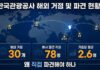
Korea’s inbound market has crossed an important psychological line. The number of foreign visitors to Korea passed 10 million earlier than last year, showing that the recovery of international travel demand is becoming more stable. At the same time, foreign card spending in Korea exceeded 2 trillion won on a monthly basis, with strong spending reported in areas such as shopping, beauty, medical services and premium consumption.
For the MICE industry, these numbers should not be read only as tourism statistics. They are signals of market depth. A country that attracts more visitors, generates higher foreign spending and builds stronger thematic consumption has more room to grow incentive travel, corporate meetings, beauty and wellness conventions, retail-linked events and destination-based business programs.
K-beauty tourism is especially important. Beauty, medical wellness, cosmetics, fashion and lifestyle consumption are no longer separate from tourism. They can become meeting themes, incentive programs, post-tour products, buyer missions and exhibition content. When 16 countries of travel trade participate in beauty-tourism programs and hundreds of related products are connected to the market, the signal is clear: MICE demand is expanding beyond meeting rooms into experience-led industries.
■ Air Access, Regional Routes and Cruises Are Part of the MICE Equation
MICE competitiveness begins before delegates enter the venue. It begins with access. Lower international fuel surcharges, stronger long-haul booking demand, expanded airline partnerships and renewed China-Southeast Asia-regional airport routes all affect the ability of destinations to attract meetings and incentive groups.
Korea’s regional airports are also becoming more relevant. New or resumed routes from China, Southeast Asia and other short- and medium-haul markets can support regional MICE cities if they are connected to clear event themes, hotels, transport, local content and post-tour programs. A convention bureau cannot sell a city only with a convention center. It must sell a complete journey: arrival, accommodation, meeting, networking, food, shopping, local experience and departure.
Cruise demand offers another signal. The expansion of Busan-based cruise products, including itineraries linked to Fukuoka, Sasebo, Shanghai and Jeju, shows that Korea’s MICE-related travel ecosystem can widen beyond airports and convention centers. For incentive groups and corporate reward programs, cruise-linked itineraries may become a more flexible product if port cities, hotels, DMCs and local governments design them properly.
 ■ Hosted Buyer Platforms Are Becoming the Core of MICE Value
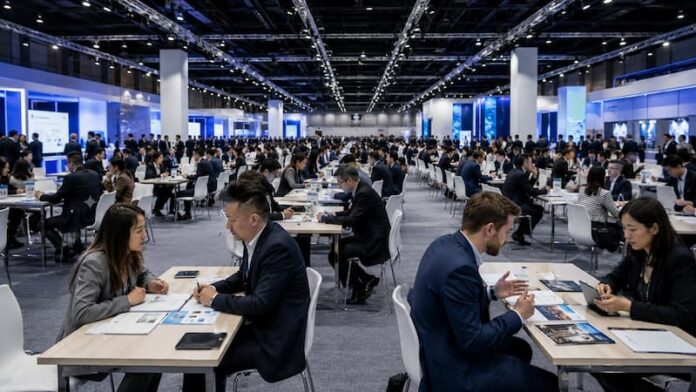
The clearest lesson for Korea’s MICE sector is that business matching is no longer a side program. It is becoming the core product.
A modern MICE event must do more than gather exhibitors. It must identify real buyers, qualify demand, design appointments, prepare suppliers, support follow-up and turn meetings into business. Destinations, venues, hotels, PCOs, DMCs, airlines, technology firms and local content providers all need a marketplace where they can meet decision-makers, not just visitors walking through booths.
This is why the hosted-buyer model matters. A hosted buyer is not simply an invited guest. A proper hosted-buyer program selects buyers with real purchasing or planning authority, matches them with relevant suppliers, manages appointments and creates measurable business outcomes. For Korea, this model is especially important if KME and other MICE platforms want to grow beyond domestic industry networking.
Korea has strong venues, hotels, city infrastructure, airlines, technology and cultural content. The question is whether these assets are being packaged and presented to the right buyers through a carefully managed marketplace. A large exhibition hall may create visibility, but structured business matching creates value.
■ MICE Keyword: Marketplace
This week’s keyword is “marketplace.”
A marketplace is not just a venue where people gather. It is a structure that brings supply and demand together with intention. In MICE, that means connecting destinations with meeting planners, venues with associations, hotels with incentive houses, DMCs with corporate buyers, airlines with event organizers, and local content providers with global programs.
This is different from a simple exhibition. A booth-based event may show what suppliers have. A marketplace helps buyers decide what they need, who they should meet, and how business can move forward after the event.
Korean MICE events should pay close attention to this distinction. If an event is designed only as a display floor, its value remains limited. If it is designed as a marketplace, it can generate business meetings, media attention, investment interest, destination branding, product development and long-term trade relationships.
 ■ Exhibition Halls Must Become Industry Trading Floors
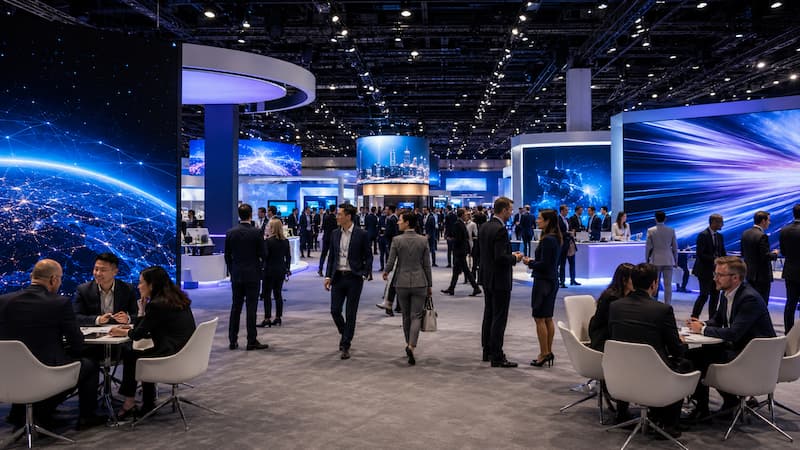
The exhibition hall is changing. It is no longer just a place to install booths, hang banners and count visitors. In the strongest MICE markets, exhibition halls are becoming industry trading floors where buyers, brands, media, investors, governments and consumers meet in one environment.
This is why Korea’s recent tourism signals matter. Foreign visitor recovery, higher foreign spending, K-beauty tourism, air access, cruise products and regional route development all create more reasons for industries to meet. Beauty, wellness, medical tourism, aviation, hotels, retail, cruise, local tourism and technology can all become MICE themes if they are connected to the right marketplace structure.
For Korea, the opportunity is significant. The country already has global cultural visibility, strong consumer brands, advanced event technology and competitive infrastructure. What is needed is stronger integration. A beauty-tourism event should not end as a product fair. It should connect clinics, cosmetics brands, travel agencies, DMCs, hotels, airlines, media and overseas buyers. A regional MICE event should not simply promote a convention center. It should package local industries, transport, accommodation, food, culture and post-tour programs.
■ Global MICE Watch: Technology, Data and Follow-Up
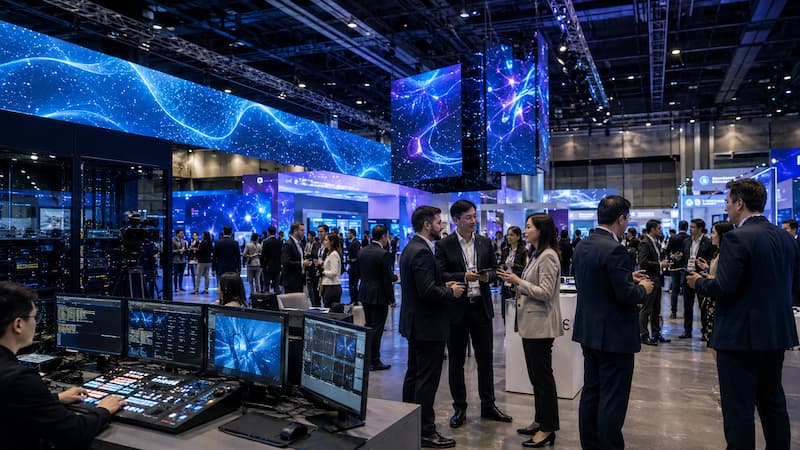
Globally, the MICE industry is moving toward more technology-driven operations. Event platforms, appointment systems, digital badges, lead management tools, hybrid content, buyer analytics and post-event data are becoming part of the basic infrastructure of serious MICE events.
This is not technology for display. It is technology for business conversion.
A hosted-buyer program without data cannot prove its value. A trade show without follow-up loses momentum after the closing day. A convention without digital content reaches only the people inside the venue. A destination without CRM cannot manage buyers across multiple years.
Korean MICE organizers, convention bureaus and venues should therefore look at technology not as decoration, but as the operating layer of the marketplace. The important question is not whether an event looks modern. The question is whether it helps people meet better, exchange information faster, follow up more effectively and convert interest into business.
■ Travel News Market View
This week’s keyword for the Korean MICE market is marketplace.
Last week’s MICE Brief focused on the operating system. This week’s signals show what that operating system must ultimately produce: a functioning marketplace where tourism demand, foreign spending, industry content, hosted buyers, air access, regional programs, technology and local experiences come together.
The recovery of foreign arrivals gives Korea a larger audience. Increased overseas spending shows stronger commercial potential. K-beauty tourism points to high-value thematic demand. Regional air routes and cruise products widen access. Hosted-buyer platforms create business conversion. Technology and data help the industry measure and manage what happens after the event.
The conclusion is clear. MICE is not only about hosting events. It is about designing marketplaces where industries meet, buyers make decisions, cities capture spending, and relationships continue after the closing day.
The competitive MICE destination of the future will not be the one that simply fills the largest hall. It will be the one that can bring the right people into the same market, connect them with precision, support them with technology, and turn meetings into measurable business.
여행레저신문 Copyrights ⓒ The Travel News. 무단전재 및 재배포 금지.