

강정호 기자 ㅣ 여행레저신문
Successful marketing begins before selling. It begins with the ability to read a market that is not yet visible. As Peter Drucker suggested, when a company understands its customer deeply enough, a product or service does not need to be forced into the market. It becomes a natural choice.
Aviation is no different. A route may begin with supply, but a market is built through mutual understanding and trust.
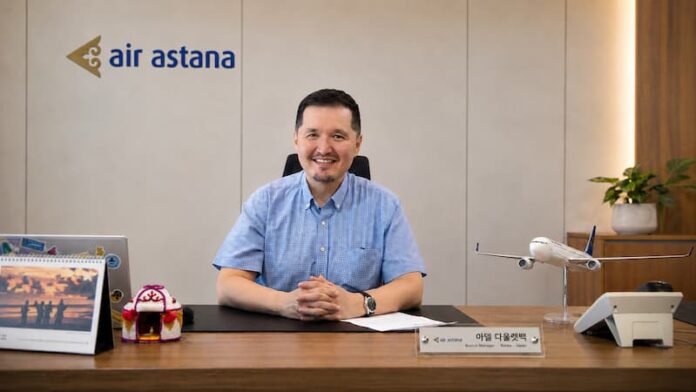
That was the lens through which Adel Dauletbek, Air Astana’s Senior Regional Manager, Korea & Japan, was looking at Korea. He has been in Korea for just over a year, yet he already reads not only the Korean travel market, but also the broader currents shaping travel demand across Northeast Asia. He does not see Korea simply as a large outbound travel market. He sees it as a future gateway from Northeast Asia to Kazakhstan, Central Asia, and the Caucasus.
His perspective was striking because it went beyond the usual language of aviation. Airline executives often speak in schedules, frequencies, hubs, and aircraft. Dauletbek spoke in journeys. He spoke of cities becoming stories, unfamiliar names becoming travel choices, and routes becoming a wider map for Korean travelers.
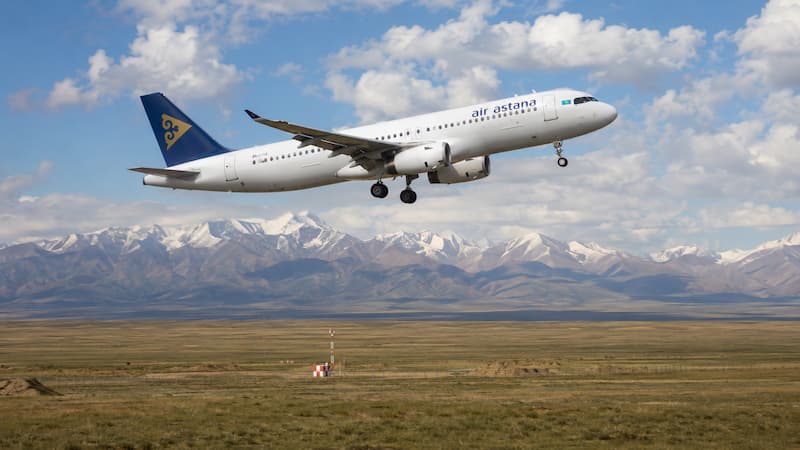
From Incheon to Almaty, from Incheon to Astana, and from Kazakhstan onward to Tbilisi and Batumi, he described a travel axis that could expand the Korean market’s understanding of Central Asia and the Caucasus. In his explanation, Air Astana was not simply an airline connecting Korea and Kazakhstan. It was a carrier capable of introducing Korean travelers to a much wider world.
Air Astana is Kazakhstan’s leading carrier, and for many Korean travelers, Almaty has long been the more familiar name. Set against the backdrop of the Tian Shan mountains, Almaty has often been introduced as Kazakhstan’s natural and cultural gateway. It is a city where mountain scenery, urban life, cafés, markets, and Central Asian atmosphere come together.
But Dauletbek’s vision did not stop with Almaty. He placed equal importance on Astana.
Astana is still not a familiar name to many Korean travelers. Yet unfamiliarity is not a weakness. It can be an opening. New markets rarely begin with destinations everyone already knows. They often begin with cities that must be explained properly, repeatedly, and in the language of the market.
Dauletbek did not describe Astana merely as Kazakhstan’s capital. He presented it as a modern city destination and a new way for Korean travelers to understand the country. If Almaty is the mountain gateway, Astana is the city of scale, planning, architecture, new hotel infrastructure, and national ambition. It represents the future-facing image of Central Asia more clearly than almost any other city in the region.
When Almaty and Astana are introduced together, Kazakhstan becomes more than a single stop. It becomes a country of contrasts. Nature and city. Mountains and modern architecture. Historic movement and future design. Transit and destination. For Korean travelers, that duality can become the foundation of a deeper Kazakhstan itinerary.
This is where Air Astana’s role becomes larger.
The airline does not only provide seats between Korea and Kazakhstan. It can help shape the way Korean travelers understand a region. Through Almaty and Astana, Air Astana can connect Korea to a wider travel world that includes Central Asia, Georgia, the Caucasus, and the Black Sea coast.
That wider geography matters. For years, Korean outbound travel has been shaped by familiar axes: Japan, Southeast Asia, Europe, the Middle East, and North America. Central Asia and the Caucasus have appeared only intermittently in that landscape. They have attracted independent travelers and specialist operators, but they have not yet become a fully developed mainstream travel category in Korea.
The opportunity, therefore, is not only about aviation. It is about market creation.
A destination does not become popular simply because a route exists. It becomes visible when travelers understand why they should go, what they can experience, how the journey works, and how the destination fits into their own travel language. That requires editorial storytelling, digital search visibility, travel trade communication, and repeated exposure.
Dauletbek understands that sequence. His strength lies not in exaggerating the market, but in reading it carefully. He knows that new destinations need time. Korean travelers respond quickly to fresh ideas, but they also need credible information, practical routes, and a sense of familiarity. Travel agencies need more than flight schedules to build products. Consumers need more than a destination name to make a decision.
In that sense, his conversation felt less like airline promotion and more like the thinking of someone who understands how a market is formed.
Air Astana’s stopover opportunity is one example. For travelers transiting through Kazakhstan, a stopover in Almaty or Astana can turn waiting time into a short city experience. Instead of passing through Kazakhstan without seeing it, Korean travelers can briefly encounter the country, its hotels, streets, food, and atmosphere.
For a market like Korea, this matters. A stopover can reduce psychological distance. It can make an unfamiliar country feel accessible. It can allow travelers to experience Kazakhstan before committing to a longer journey. For Air Astana, it can also transform a transfer point into a destination story.
If explained well in Korean, the stopover can become a powerful gateway product. It can introduce Astana to travelers who might otherwise pass through without noticing it. It can help Almaty move from transit city to travel memory. It can also prepare the market for larger itineraries across Central Asia and the Caucasus.
Georgia adds another layer to this opportunity.
Tbilisi, the capital of Georgia, is one of the most compelling cities in the Caucasus. It carries layers of history, wine culture, religion, architecture, and old trade routes. Batumi, on the Black Sea coast, offers another mood entirely. It is a seaside city, a resort gateway, and the center of Georgia’s Adjara region.
Together, Tbilisi and Batumi can form a strong travel narrative for Korean travelers: mountain landscapes, old churches, wine regions, rail journeys, seaside holidays, and the cultural bridge between Europe and Asia.
When this is connected through Kazakhstan, the journey becomes more distinctive. A Korean traveler can fly from Incheon to Almaty or Astana, experience Kazakhstan, and continue onward toward Georgia and the Black Sea. It is not the conventional Europe route. It is not the familiar Middle East connection. It is a new travel axis built around Central Asia and the Caucasus.
This is precisely where Air Astana can differentiate itself in Korea.
The airline’s future in the Korean market should not be measured only by the number of flights. It should be measured by the size of the world it can open to Korean travelers. Almaty, Astana, Tbilisi, Batumi, and beyond — these are not isolated points on a map. They can become a connected journey if the market is taught to see them that way.
Dauletbek is working from that larger map.
As Senior Regional Manager, Korea & Japan, his responsibility covers two important Northeast Asian markets. But his view of Korea does not stop at Korea alone. He sees the country as part of a wider demand base that can help bring Central Asia and the Caucasus into sharper focus. Korea’s travel market is fast, digitally responsive, and deeply influenced by content. New destinations can move quickly when the right story reaches the right audience.
That is why Korea matters for Air Astana. It is not merely a source market. It is a market that can help shape perception.
If Astana becomes better known in Korea, if Kazakhstan stopover travel becomes easier to understand, and if Georgia and Batumi are introduced as natural extensions of the Air Astana network, the airline’s role in the Korean market can expand significantly. It can become not just a carrier to Kazakhstan, but a strategic travel partner for Korean travelers looking for new routes beyond the obvious.
The Korean travel market has changed. Travelers no longer wait for a brochure to tell them where to go. They search. They compare. They read articles, watch videos, follow newsletters, check blogs, and build desire long before they speak to a travel agency. Tour operators then transform that demand into products, while airlines provide the routes that make those journeys possible.
New destinations open when those three forces meet: story, product, and route.
Dauletbek’s advantage is that he appears to understand this structure. He is not simply asking Korea to fill seats. He is looking at how awareness can be created, how Kazakhstan can be explained, how Astana can be positioned, and how Air Astana can become part of a larger journey from Korea to Central Asia and the Caucasus.
That is the work of a modern airline market leader.
A strong regional manager does not only manage a route. He builds confidence around it. He meets the market, listens to its structure, and prepares the ground for future demand. He understands that a new destination is not sold in a single message. It is built through repetition, credibility, and a growing sense of familiarity.
Dauletbek’s attitude reflected that approach. He was calm but engaged, careful but clear, modest but ambitious in his reading of the market. He did not treat Korea as a short-term sales opportunity. He treated it as a market that deserves patient development.
That is why his first year in Korea matters. One year is not a long time. Yet in that short period, he has begun to identify the deeper possibilities between Korea, Kazakhstan, and the wider region. He reads the market not only from the airline side, but from the traveler’s side: what Korean travelers know, what they do not yet know, and what they may be ready to discover next.
Air Astana’s next chapter in Korea will not be written by route expansion alone. It will be written when Astana becomes a name Korean travelers recognize, when Almaty becomes more than a gateway, when a Kazakhstan stopover becomes part of the travel experience, and when Georgia and Batumi are seen as reachable through a wider Central Asian journey.
At the starting point of that work stands Adel Dauletbek.
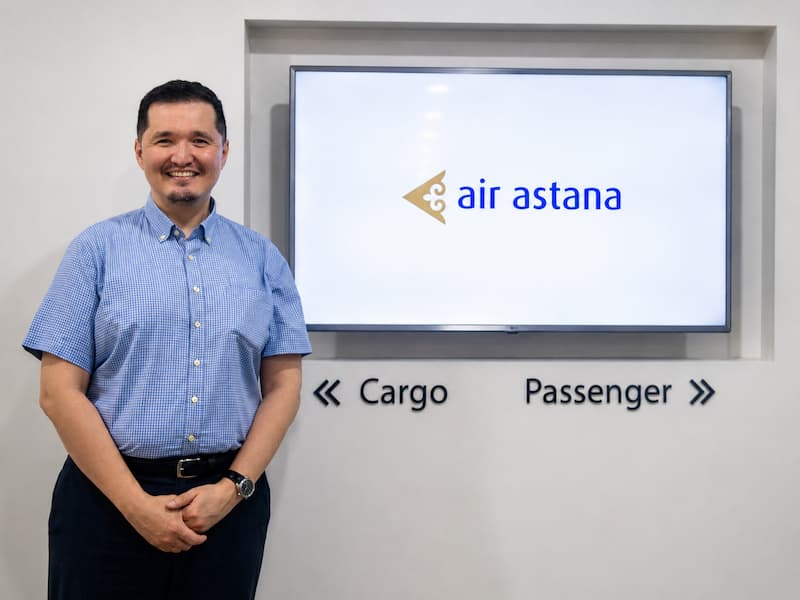
He has been in Korea for about a year, but he already reads the Korean market with uncommon clarity. As Air Astana’s Senior Regional Manager, Korea & Japan, his responsibility covers both markets, yet his vision does not stop there. He sees Korea as a future Northeast Asian gateway to Central Asia and the Caucasus.
From Almaty and Astana to Georgia and Batumi, the wider world Air Astana can open for Korean travelers is not just an idea on a map. Adel Dauletbek is designing it, shaping it, and steadily bringing it into being.
여행레저신문 Copyrights ⓒ The Travel News. 무단전재 및 재배포 금지.