
김미래 기자 ㅣ 여행레저신문
A major event can impress the travel trade, but it cannot build an FIT market on its own. In Korea, destinations must first earn awareness and interest through relevant content, then turn that attention into action.
2026-07-15
This article is written for tourism boards, embassies and destination marketing teams preparing to enter or grow in the Korean outbound travel market.
Large formal events can be effective for travel-trade engagement, but they cannot reach Korea’s fragmented FIT consumer market on their own.
In the FIT Era, Build the Market Before You Stage the Event
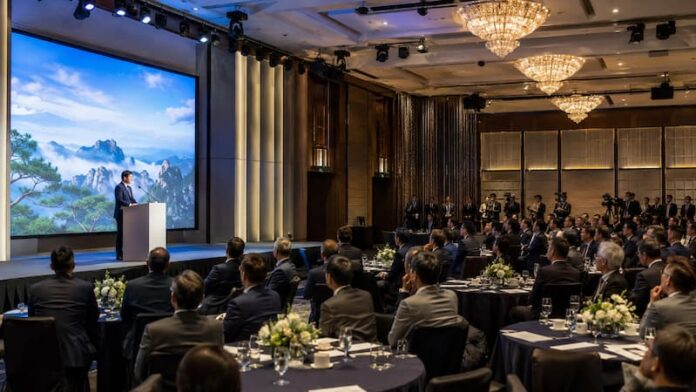
Tourism boards and embassies entering the Korean market often feel pressure to make an immediate impression. A prestigious venue is selected, senior officials and travel industry representatives are invited, formal presentations are prepared, and a large promotional event is staged to demonstrate commitment, status and visibility.
For trade marketing, this approach can still be effective. Tour operators, airlines, travel agencies and other industry partners form a relatively defined audience, and a well-planned gathering can bring the right people into one room, create opportunities for business discussions and introduce new products directly to the distribution network.
The FIT market, however, operates on a completely different scale and through a different decision-making process.
Independent travelers are not a concentrated professional group that can be assembled in a hotel ballroom. They are a vast and fragmented consumer market whose travel decisions develop gradually through search, media exposure, recommendations, photographs, videos, practical information and repeated encounters with a destination brand. No single event, however impressive, can build that market on its own.
This distinction has become more important as outbound travel has shifted from group travel toward FIT. Many tourism organizations recognize that independent travelers now drive a large part of the market, yet their promotional methods remain rooted in the group-tour era. They continue to rely on formal receptions, official visits and one-off events as if a strong appearance in front of a limited audience will automatically create wider consumer demand.
It rarely does.
Considerable money is spent, the venue is filled with familiar industry figures, photographs are circulated and several articles appear the next day. Inside the organization, the campaign may look successful. Outside that circle, most consumers remain unaware that anything happened.

When an Announcement Is Not Yet a Story
The same problem appears in post-event publicity. A tourism board announces that an event was held, an embassy reports that a delegation visited Korea, or two organizations issue a press release announcing the signing of an MOU. Such information may be important for official records, stakeholder relations, government reporting and travel trade communication. It may also reflect months of genuine preparation and effort.
Its value to the general traveler, however, is often limited.
Post-event articles are frequently written with care. Journalists and PR agencies may work hard to summarize the speeches, attendance, discussions and expected outcomes. Yet few ordinary travelers read those reports with sustained interest. The reason is not necessarily poor writing. It is a lack of direct relevance.
Travelers are rarely interested in an agreement simply because it was signed, or in an event simply because it was held. They want to know what has changed.
Has a new direct flight been introduced? Has a new travel product been created? Has the visa process become easier? Is there a special hotel rate, a discount, a cashback offer or a new benefit for Korean visitors? Has the destination become easier to reach, more affordable or more convenient?
If an institutional activity produces no visible benefit, opportunity or useful information for the traveler, the announcement remains an institutional report.
Event coverage and MOU announcements therefore have a legitimate role, but they should not be mistaken for the center of consumer marketing. Institutional publicity explains what an organization has done. Consumer marketing explains why the result matters to the traveler. That is the starting point of FIT marketing.
Start With the Consumer, Not the Announcement
A destination must begin not with what it wants to announce, but with what Korean consumers need, want and currently care about. Their needs are practical: visa requirements, air access, safety, transportation, travel time, accommodation, pricing and booking convenience. Their wants are emotional and experiential: memorable food, distinctive landscapes, premium accommodation, local culture, wellness, adventure, wildlife, family experiences and moments worth sharing.
These needs and wants are constantly influenced by market trends. Korean travelers may be moving toward independent itineraries, shorter journeys, premium stays, regional cuisine, wellness, nature-based travel or lesser-known destinations. Their information habits also evolve, as search-based articles, short-form video, online reviews, detailed itineraries and expert recommendations play different roles in the decision-making process.
Without this understanding, tourism communication becomes internally driven. Organizations publish what headquarters wants to announce rather than what consumers are ready to read. They distribute whatever material happens to be available instead of developing content around actual market demand.
Strategic FIT marketing therefore begins with listening. Before deciding what story to tell, a destination must understand what would make a Korean traveler stop, read and become curious. Only then can the destination look at itself again.

Re-Establishing the Destination for Korean Eyes
Entering Korea is not a translation exercise. It is a process of re-establishing the destination and its products through Korean eyes. A global campaign centered on heritage may not provide the strongest entry point in Korea. Korean consumers may respond more readily to food, natural scenery, wildlife, luxury resorts, safety, convenience or distinctive local experiences.
A tour that sells well in another market may be too long, too complicated or poorly paced for Korean travelers. A hotel package may require different benefits, room combinations, meal arrangements or booking conditions. An itinerary may need more efficient transportation, clearer pricing or a stronger explanation of value.
The same principle applies to visual material. Tourism organizations often possess extensive libraries of photographs and video, but much of this content was created for official reports or broad international use. Formal handshakes, group photographs and distant panoramas may document activity, but they rarely help an FIT traveler imagine the experience.
The destination must make a fresh decision about which image should lead, which audience should be approached first, which products should be adjusted and which concerns must be resolved before consumers will consider travelling. The destination itself may not change, but its meaning in the Korean market must be rebuilt.
Where Brand Image Begins
Before asking consumers to buy a product or attend an event, a destination must first occupy a clear place in their minds. Is it a destination of nature and adventure, a country of history and civilization, a place of food, music and energy, a luxury escape, a wellness retreat or a destination for families and independent travelers?
That image cannot be created by a slogan alone. It is formed gradually through repeated exposure to stories, photographs, videos, people, products and experiences that reinforce a consistent impression.
A story about a local chef, a traditional market, a national park, a historic district or a family-run hotel may appear small on its own. Together, those stories begin to establish what the destination represents. One article will not transform the market, and one video will not establish a brand. Recognition develops through repeated and relevant contact.
A consumer may first think, “I have heard of that place.” Later, the response may become, “It looks more interesting than I expected.” Eventually, it may become, “I would like to know how to travel there.”
This gradual rise in the market’s interest level is one of the most important parts of FIT marketing. It is also the stage at which tourism organizations should use their budgets most carefully. When awareness is low, the objective should not be to spend heavily on a single grand occasion. The objective should be to remain visible long enough, and often enough, for the market to begin recognizing and understanding the destination. That requires continuity and cost efficiency.
Articles, Naver Blog posts, online media coverage, social content, short-form video, newsletters, digital publications, books and search exposure can all contribute to that process. Their individual impact may appear modest, but their cumulative effect is far more important. The goal is not to make the loudest possible appearance once. It is to create enough consistent exposure for an unfamiliar destination to become familiar, relevant and desirable.
Why Content Must Sit at the Center
Tourism organizations have many tools at their disposal. They can organize events, publish books, produce videos, operate social media accounts, issue newsletters, work with the media and develop consumer promotions. These are all methods of delivery. The central marketing asset is content.
Without meaningful content, an event becomes a ceremony, a social account becomes an empty channel and a brochure becomes another document that is quickly forgotten.
The source material is almost unlimited. History, culture, food, landscapes, wildlife, local people, hotels, resorts, restaurants, flights, visas, transportation, seasonal travel, products, prices and promotions can all become useful content. Facts alone, however, are not enough. They must be shaped into stories.
A new flight should not be presented only as an operational announcement. It should explain which journeys have become easier and which new travel opportunities are now possible.
A hotel package should not be reduced to a list of inclusions. It should show which traveler it suits, what experience it offers and why it represents value.
A visa change should not be communicated merely as a regulation. It should explain how travel has become more accessible.
Seasonal information should not be limited to temperatures and rainfall. It should help consumers understand what kind of journey is possible at that time of year.
Storytelling gives facts relevance. It connects institutional information with personal travel decisions.
Matching the Story to the Stage
Content must also follow the consumer’s level of awareness and interest. At the beginning, the market needs stories that make an unfamiliar destination recognizable. As interest develops, consumers need deeper stories about culture, food, nature, people, history and distinctive local experiences. When they begin considering a trip, practical information about visas, flights, safety, weather, transportation, travel duration and cost becomes essential.
When they start comparing options, hotels, resorts, itineraries, tours, restaurants and packages must be explained clearly enough to support a choice. Once they are ready to act, discounts, cashback, upgrades, vouchers, limited offers and other benefits can provide a final reason to book.
The order matters. Product information delivered before the destination has acquired meaning may be ignored. General cultural content repeated after consumers have moved into the booking stage may also fail to produce results.
Strategic marketing is not simply the production of more messages. It is the discipline of identifying what the market needs to hear next, and telling that story at the right time.
Putting the Event Back in Its Place
Events still have an important role, but their value depends on timing.
An event held in a market with little knowledge of the destination must spend most of its energy explaining the basics. It is trying to create interest from nothing.
An event held after recognition and curiosity have already developed can perform a far more valuable role. Consumers attend because they already know the destination. They want to experience its food, culture, people and products. They are ready to ask practical questions, compare travel options and respond to booking incentives. At that stage, the event can deepen engagement, introduce products, collect consumer data, encourage bookings and convert interest into measurable demand.
The event is no longer expected to build the entire market by itself. It becomes one effective part of a broader strategy.
The Correct Order
Understand the Korean consumer. Identify needs, wants and trends. Re-establish the destination and its products for the market. Build a clear brand image. Create relevant content. Turn that content into stories. Distribute those stories consistently through the most effective and efficient channels. Raise the market’s interest level. Then use events, promotions and products to convert that interest into action.
A well-developed story should also continue working after its first publication. It can begin on a Naver Blog and be adapted for online media, press releases, Facebook, Instagram, YouTube, short-form video and newsletters. The same material can later become an e-book, a destination guide, a sales kit, a trade presentation or a printed publication. Over time, this creates a Korean-language content archive that continues to build awareness, answer questions and support sales.
An event may last one day. A useful story can remain searchable and relevant for years. That is why FIT marketing must be continuous, cost-efficient and content-led. The goal is not to make one impressive appearance and then disappear. It is to remain present long enough to become familiar, relevant and desirable.
There is strategic marketing. And there is storytelling.
Strategic marketing determines what the market needs to hear, when it needs to hear it and how the message should move the consumer forward. Storytelling is the form that makes that strategy relevant, understandable and persuasive.
“Do not tell people what you want to say. Tell them what they want to hear. That is the story.”
여행레저신문 Copyrights ⓒ The Travel News. 무단전재 및 재배포 금지.