

김미래 기자 ㅣ 여행레저신문
At a travel fair, most destinations try to be noticed quickly. They show scenery, hotels, food, festivals and itineraries. They speak in the familiar language of arrival numbers, air access and product development.
Bhutan does not need to begin that way.
For Korea, Bhutan is not yet a mainstream outbound destination. It is not a place most travelers compare casually with Japan, Vietnam, Thailand or Europe. It remains distant in both geography and imagination. But that distance may now become part of its strength.
At the Seoul International Travel Fair 2026, Bhutan appeared before the Korean travel trade with a quieter but more important proposition. The issue was not only how to bring more Korean visitors to Bhutan, but how to introduce the country to travelers who are beginning to look for a different rhythm of travel.
Korea’s outbound travel market has changed sharply in recent years. The old formula of large group tours, fixed schedules and price-led competition no longer explains the whole market. Korean travelers are more independent, more digitally informed and more selective. Many are no longer satisfied with simply visiting famous places. They want journeys that feel personal, quiet, restorative and purposeful.
In that shift, Bhutan has a rare opening.
Bhutan is one of the few countries in Asia that can speak naturally to the language of spirituality, wellness, culture and inner balance without having to manufacture it as a marketing concept. In Bhutan, these values are not added to tourism. They are part of the country’s identity.
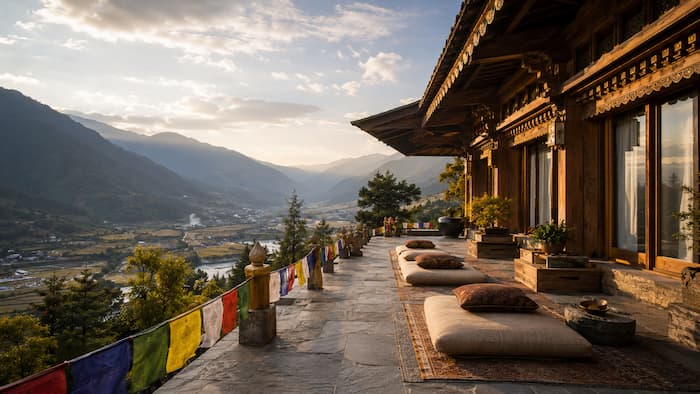
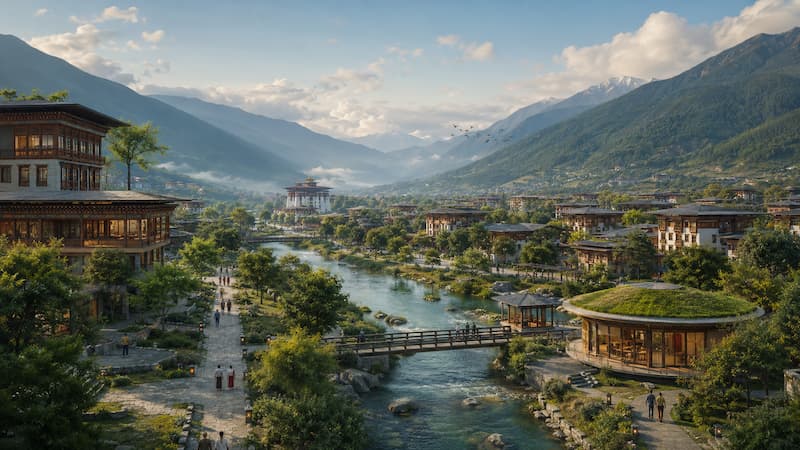
The Himalayas, Buddhist monasteries, prayer flags, traditional villages, forested valleys and deeply rooted cultural life are not just visual attractions. They form a travel experience that asks visitors to slow down, listen and understand.
For Korean travelers who are tired of crowded itineraries and repetitive destinations, Bhutan can offer something rare: a journey that feels less like consumption and more like reflection.
This potential shaped the discussion between Bhutanese representatives and The Travel News during SITF 2026 in Seoul. The exchange was not limited to a single article or a simple promotional story. It moved toward a broader issue: how Bhutan can be introduced to Korea in a way that respects Bhutan’s identity while also understanding the reality of the Korean travel market.
That reality is complex.
Korea is now one of Asia’s most dynamic outbound markets. Travelers are highly connected, trends move quickly, and traditional travel agency channels no longer control the full journey from inspiration to booking. Search, media exposure, digital storytelling, specialist communities, newsletters and direct consumer communication all shape travel decisions.
For a destination such as Bhutan, this means Korea cannot be approached only with a brochure, a booth or a one-time roadshow. Bhutan needs a narrative. It needs market education. It needs carefully built trust with both the travel trade and the consumer audience.
The opportunity is strong precisely because Bhutan should not become an ordinary mass-market product.
Bhutan’s value lies in selectivity. It is a destination for travelers who are prepared to spend more time, more attention and more emotional commitment on a journey. That makes it especially relevant for premium small-group travel, spiritual travel, wellness programs, cultural immersion, senior travel, photography journeys and special-interest itineraries.
In the Korean market, these segments are growing. Many travelers in their 40s, 50s, 60s and beyond are looking for something different from conventional sightseeing. They have traveled widely. They have seen major cities and famous landmarks. What they now seek is not only where to go, but why to go.
Bhutan has a powerful answer to that question.
It can speak to Koreans interested in Buddhist culture and meditation. It can appeal to travelers seeking nature, silence and recovery. It can attract mature travelers who value dignity, safety and depth. It can also connect with younger independent travelers who are drawn to destinations with philosophy, authenticity and a clear sense of place.
But this appeal must be explained carefully.
Bhutan should not be presented to Korea as simply “beautiful.” Many places are beautiful. Nor should it be introduced only as “mysterious.” That word is too distant and too vague. Bhutan’s real strength is more precise. It offers a living culture where spirituality, landscape and daily life remain connected.
That is the story Korea needs to hear.
The Travel News sees Bhutan not merely as a new destination to cover, but as a long-term market story. For Korea’s travel industry, Bhutan may become one of the most distinctive premium destinations if the right communication strategy is built from the beginning.
This strategy should combine destination journalism, Korean-language storytelling, trade engagement, consumer education and carefully selected travel product development. Articles alone are not enough. Travel products alone are not enough. Bhutan needs a bridge between its identity and Korea’s changing travel demand.
That bridge must be built with patience.
In practical terms, cooperation could develop through destination features, interviews, newsletters, Korean travel trade briefings, specialist product planning, media familiarization trips and direct communication with high-value travel audiences. The focus should not be volume first. It should be understanding first.
This is especially important because Bhutan is not a destination that can be fully understood through price tables and daily schedules. A Bhutan journey requires context. Korean travelers need to know what they are entering, how to travel respectfully, what makes the country different, and why the experience may remain with them long after they return home.
For Bhutan, Korea can be more than a source market. It can become a thoughtful partner market — one that appreciates culture, education, spirituality, wellness and carefully designed travel experiences.
For Korea, Bhutan can be more than a new destination. It can become a reminder that travel still has the power to change the rhythm of a person’s life.
At SITF 2026, the connection between Bhutan and Korea began quietly. But quiet beginnings often matter more than loud campaigns.
Bhutan does not need to be pushed loudly into the Korean market. It needs to be introduced with care, context and respect.
If that process is built properly, Bhutan may become one of the most distinctive premium destinations for Korean travelers — not because it is easy to sell, but because it is worth understanding.