이가온 기자 ㅣ 여행레저신문
Fort St Angelo is not a place that needs dramatic language to feel important. The harbour does much of the work. From its walls, Grand Harbour opens below in a sweep of blue water, stone cities and marina life, while Valletta rises across the water with the confidence of a capital built from strategy as much as beauty.
To stand here is to understand why Malta was never just another island. The harbour is deep, protected and visually commanding, and the fort sits in a position that turns geography into authority. What now appears as one of the Mediterranean’s most photogenic views was once a line of defence, a place from which the movement of ships could mean trade, threat, alliance or war.
Fort St Angelo is deeply associated with the Knights of St John, whose presence transformed Malta into a fortified island of unusual intensity. The Knights did not simply occupy buildings. They shaped the harbour, the city and the idea of Malta as a bastion between continents, faiths and empires. Their military culture remains visible not only in the great walls but also in the smaller, more intimate objects that survive in armouries and museums.
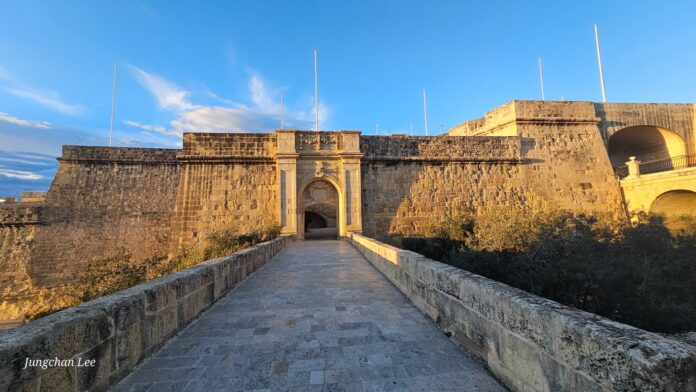
The approach to the fort is already part of the experience. Stone passages slow the body down. Gates, bends and shadowed surfaces remind visitors that access was never neutral in a fortress. Today the path is comfortable, even elegant, but its original logic is still there. It was designed to control movement, to delay, to expose and to protect.
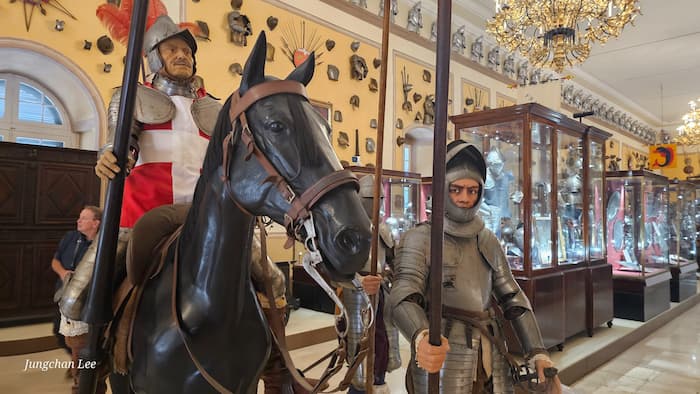
Inside the armoury, the story narrows from architecture to the human body. Helmets, breastplates, swords, lances and horse armour make the military past less abstract. The first impression is craftsmanship. Metal has been shaped with precision, polished by care and arranged with museum discipline. Yet behind the beauty is a more difficult truth. Armour was not decoration. It was a technology of fear, protection and survival.
This is where Malta’s military heritage becomes especially effective. It does not ask visitors to admire war uncritically, but it does not hide the visual power of its objects either. The armour is impressive because it is beautiful and unsettling at the same time. It speaks of rank, ritual and skill, but also of the vulnerability of the bodies that wore it.
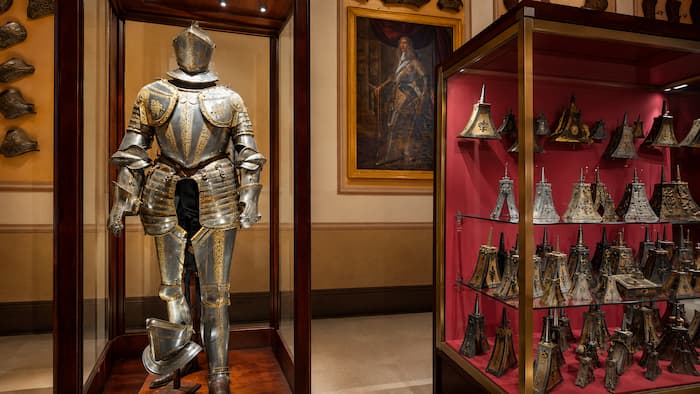
Seen together, Fort St Angelo and the armoury give the Knights of St John a physical presence. They are no longer only a chapter in European or Mediterranean history. They become stone underfoot, metal behind glass, wind across a harbour and the slow movement of a visitor through a fortified city. The past is not distant here. It remains embedded in the way the island is walked.
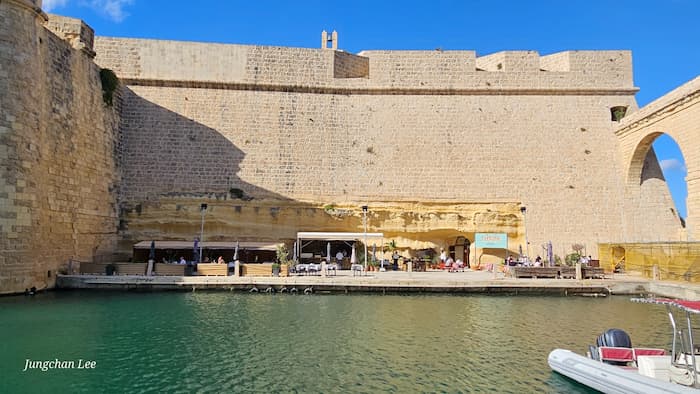
What makes the Maltese experience unusually complete is the way the fortress opens back onto the harbour. After the enclosed tension of gates and armour, the view returns to water. Grand Harbour is dazzling, but it is not light in meaning. It was a military harbour, a strategic prize and a point of vulnerability. Today it is also a place of yachts, promenades, restaurants and everyday life.
That layering is essential. Malta has not turned its fortress heritage into a frozen stage set. The old military landscape remains part of a living harbour. Boats move through the same water that once carried fleets. Diners sit near walls that once watched for enemies. Visitors photograph the stone not as a dead ruin, but as part of a city still in use.
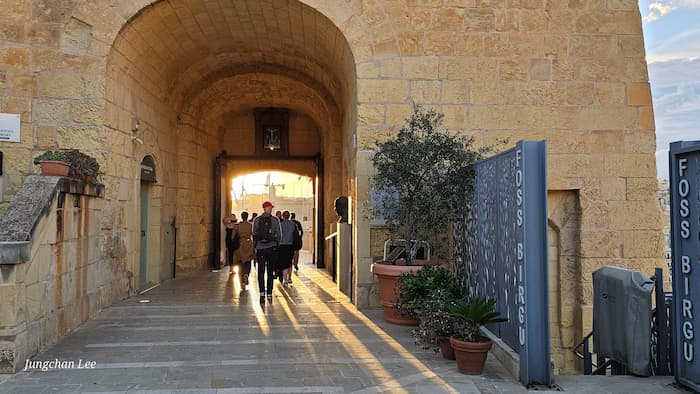
The Military FAM itinerary understood this rhythm well. It did not leave the traveller inside history until fatigue took over. After the fort and armoury, the journey moved naturally toward the waterfront, where a meal could gather the day’s impressions into a more human register. This was not a distraction from the military theme. In Malta, the harbour table belongs to the same geography as the fortress.
Food, wine and conversation changed the weight of the day without diminishing it. From the restaurant, the stone walls remained nearby. The sea remained visible. The experience of looking at armour and bastions was followed by the experience of sitting beside the harbour they were built to protect. That sequence is what turns a site visit into a travel story.
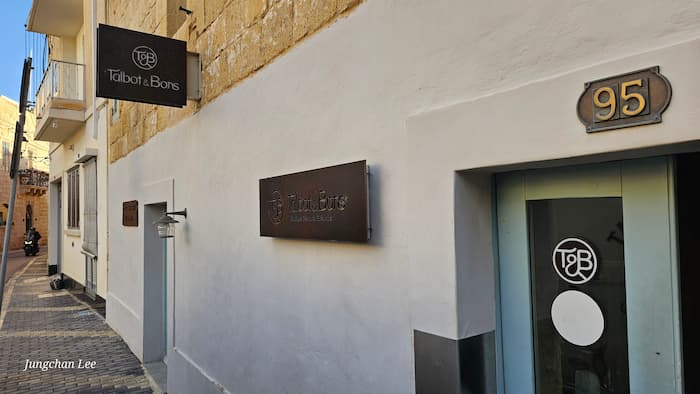
For the Korean market, this combination has real strength. Many travellers are interested in history, but not all want an itinerary that feels like a classroom. Malta offers depth without removing pleasure. A visitor can move from knightly armour to blue water, from fortress passages to seafood or wine, from strategic history to a boutique hotel with local character.
Fort St Angelo also shows why military heritage should not be reduced to military tourism alone. The best version of this journey is cultural, architectural, culinary and emotional at once. It asks why the island mattered, how it defended itself and how it has chosen to preserve the structures and objects that remain.
The Knights of St John no longer command this harbour, but their world has not disappeared. It survives in the geometry of walls, the weight of armour, the names of places and the way Grand Harbour still gathers stone, sea and memory into a single view. Malta’s achievement is that it allows visitors to enter that world without sealing them inside the past.
At Fort St Angelo, war has become architecture, architecture has become heritage, and heritage has become travel. The result is not a softened version of history, but a more generous one, where strength, beauty and hospitality sit within the same harbour light.
여행레저신문 Copyrights ⓒ The Travel News. 무단전재 및 재배포 금지.