
이만재 기자 ㅣ 여행레저신문
“Warsaw is the capital of Poland. But when it comes to the Korean community, I can say that Wrocław is the capital.”
That was how Alfred Wagner, Deputy Division Director of the City Promotion and Tourism Division at the Municipality of Wrocław, began his conversation with The Travel News at the Seoul International Travel Fair 2026.
It was an unusually warm beginning for a destination interview. Many tourism officials start with monuments, museums, hotels, UNESCO heritage sites or airport access. Wagner began with people. More precisely, he began with Korean people living in Wrocław.
For a city official representing one of Poland’s most historic and attractive destinations, that choice of opening was telling. It showed that Wrocław does not see Korea merely as another distant outbound market. Korea is already part of the city’s daily life.
“Korea is very important for us,” Wagner said. “We have a very good relationship with the Korean market, and in Wrocław there is a strong Korean community, especially connected with Korean companies such as LG. Many Korean families live in our city.”
Wrocław is not Poland’s political capital. That title belongs, of course, to Warsaw. Nor is it yet as familiar to many Korean travellers as Kraków, long established on Central European itineraries. But Wagner’s message at SITF 2026 was clear: for Korean companies, Korean families and, increasingly, Korean travellers, Wrocław is becoming one of the most meaningful cities in Poland.
A city shaped by many histories
Located in Lower Silesia in southwestern Poland, close to both Germany and the Czech Republic, Wrocław is a city shaped by more than a thousand years of layered history. Its identity cannot be explained by one nation, one language or one period. Over the centuries, the city has belonged to different political and cultural worlds. It has been Polish, Bohemian, Habsburg, Prussian and German, before becoming Polish again after the Second World War.
That history gives Wrocław a rare depth. It is not a city frozen in one version of the past. It is a city that has been rebuilt, reimagined and repopulated.
After the Second World War, the city underwent one of the most dramatic demographic changes in Europe. Many German residents left, and people from different regions, including today’s Ukraine and Belarus as well as other parts of Poland, came to Wrocław and built a new civic life on top of an old urban history.
Wagner sees this as one of the reasons Wrocław is so open to foreigners today.
“In Wrocław, it is almost impossible to say that your family has been here for hundreds of years,” he explained. “My generation is perhaps the third generation in the city. Everyone came from somewhere. That makes Wrocław very open. People from abroad can feel accepted here.”
This openness is not an abstract slogan. It is one of the city’s strongest travel assets. Wrocław feels European, historic and elegant, but it also feels young, flexible and welcoming. It is home to a large student population, a strong start-up culture and a growing international community. Korean residents, Wagner said, are very much part of that story.
For Korean travellers, this matters. A destination is not only a collection of beautiful buildings. It is also the feeling of being welcomed. In that sense, Wrocław has a special advantage: it already knows Korea, and it speaks about Korea with genuine affection.
Water, bridges and a city made for walking
The city itself is easy to love.
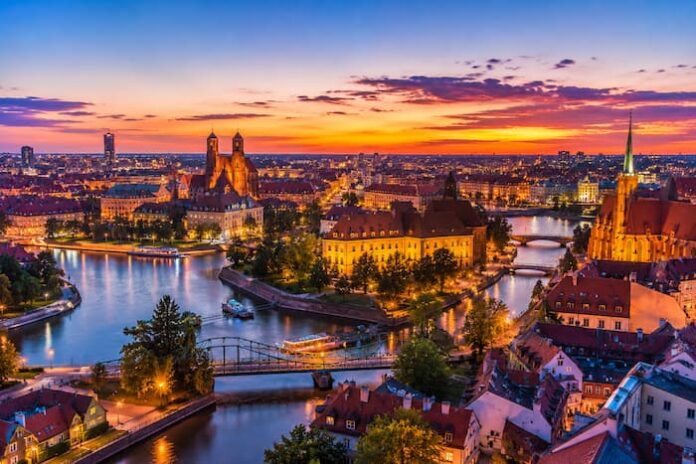
Wrocław is often called the “Venice of the North,” and the phrase is not just a tourist cliché. The Odra River flows through the city, joined by several smaller waterways. More than 130 bridges connect its islands, streets and neighbourhoods. Water is not a distant landscape here. It is part of the daily rhythm of the city.
Visitors can walk along the river, dine at waterfront restaurants, take a kayak, ride a bicycle or move easily by tram. The city has the kind of scale that travellers appreciate: large enough to be lively and rich in culture, yet compact enough to explore without stress.
“The city is very comfortable for tourists,” Wagner said. “You can walk, take a tram, take a bus, and in a short time you can see many important places.”
Those places include the Market Square, the historic Old Town, Cathedral Island, the UNESCO-listed Centennial Hall, the zoo, the aquapark and Hydropolis, a modern knowledge centre devoted to water. Together, they create a destination that works well for couples, families, educational groups, senior travellers and incentive groups.
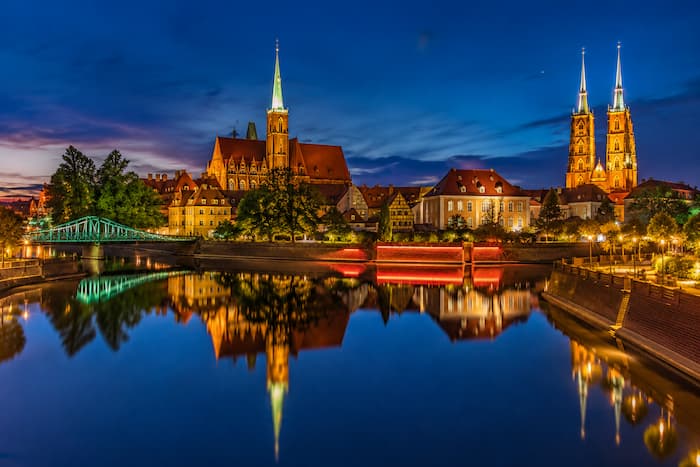
Cathedral Island is one of the places that captures the soul of Wrocław. In the evening, when the lights come on and the old streets become quiet, the city seems to slow down. Bridges, church towers, the river and passing trams form a scene that feels both deeply European and quietly intimate.
The small dwarves with a big story
Yet one of Wrocław’s most beloved symbols is not grand at all. It is small, playful and unexpectedly meaningful.
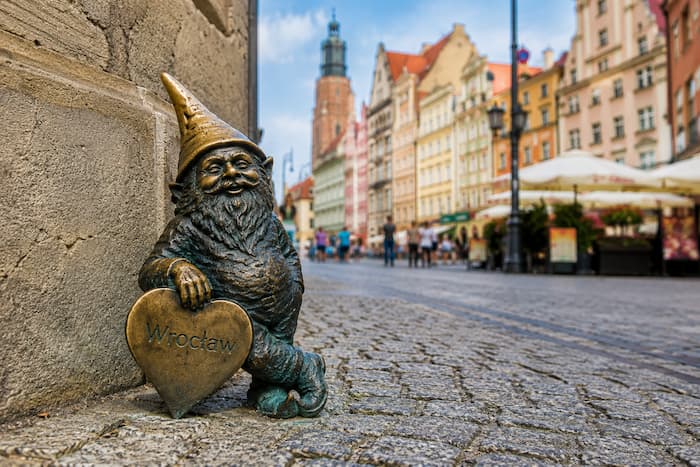
Across the city, visitors find hundreds of little dwarf statues. Wagner introduced them as one of Wrocław’s most attractive experiences for families and children. Travellers can follow maps, search for the dwarves, take photographs and turn the whole city into a kind of open-air treasure hunt.
But the dwarves are not merely cute tourist figures. They are connected to the city’s spirit of humour and peaceful resistance.
Wrocław’s dwarves recall a time when people responded to political pressure not only with anger, but also with wit, irony and imagination. Humour became a form of freedom. For visitors, the dwarves are fun. For the city, they are also a quiet symbol of dignity and civic courage.
“You do not always have to fight with aggression,” Wagner said. “You can also fight with humour, with distance, with a sense of fun.”
That sentence says a great deal about Wrocław. This is a city that has known difficult history, but it does not present itself through sorrow alone. It has learned how to transform memory into warmth, and history into hospitality.
Food, accessibility and the next travel trends
Food is another area where Wrocław is now building international recognition. Wagner spoke with particular enthusiasm about gastronomy, describing it as one of the city’s most important tourism strategies.
Food tourism is no longer a small niche. For many modern travellers, where to eat is as important as what to see. Wrocław is responding to that trend with confidence. Michelin-recognised restaurants, riverside dining, local flavours, creative European cuisine and a growing café culture are helping the city become a destination that travellers can enjoy with all senses.
For Korean travellers, this point is especially important. Good food often defines the success of a trip. A beautiful itinerary can be weakened by ordinary meals, while a memorable dinner can turn a city into a favourite destination. Wrocław’s growing culinary scene gives Korean travel companies another strong reason to look beyond the standard Poland itinerary.
Wagner also highlighted a theme that is becoming increasingly important in global tourism: accessibility and silver tourism.
Wrocław is working to become more welcoming for older travellers and people with disabilities. Hotels, attractions and information systems are being encouraged to meet better standards. The city is also preparing tools to help visitors understand what is available and how to plan their trip with confidence.
“The dignity of the human being is very important for us,” Wagner said.
It was one of the most impressive moments of the interview. Tourism, in his view, is not only about promotion. It is also about making sure that people can travel with comfort, confidence and respect.
This idea will resonate strongly in Korea. Korean society is ageing quickly, and senior travel is becoming an increasingly important part of the market. A city that prepares for older travellers is not only helping one group of visitors. It is making travel better for everyone.
 Beyond Warsaw and Kraków
Wrocław’s potential also extends far beyond the city centre. Within one to one and a half hours from Wrocław, travellers can find castles, palaces, mines, gentle mountain landscapes and historic sites. Some castles and palaces even offer overnight stays, giving visitors the chance to sleep inside a real European heritage property.
This makes Wrocław more than a one-night stop. It can be the base for a deeper Lower Silesia journey. A Korean itinerary could combine the Old Town, Cathedral Island, riverside dining, dwarf hunting, Michelin restaurants, castle stays, gold mine experiences and soft nature excursions. For families, seniors, luxury travellers, FIT visitors and incentive groups, the possibilities are wide.
Wagner said that a stay of seven or even eight days could easily be filled with meaningful experiences in and around Wrocław.
That is exactly why he wants to work more closely with Korean travel companies.
Many Korea outbound packages to Poland still focus mainly on Warsaw and Kraków. Those cities are important, of course. But Wrocław can add a different layer to the Poland experience. It offers a warmer, more relaxed and more human side of Central Europe — one that combines history, food, creativity, family-friendly experiences and a real Korean connection.
“We want to cooperate with Korean travel agencies,” Wagner said. “We would like them to include Wrocław in their Poland itineraries.”
He added that Wrocław can work with travel companies according to their specific customer needs. A family-focused company may build a programme around dwarves, Hydropolis, the zoo and easy city mobility. A culinary-focused company may connect Michelin restaurants, local food and riverside dining. A company specialising in MICE or corporate incentive travel may use Wrocław’s business environment, accessibility and cultural venues. Luxury, heritage and silver tourism products can also be designed in different ways.
This flexibility is important. Wrocław is not asking Korea simply to “visit.” It is inviting Korean travel professionals to create products together.
As the first interview for SITF 2026 Online Daily, Wrocław made a memorable impression. The city did not introduce itself with exaggeration. It introduced itself with sincerity. It spoke first about Korean people. It spoke about shared community, cooperation and trust. Then it opened the door to its rivers, bridges, old streets, dwarves, food, castles and welcoming spirit.
If Warsaw is Poland’s political capital and Kraków its most familiar historic jewel, Wrocław may well be the next chapter Korean travellers should discover.
It is a city of water and bridges, humour and memory, Michelin tables and family walks, castle journeys and warm encounters. Above all, it is a city that already feels close to Korea.
At SITF 2026, Alfred Wagner did not simply promote Wrocław. He offered Korea an invitation — sincere, thoughtful and full of promise.
여행레저신문 Copyrights ⓒ The Travel News. 무단전재 및 재배포 금지.