
김미래 기자 ㅣ 여행레저신문
Korea does not need fewer roadshows. It needs better ones.
More precisely, Korea needs roadshows that understand the market they are entering. A familiar format does not become effective simply because it is repeated every year.
The second week of June made that clear. Around the Seoul International Travel Fair, overseas tourism boards, regional destinations, hotels, DMCs and travel suppliers arrived in Korea with a familiar objective: meet the market, present new products, reconnect with partners and build business.
Some joined SITF. Others hosted separate roadshows in Seoul and Busan. The timing was understandable. When international sellers are already in Korea for a major travel fair, adding trade meetings looks efficient. It reduces travel cost, concentrates market activity and gives sellers a chance to reach both industry partners and consumers in one visit.
The logic is sound. The execution, however, now requires a different standard.
Korea’s outbound travel market has changed more deeply than many overseas sellers appear to recognize. The traditional travel agency network is thinner. Product planners are fewer and more selective. Land operators remain important, but their role is no longer as broad as it once was. FIT travelers have become the dominant force in market behavior. Search, content, social media and direct booking platforms now shape destination demand long before many consumers speak to a travel agency.
In that environment, a roadshow cannot be judged by how many people sat in the room. It must be judged by whether the right people were there, whether they were properly prepared before the meeting, and whether meaningful work followed after the event.
A Full Room Is Not Always a Qualified Room
Recent roadshow programs in Korea illustrated the problem.
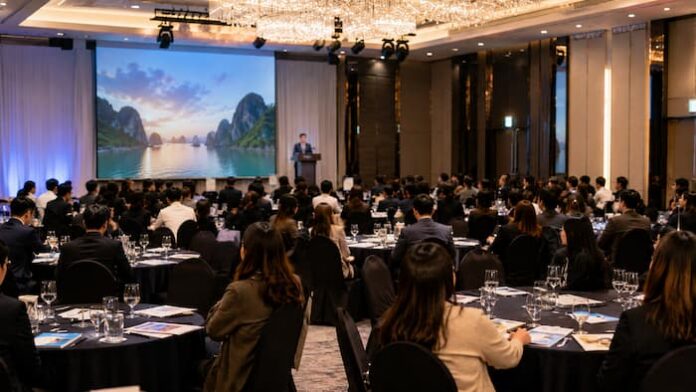
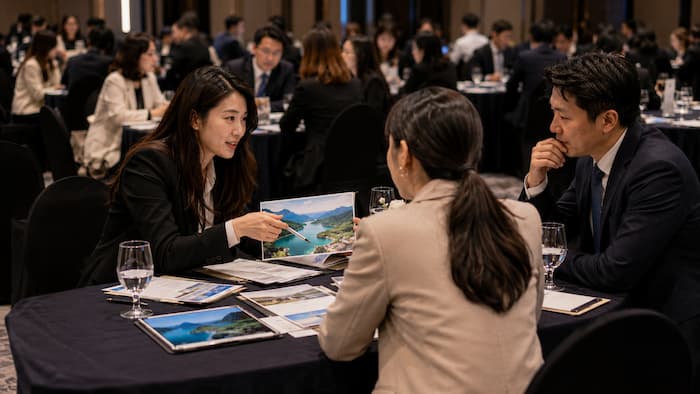
According to sellers who participated in related events, one Busan roadshow drew roughly 40 attendees, while a Seoul program attracted about 80. These numbers, taken alone, do not suggest failure. For destination marketing, however, the number of attendees is only the beginning of the question.
The more important issue is composition.
In Busan, only about half of the attendees were believed to be travel agency representatives. In Seoul, the proportion was also estimated at roughly half. Some participants were not directly responsible for selling the destination being presented. Others appeared to have limited commercial connection to the region or product category.
For international sellers who travel thousands of miles to meet Korean buyers, this distinction is critical. A roadshow is not a networking reception. It is not a ceremonial gathering. It is supposed to be a business platform.
If the room includes people who cannot package, sell, promote, distribute or influence the destination, the roadshow becomes weaker, even if the venue looks busy. A full room may help the event photo. It does not necessarily help the market.
For sellers, the most expensive seat in the room is not an empty one. It is a seat occupied by someone who cannot move the business.
The real question is no longer how many came. The real question is who came, why they came and what happened after they left.
The Old Roadshow Model Was Built for a Different Korea
For many years, roadshows worked in Korea because the outbound market was organized around travel agencies.
Package tours were strong. Destination product managers carried weight. Wholesalers and land operators formed clear distribution channels. Airlines, agencies and local suppliers could be connected through familiar trade relationships. A tourism board could host a presentation, invite key agencies, arrange seller-buyer meetings and expect at least some product conversation to follow.
The old model was not wrong. It belonged to an older market.
That structure has weakened.
The pandemic accelerated consolidation across the Korean travel industry. Many small and mid-sized agencies disappeared or reduced their operations. Remaining companies became leaner. Product managers now often cover more destinations with fewer resources. They have less time to study unfamiliar regions and less tolerance for destinations without a clear commercial path.
This has changed the economics of attention.
A new destination, a secondary region, a long-haul niche product or an unfamiliar hotel brand cannot assume that Korean agencies will automatically make time. They must give agencies a reason. They must show access, demand potential, margins, seasonality, target segments and workable itineraries. Without that, the meeting may be polite, but it will not become business.
Travel agencies still matter in Korea. They remain essential for groups, long-haul packages, senior travel, MICE, incentive programs, special-interest products and destinations that require operational support. But they are no longer the only gatekeepers of Korean outbound demand.
What is risky today is not the roadshow itself, but the assumption that Korea’s trade structure is still waiting in the same place, with the same buyers, the same product planners and the same distribution power.
Any roadshow strategy that ignores this shift is already outdated.
FIT Has Changed the First Point of Contact
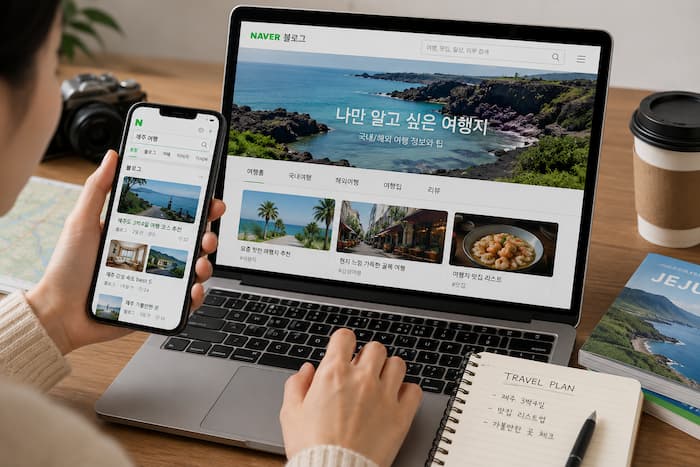
The Korean traveler increasingly begins with search.
Before visiting an agency, many consumers compare airfares, check hotel rates, read blogs, watch videos, save Instagram posts, review maps, scan online communities and build their own itineraries. For many destinations, the first meaningful contact with the Korean market is no longer a travel agent’s recommendation. It is a search result.
For many Korean travelers, the first sales call is now a search query.
That changes the role of a roadshow.
A roadshow can introduce a destination to trade partners. It can help sellers understand the market. It can create relationships. It can support product development. But it cannot, by itself, create consumer demand in a FIT-led market.
If Korean travelers search for a destination and find little practical Korean-language information, the market will not move. If access is unclear, itineraries are thin, seasonal angles are weak, images are poor, and local stories are not localized, a roadshow will have limited impact. The event may end well. The destination may still remain invisible.
If a destination is not searchable in Korean, it is not seriously present in the Korean market.
In today’s Korea, trade activity and content visibility must work together.
A destination that wants Korean travelers must be searchable, readable and usable in Korean. It must provide practical routes, sample itineraries, transportation details, food stories, seasonal reasons to go, price context, maps, images and credible local information. Without that foundation, neither travel agencies nor FIT travelers can build confidence.
Visibility Must Live Beyond the Event Room
A destination’s Korean campaign should not end when the presentation closes. It should leave something behind.
That means Korean-language destination content, practical travel guides, sample itineraries, seasonal angles, food and culture stories, media coverage, newsletter items, image assets, product notes and trade updates. These materials are not decoration. They are part of market infrastructure.
For overseas sellers, this requires a change in thinking. A roadshow is not only a meeting. It is also a content trigger. If a tourism board, hotel or DMC comes to Korea and leaves without creating new Korean-market material, the visit loses much of its long-term value.
Korean travelers are active information seekers. They do not wait passively for a destination to be sold to them. They search, compare, save and share. A destination that cannot be found after the event will struggle to convert interest into travel.
The room matters. But what remains after the room is just as important.
B2B Requires Discipline, Not Ceremony
If the objective is B2B, the audience must be curated with discipline.
A room of 30 serious participants is more valuable than a room of 100 loosely relevant attendees. The right audience includes agencies that can sell the destination, product planners with authority, wholesalers with distribution power, land operators with regional expertise, airline partners with route relevance, and specialist media or content partners who can shape market understanding.
The event must also have a clear business purpose.
Is the destination trying to launch a new itinerary? Build winter demand? Develop premium travel? Support regional dispersion? Promote a new route? Reach FIT travelers? Find MICE partners? Reconnect with Korea after several years of limited activity?
Without a defined objective, a roadshow becomes ceremonial. A presentation is made. A dinner is served. Business cards are exchanged. Photographs are taken. The destination appears to have done Korea.
A roadshow without a defined business objective is not strategy. It is hospitality.
Korea is too competitive, too digital and too fast-moving for ceremonial marketing.
For Consumers, the Roadshow Should Return to the Road
If the objective is consumer awareness, the format should not simply be a hotel ballroom with a different guest list. It should be a different kind of event.
A consumer roadshow should be understood more literally. It can be a destination experience placed where people actually are: along Cheonggyecheon Stream, at Seoul Plaza, near Gwanghwamun, in a university district, in front of a major shopping mall, or in another public space where travelers can stop, ask questions and engage directly.
This is not the same as an exhibition booth. It is not a formal B2B appointment program. It is a public-facing destination encounter.
A tourism board or destination can set up a small pavilion, offer food tastings, distribute practical travel information, run prize events, use QR codes to connect visitors to itineraries, show strong destination images, invite local performers and speak directly with people who may become future travelers.
That is a different meaning of roadshow. It is not a trade roadshow. It is a road show.
In a market where travelers increasingly bypass traditional channels, destinations may need to stop waiting for consumers to enter the industry room and start meeting them in the city.
As Korean travel becomes more independent and FIT-oriented, destinations should consider meeting consumers where travel decisions are actually formed. A closed hotel room may still serve selected trade meetings. SITF can still provide useful consumer exposure. But if the target is the Korean traveler, the destination may also need to step outside the room and meet the public directly.
Pre-Event Communication Is Part of the Event
Many overseas sellers still treat arrival in Korea as the start of marketing. That is a mistake.
The market must be prepared before the seller arrives.
Tourism boards, hotels, DMCs and regional destinations should communicate in advance. Korean partners should know who is coming, what is being introduced, which segments are being targeted and what kind of cooperation is being sought. Trade media should receive background material before the event, not after it. Travel agencies should understand the commercial reason to attend. Content partners should know what stories, images and itineraries are available.
For lesser-known destinations, this is not optional. It is essential.
A famous destination can rely partly on name recognition. A secondary region cannot. A new product cannot. A destination with weak Korean-language visibility cannot. It must explain itself before the meeting begins.
Access, seasonality, target audience, recommended length of stay, product potential, hotel inventory, local partners and pricing level should be communicated clearly. Otherwise, the first meeting becomes an introduction when it should have been a business conversation.
A roadshow does not begin when the microphone is turned on. It begins when the market first hears that the seller is coming.
If the first serious introduction happens inside the ballroom, the seller has already lost valuable time.
Follow-Up Is the Core of Market Development
The weakest part of many Korea roadshows is not the presentation. It is the silence that follows.
Follow-up is not a courtesy. It is the core of market development.
Overseas sellers who participate in SITF or host roadshows must follow up quickly and professionally. They should send materials, provide rates where appropriate, share images and maps, offer Korean-language information, answer product questions, connect agencies with local partners, support itinerary development and maintain communication with media and content partners.
Tourism boards should track outcomes with the same seriousness they use to organize the event.
Which agencies showed real interest? Which products are being discussed? Which partners requested more information? Which media stories were published? What Korean-language content is still missing? Which consumer questions appeared repeatedly? What should be done before the next market visit?
Without follow-up, a roadshow is an appearance. With follow-up, it becomes a market process.
A destination cannot build Korea by visiting once a year, exchanging name cards and returning home. That is not market development. It is market attendance.
Korea rewards continuity. It rewards suppliers who answer quickly, localize information, support trade partners, provide content and remain visible after the event.
The market does not respond to presence alone. It responds to sustained work.
Korea Is Not a Once-a-Year Market
Korea remains one of Asia’s most dynamic outbound travel markets. Korean travelers are active, digitally engaged, curious and increasingly independent. They are willing to explore new destinations when the information is clear, accessible and persuasive.
But Korea does not reward one-time appearances.
A booth at SITF, a hotel roadshow in Seoul, a dinner in Busan and a stack of business cards may be useful starting points. They are not a strategy.
The Korean market rewards consistency. It rewards partners who stay in touch, provide usable information, support media coverage, help product development and understand the changing behavior of Korean travelers.
For overseas sellers, the central question is no longer simply whether they came to Korea. The better question is what they prepared before arrival, whom they actually met while here, and what they did after leaving.
That is where market value is created.
Korea Needs Better Roadshows, Not Fewer Roadshows
The recent roadshow week did not show that Korea is a weak market. It showed that Korea is a changed market.
Roadshows still matter. SITF still matters. Travel agencies still matter. But the formula must change.
For B2B programs, the audience must be commercially relevant. For consumer engagement, the format must meet travelers directly. For FIT growth, information must be practical, searchable and localized. For Korea, follow-up must be continuous.
The sellers who succeed in Korea will not be those who simply appear on the annual calendar. They will be those who prepare before arrival, meet the right partners while here and keep working after departure.
That is now the standard for serious destination marketing in Korea.
여행레저신문 Copyrights ⓒ The Travel News. 무단전재 및 재배포 금지.