
강정호 기자 ㅣ 여행레저신문
History does not always turn on the largest continents or the mightiest capitals. Sometimes it turns on a small point on the map, a place so modest in size that it can be overlooked at first glance, yet so critical in position that empires could never afford to ignore it. Gibraltar was one of those places. Suez was another. Malta belongs to the same family of geography. It is not large, not lush, and not rich in resources, but it sits where routes converge and where power once moved by sail, cannon, convoy, and command.
To find Malta on a map of the Mediterranean, the eye has to slow down. South of Sicily, north of Africa, between the eastern and western Mediterranean, a small archipelago rises from the sea. At first the traveler sees beauty: honey-colored limestone, fortified harbors, church domes, narrow streets, and water that changes shade with the light. Yet history has remembered Malta by sterner names. It has been a fortress, a naval outpost, a shield, and in the language of the twentieth century, an unsinkable aircraft carrier in the middle of the Mediterranean.
The question is simple. Why did so many powers want this island? The answer lies not in what Malta possessed, but in what passed by it. Malta was never merely a destination. It was a threshold. The sea roads linking Europe to North Africa, the western Mediterranean to the Levant, and eventually Britain to India all moved through waters that Malta could observe, shelter, and defend. To control Malta was not simply to control land. It was to command a vantage point over movement itself, and movement in world history has always meant more than travel. It has meant trade, taxation, religion, war, language, and power.
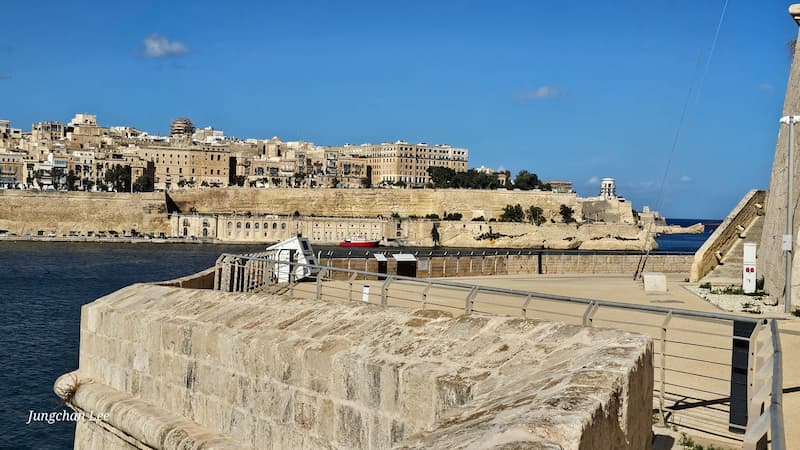
The Phoenicians understood this early. For them, the Mediterranean was a network of ports, winds, currents, markets, and opportunities. Rome, too, understood Malta’s value. The Roman world was built not only by legions, but by roads, harbors, grain routes, and maritime discipline. When Rome faded, Malta did not become irrelevant. Arab rule left one of the island’s deepest cultural marks, and the Maltese language remains one of Europe’s most unusual living bridges, Semitic in structure and layered with Romance influence. Malta looks toward Sicily and Italy, but it also carries the memory of North Africa and the eastern Mediterranean.
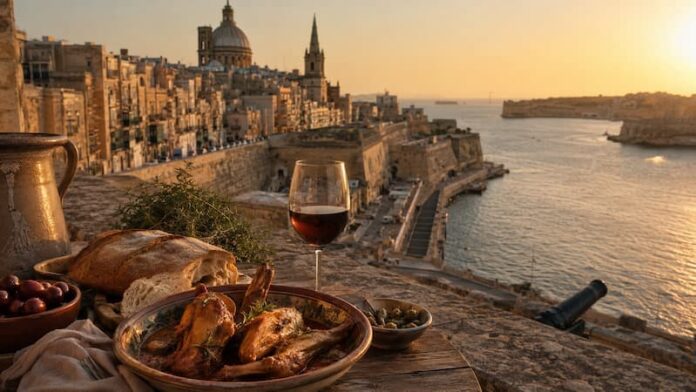
That layered identity can be seen in the architecture and heard in the language, but it can also be tasted at the table. Maltese food resists a single tidy label. It has the tomato and bread culture of the central Mediterranean, the practical habits of island life, traces of older crossings, and a warmth that treats food as something to be shared rather than displayed. A Maltese table is not just a collection of dishes. It is a compact archive of the island’s history.
In 1530, the Knights of the Order of St. John arrived in Malta and gave the island one of its defining historical chapters. Popular imagination remembers the knights through armor, swords, and fortresses, but their origins were medical and charitable. They began as a hospital order caring for pilgrims and the sick in the Holy Land. Over time, in a world where pilgrimage routes and strategic ports were exposed to violence, care and defense became inseparable. The caregivers became warriors because the road to mercy passed through danger.
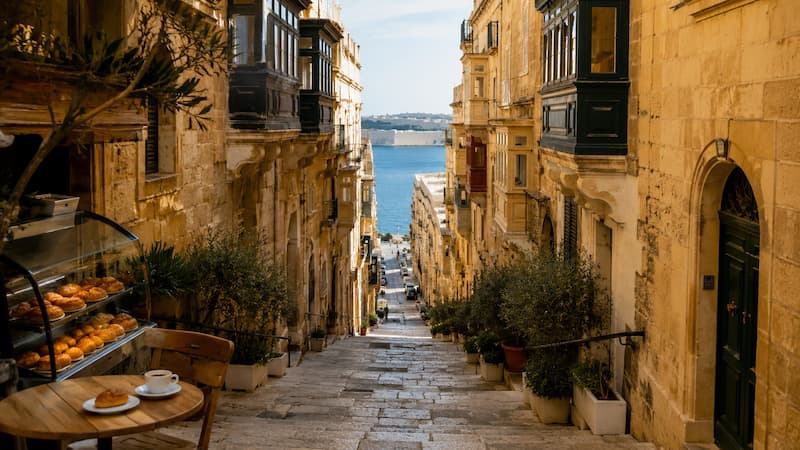
When the Order lost Rhodes, it needed a new base. Malta was dry, difficult, and hardly luxurious, but it was perfectly placed. The knights did not look at Malta as a remote island. They saw a strategic platform. Grand Harbour was one of the finest natural harbors in the Mediterranean, and from its shores one could monitor sea lanes that mattered. Standing by the fortifications today, the traveler sees water, light, and an unforgettable skyline. The knights saw angles of fire, supply lines, incoming sails, and the difference between survival and disaster.
That strategy was tested in 1565 when the Ottoman Empire laid siege to Malta. The Great Siege was not only a battle between two armies. It was a struggle over the future balance of the Mediterranean. The defenders were outnumbered, but walls, terrain, discipline, and determination transformed Malta into something larger than its size. The siege ended with the Ottoman withdrawal and entered European memory as one of the age’s great defensive struggles. Afterward, the knights built not simply a city, but a fortified vision of endurance. Valletta was born from the logic of defense, and its beauty remains inseparable from its discipline.
Yet the most compelling thing about Malta is that its history did not remain locked in stone. It came down into ordinary life. In the morning, the memory of empire can arrive as the smell of pastry. In Valletta, a small café or bakery counter may present the island more honestly than a monument. Pastizzi sit in warm golden layers, crisp pastry wrapped around ricotta or mushy peas, eaten quickly, cheaply, and lovingly. No royal banquet can explain a country as clearly as a food that everyone eats. Pastizzi tell the story of Malta not through grandeur, but through repetition, through daily life, and through the comfort of something familiar.
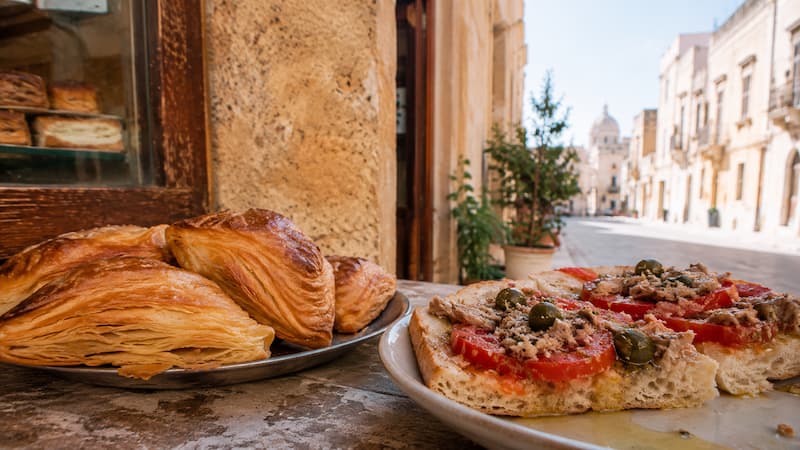
Ftira tells another part of the story. Rustic and deeply Mediterranean, it becomes a full meal with tomato, olive oil, tuna, capers, olives, and onion. It belongs to an older grammar of wheat, salt, oil, fish, and sun. Its flavor is not elaborate, but it is layered. The brightness of tomato, the salt of capers, the richness of olive oil, and the plain strength of bread combine in a way that feels older than the modern nation-state. To eat ftira overlooking a harbor is to understand that the Mediterranean was built not only by admirals and kings, but by bakers, fishermen, and families.
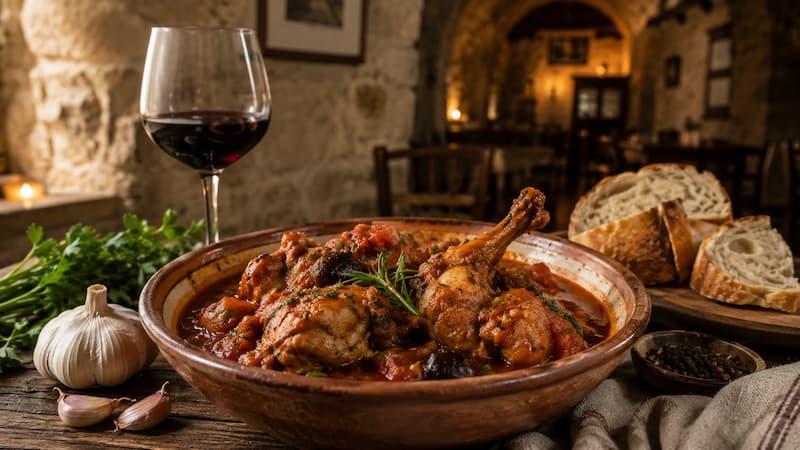
Then there is fenek, Malta’s most famous traditional dish. To a first-time visitor, it can be surprising. Why would an island nation be known not primarily for fish, but for rabbit stew? The answer opens a door into Malta’s lived history. The sea was always present, but it was not always equally generous or safe. Rabbit, by contrast, could be raised on land and suited the rhythms of family life. Over time, rabbit stew became more than food. It became an expression of community, practicality, and memory.
A good Maltese fenek is not a hurried dish. It is slow, aromatic, and built around patience. Rabbit is cooked with wine, garlic, tomatoes, herbs, and time. The sauce deepens, the meat softens, and bread becomes essential because the sauce is not an accessory. It is part of the meal’s soul. In a restaurant, fenek may arrive as a traditional specialty. In a Maltese family, it carries something more intimate: Sundays, celebrations, long conversations, and the memory of people gathering around a table before the modern world taught everyone to rush.
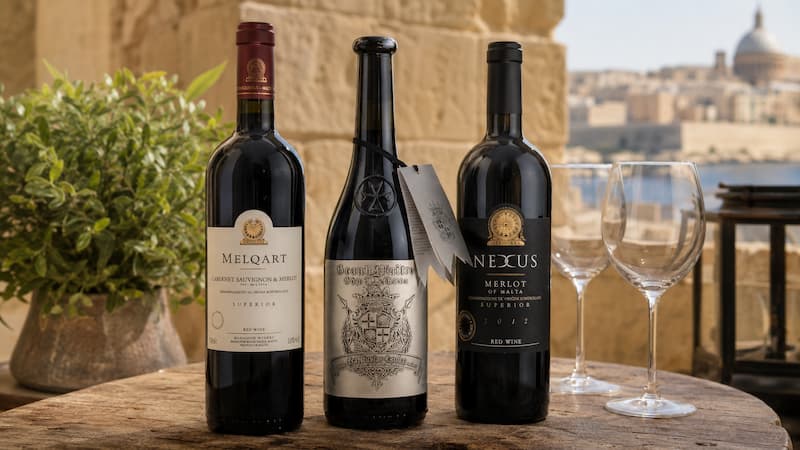
Maltese wine deserves its place at that table. The island’s limestone soil, intense sunlight, and sea winds give its wines a distinct personality. Malta will never be defined by vast production, and that may be part of its appeal. Its wines speak in a smaller register, closer to place than to scale. Bottles from producers such as Marsovin, Delicata, and Meridiana point to a wine culture shaped by local conditions and Mediterranean continuity. Wine here is not simply a drink. It is part of the older grammar of the region, tied to hospitality, trade, ritual, and conversation.
In 1798, Napoleon entered Malta on his way to Egypt. Even then, Malta was less an endpoint than a passage. For Napoleon, the island was a strategic stepping stone toward a larger campaign. The French occupation was brief, but it marked the end of the knights’ era and opened the way to British rule. Under Britain, Malta became one of the empire’s key naval bases. After the opening of the Suez Canal, its position became even more important. The line from Britain to the eastern Mediterranean and on to India required stations, discipline, and control, and Malta was one of the indispensable points in that imperial chain.
The Second World War brought Malta once again into the center of history. From 1940 to 1942, the island endured intense bombing by Axis forces. Its harbors, airfields, and people came under relentless pressure, yet Malta did not collapse. Its position made it vital to the Allied struggle in the Mediterranean and North Africa. The island helped support Allied operations and disrupt Axis supply lines. Its suffering and resilience became part of wartime memory.
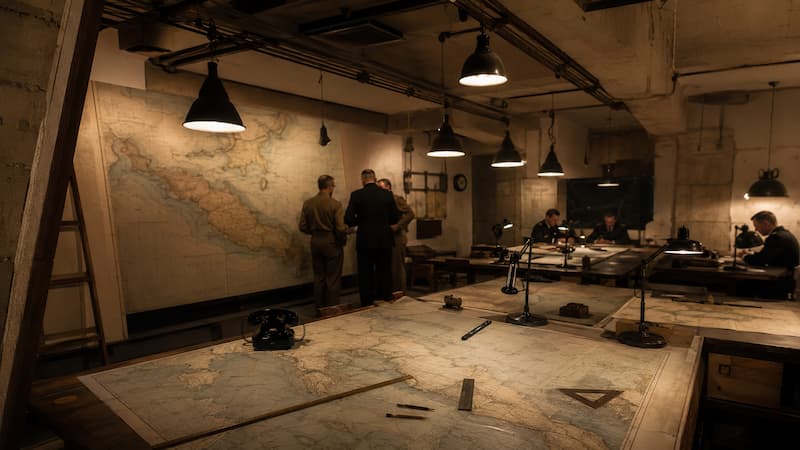
Places such as the Lascaris War Rooms help visitors understand that Malta’s wartime role was never symbolic alone. Decisions made in underground rooms affected convoys, aircraft, fleets, and lives. Maps, telephones, charts, and command tables tell another version of the island’s story, not golden limestone in the sun, but calculation, pressure, and endurance beneath the surface.
Today Malta is no longer a frontline fortress. Tourism, education, financial services, technology, and culture shape the modern country. Cruise ships and pleasure boats now share waters once watched for enemy fleets. Cafés fill streets that were designed for defense. Visitors photograph bastions that were built for survival. Yet Malta has not erased its past. It has folded it into the present, and that is why the island is best understood not only by walking its fortifications, but by sitting at its table.
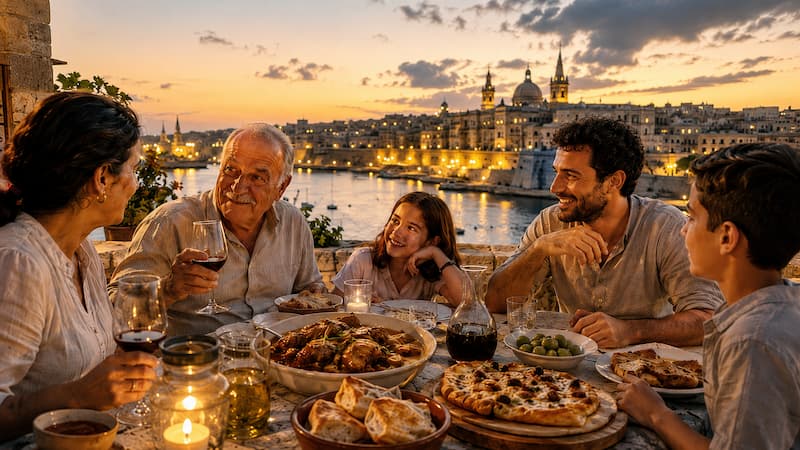 At dusk, when the limestone of Valletta turns warm and the harbor begins to glow, a Maltese meal can feel like a quiet gathering of centuries. Bread, olives, ftira, pastizzi, fenek, and wine appear on the table. Around them, the imagination fills the empty seats with Phoenician traders, Roman sailors, Arab farmers, knights, soldiers, wartime families, and the Maltese people of today. A fortress can tell us who fought. A table can tell us who remained.
Malta is small, but small places are not necessarily minor places. Sometimes the smallest island asks the largest question: what happens when geography, faith, trade, war, and daily life meet in one place for thousands of years? Malta’s answer is written in stone, but it is also served in pastry, bread, stew, and wine. History may be recorded on walls, but civilization survives at the table.
A Civilization in One Sentence
Malta was never merely an island. It was the Mediterranean’s strategic crossroads, and the memory of the empires that fought for it still lingers in its food, its wine, and its table.
여행레저신문 Copyrights ⓒ The Travel News. 무단전재 및 재배포 금지.