

이만재 기자 ㅣ 여행레저신문
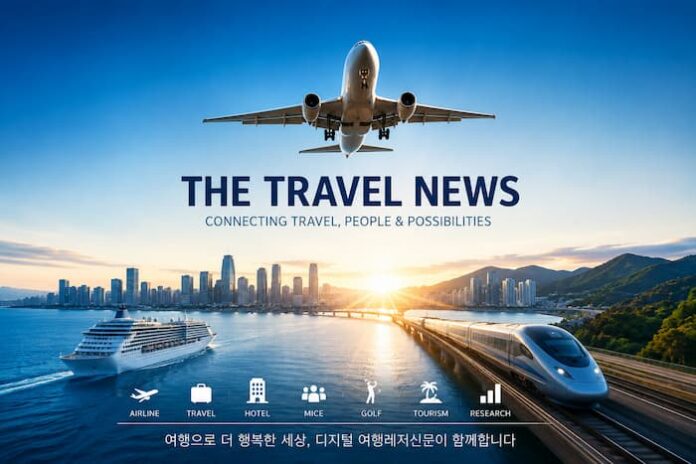
The Travel News is entering a new phase as a digital publication for the travel and leisure industry. Built around email distribution, its website, social platforms, visual content and research-based reporting, the publication is expanding into a broader digital platform covering travel, aviation, hotels, MICE, golf, leisure, tourism boards and regional tourism in a more integrated way.
The foundation for this step was laid long ago. In 1998, The Travel News began digital distribution for the travel industry at a time when email communication was far from standard practice. In an era when printed newspapers, faxed documents, phone calls and mail still dominated information flows, the publication recognized early that the future of industry communication would be digital. That early experience was not simply about sending newsletters. It was about learning what the travel business needed to know, what questions mattered to travel agencies, airlines, hotels, destination marketers, land operators and MICE professionals, and how the industry actually moved in the field.
This relaunch is not a cosmetic update. It is a structural shift. The Travel News aims to move beyond the role of a publication that merely passes along scattered industry updates. Its goal is to become a digital, specialized news platform that reads the travel and leisure business as one connected ecosystem. Through reporting, data analysis, research and field-based interpretation, it intends to help the industry understand what is changing, what deserves attention and what must be prepared for next.

Travel is a much wider industry than outbound tourism alone
For many years, Korean travel media tended to focus heavily on outbound travel. Tour products, airline seats, tourism-board promotions and travel-agency news formed the core of the agenda. Yet the travel industry is much larger than that. Travel includes aviation, hotels, airports, transport, tourism boards, local governments, MICE, exhibitions, golf, leisure, cruises, cargo, logistics and regional economies. It also intersects with food, shopping, culture, sports, festivals, city branding, data and marketing.
Tourism, too, cannot be reduced to visitor numbers alone. When a destination receives more travelers, the effects reach lodging, dining, transport, retail, performances, local experiences, regional commerce and jobs. When an airline route opens, the impact is not limited to the airport. Hotel demand, tour-product design, local government marketing and regional tourism opportunities move with it. The competition to attract MICE events is also not simply a question of convention halls. It depends on air access, hotel inventory, city image, tourism content and international promotion working together.
Despite the breadth of that ecosystem, few specialized platforms have read travel, tourism and leisure as one connected industry. General-interest media treat tourism as one issue among many. Traditional travel media often remain centered on industry announcements or outbound market information. Golf is read separately, hotels separately, aviation separately and MICE separately. The need for a publication that can show how these sectors overlap and influence one another has grown steadily clearer.

A platform built on field knowledge and industry experience
That is the space The Travel News now seeks to fill. When aviation fuel prices rise, it is not only airlines that feel the pressure. Travel agencies face product-pricing challenges, consumers face higher fares, regional airports face route uncertainty, inbound promotion becomes harder and hotel demand can shift. When Japan experiences a surge in tourism, the effects are not confined to Japan. Korean outbound demand, land operator arrangements, package pricing, domestic tourism policy and overtourism debates are all part of the same story. Even tourism-board promotion must be judged not only as publicity, but in connection with market data, travel distribution, airline supply and changes in traveler behavior.
The publication believes its strength lies in long experience and field knowledge. Years of reporting on travel agencies, airlines, hotels, tourism boards, land operators and MICE organizations have built a practical understanding of how this industry works. That experience helps it move beyond surface-level updates to examine what businesses are actually concerned about, where costs are rising, how demand is shifting and how those changes affect products, sales, promotion and strategy.
Going forward, The Travel News will cover travel, aviation, hotels, MICE, golf, leisure, tourism boards, regional tourism, airports, transport, statistics and research in a more systematic way. It plans to provide regular analysis of BSP ticketing trends, inbound and outbound tourism figures, fuel prices and exchange rates, travel-industry stock movements, hotel market conditions, MICE competition, golf and leisure consumption, destination marketing and major tourism developments abroad. The intention is to become a useful reference point for industry decisions, not merely a source of passing headlines.
Monday, Wednesday and Friday digital editions
Its publication structure will also be organized more clearly. The Travel News will follow a Monday-Wednesday-Friday rhythm. Monday editions will focus on the B2B travel trade, covering the travel, aviation and tourism industries in a professional trade-journal format. Wednesday editions are intended to develop into an English global edition, presenting Korea’s tourism market and industry developments to overseas readers and international partners. Friday editions will expand toward travel and leisure content for consumers and general readers. In the initial stage, however, the publication will continue to concentrate mainly on the trade-oriented B2B format.
The English edition is an especially important part of this transition. Korea’s tourism industry can no longer explain itself only to domestic readers. Overseas tourism boards, airlines, hotels, MICE institutions, travel companies, global marketing firms, foreign investors and international media all need a clearer understanding of the Korean market. Through its English global edition, The Travel News aims to present Korea’s outbound market, inbound tourism policy, aviation and hotel developments, MICE trends, regional tourism content and evolving consumer travel patterns to the wider international industry.
That English edition is not intended to be a simple translation service. It is meant to be an independent editorial window through which global readers can better understand the Korean market: why Korean travelers move strongly toward Japan and Southeast Asia, how Korea’s MICE market is positioned, what the recovery of inbound arrivals means for the industry, and how demand in golf, leisure and cultural tourism is changing. In that sense, The Travel News hopes to serve as a bridge between the Korean industry and the wider global market.
Building a travel and leisure industry archive
The publication also plans to develop its website into an archive for the travel and leisure industry. Articles, statistics, research, interviews, field analysis, photographs and video materials will be accumulated in a structured way so that industry readers can return to them later. The goal is to build a digital record that does not disappear after a single news cycle, but instead allows long-term tracking of change across aviation, travel, tourism, hotels, MICE, golf and leisure.
This archival role is increasingly important. Tourism does not move only through one-day headlines. Changes in air routes, fuel costs, exchange rates, destination marketing, regional tourism policy, hotel inventory, MICE performance and leisure consumption reveal their meaning over time. By preserving reporting and data in an accessible form, The Travel News hopes to provide a base from which the industry can compare past and present and think more clearly about what comes next.
The publication will also look outward. Korean tourism cannot be understood in isolation. Japan’s overtourism pressures, Singapore’s MICE strategy, Europe’s tourism taxes and urban management, the revenue structure of the U.S. airline market, the marketing approaches of Southeast Asian tourism boards and the hub competition in the Middle East all offer lessons when read alongside Korea’s own market. The Travel News intends to place Korean travel and tourism within that wider global context.
A broader purpose for travel
There is also a simple reason for strengthening digital publication now: the travel industry is expanding again. But growth in itself does not guarantee that every part of the industry benefits equally. Airlines must watch fuel and exchange rates. Travel agencies must rethink revenue models. Land operators need to evolve from simple ground handlers into destination specialists. Hotels must think about room rates, labor costs, dependence on online travel agencies and direct-booking strategies. Tourism boards and local governments must look beyond arrival numbers to length of stay, visitor spending, regional dispersal and residents’ quality of life.
Golf and leisure, meanwhile, are no longer secondary subjects. Golf travel, leisure facilities, sports tourism, wellness, cruises, driving routes and local festivals have become meaningful drivers of travel consumption and regional economies. MICE, too, goes far beyond conferences and exhibitions. It sits at the intersection of city competitiveness, air access, hotel infrastructure and tourism content. The Travel News intends to read all of these fields not as isolated beats but as parts of one industry flow.
At the heart of this project is a broader aim: a society in which more people live better through travel. Travelers should have better experiences. Local residents should not lose the quality of their daily lives. Travel agencies, land operators, airlines, hotels, tourism boards and regional communities should all be able to pursue sustainable growth and sound returns. Tourism is not a good industry when it benefits only one side. It becomes a good industry when travelers, businesses, communities and the country as a whole can all gain from it.
With that goal in mind, The Travel News is beginning again with a clearer editorial direction. It aims to look wider, read deeper and record more accurately. As a digital specialized publication covering travel, aviation, tourism and leisure, it hopes to reconnect the industry and its readers in a more meaningful way.
The Travel News warmly asks for the continued interest and support of its readers. It also welcomes active subscription and participation from travel agencies, airlines, hotels, tourism boards, local governments, MICE organizations, golf and leisure businesses, land operators and marketing professionals. Industry tips, data, research proposals, contributed writing and collaboration ideas are all welcome. The Travel News hopes to grow as a digital publication that reads with the industry, records with the industry and grows with the industry.
여행레저신문 Copyrights ⓒ The Travel News. All rights reserved.