김미래 기자 ㅣ 여행레저신문
Indonesia is seeking to broaden its destination image in the Korean travel market, moving beyond the country’s long-established association with Bali and introducing a wider range of islands, cities and travel experiences to Korean travellers.
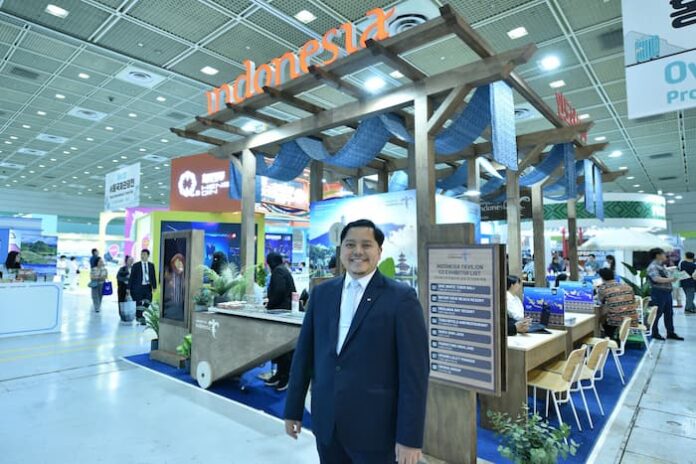
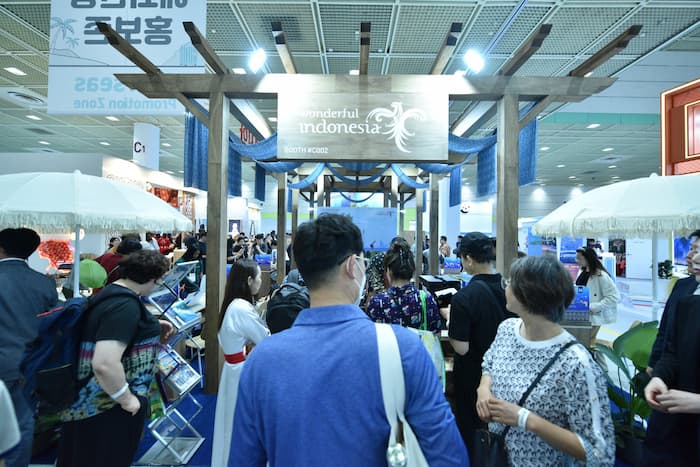
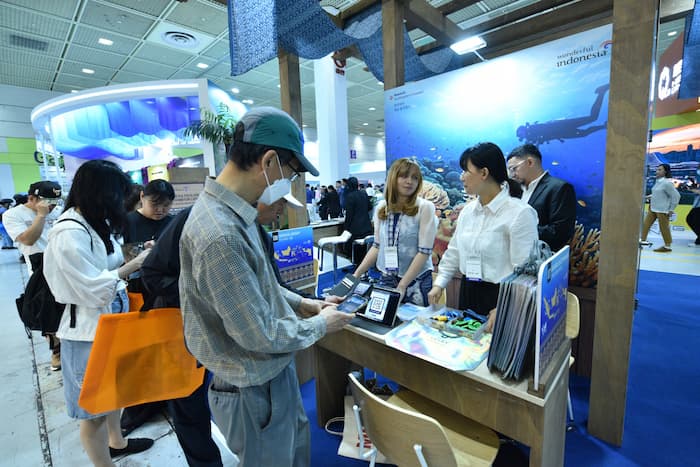
At the Seoul International Travel Fair (SITF 2026), held at COEX in Seoul, the Embassy of the Republic of Indonesia presented Indonesia’s latest tourism campaign, “Go Beyond Ordinary.” The message was clear: Indonesia remains one of Asia’s most familiar leisure destinations for Korean travellers, but its tourism offer extends far beyond a single island.
Bali continues to be Indonesia’s strongest brand in Korea. For many Korean travellers, it is the first name that comes to mind when they think of Indonesia. Yet Indonesia is now placing greater emphasis on destinations such as Lombok, Flores, Manado and Batam, each of which can appeal to different segments of the Korean outbound market.
Mr. Ali Andika Wardhana, Deputy Chief of Mission of the Embassy of the Republic of Indonesia in Seoul, said Indonesia’s participation in SITF 2026 was part of a broader effort to strengthen tourism cooperation and people-to-people exchange between Indonesia and Korea. Tourism, he noted, is one of the areas where the strong bilateral relationship between the two countries can be translated into real movement, experience and business collaboration.
The Korean market already occupies an important position for Indonesian tourism. In 2025, Korean visitor arrivals to Indonesia reached 496,862, up 13.97 percent from 436,054 in 2024. With this performance, Korea became Indonesia’s seventh-largest source market for international visitors.
Those figures explain why Indonesia is treating Korea not merely as a market with future potential, but as a proven and growing source market. Korean travellers are quick to respond to destinations that offer strong value, emotional appeal and clear travel reasons. They also rely heavily on search, blogs, video, social media, online travel platforms and travel agencies when comparing and selecting destinations. For Indonesia, this makes market communication as important as product development.
The central theme of Indonesia’s SITF presentation was not to replace Bali, but to build on Bali’s high recognition and introduce a broader Indonesian portfolio. Bali remains the gateway. The next task is to help Korean travellers understand why they should also consider Lombok, Flores, Manado, Batam and many other destinations across the Indonesian archipelago.
Lombok can appeal to travellers looking for quieter resort experiences and natural landscapes. Flores offers potential for island journeys, ecological tourism and local culture. Manado is well positioned for marine tourism and diving, while Batam offers accessibility, resort stays and opportunities for corporate and incentive travel. These destinations are not yet widely known in Korea’s mass market, but that is precisely where the opportunity lies.
Indonesia brought eight tourism industry representatives to SITF 2026, highlighting sustainable tourism, luxury hospitality and premium travel experiences. The Indonesian Pavilion also showcased Indonesian coffee, using it not simply as a tasting experience but as a cultural and gastronomic entry point into the country’s regional diversity.
Indonesia’s competitive strength lies in its range. The country can offer world-class natural scenery, rich culture, warm hospitality, high-end accommodation, marine and diving experiences, wellness, gastronomy, golf and honeymoon travel within a single national destination framework. At a time when travellers are increasingly looking for both value and quality of experience, Indonesia is well placed to present itself as both accessible and premium.
Accessibility will also be a key factor. As direct flights and travel options expand, the barriers for Korean travellers will continue to fall. For established destinations such as Bali, strong air access and product availability can quickly translate into demand. For emerging destinations, however, market development requires more than awareness. Air links, accommodation, local transport, safety information, Korean-language content and travel agency education all need to move together.
Indonesia’s target partners in Korea are also broad. The country is seeking to connect not only with travel agencies and tour operators, but also with MICE planners, media representatives, corporate buyers and wider tourism industry partners. During SITF 2026, the Indonesian Pavilion hosted business-to-business meetings, tourism product presentations and networking sessions aimed at creating new opportunities between the two markets.
Mr. Wardhana described Korea as a valuable strategic partner for the future development of Indonesia’s tourism industry. The objective is not only to increase visitor arrivals, but also to deepen cooperation across the tourism value chain, including travel package development, destination marketing, MICE cooperation, airline collaboration and hospitality partnerships.
This is where Korea’s strengths can be relevant for Indonesia. Korea has strong capabilities in digital technology, content consumption, destination marketing, travel product development and tourism infrastructure. If these strengths are connected with Indonesia’s destination diversity and hospitality assets, the partnership can create benefits for businesses, travellers and local communities in both countries.
One of the most important signals from Indonesia’s Korean market approach is its follow-up activity after SITF. Indonesia is not limiting its promotion to a single event in Seoul. As part of its tourism promotion series in Korea, Indonesia will hold tourism sales missions in Busan on June 10 and in Gwangju on June 12.
This matters. Korea’s outbound market cannot be understood through Seoul alone. Busan and Gwangju represent important regional travel markets, and direct engagement with regional travel agencies can help build long-term sales channels. For destinations beyond Bali, repeated explanation, product consultation and relationship-building with local travel companies are essential.
The sales missions in Busan and Gwangju therefore show a more practical approach to the Korean market. Seoul provides national visibility. Regional cities provide industry access and follow-up. For a destination that wants to expand its product range in Korea, both are necessary.
Indonesia’s focus themes for the Korean market are also well aligned with current demand. Wellness, gastronomy, luxury hospitality, golf and honeymoon travel are among the key segments being highlighted. Bali remains powerful in the honeymoon market, but there is room for quieter premium resorts and new island experiences. Golf and wellness can connect with mature and high-value travellers, while food, coffee and culture can appeal to younger FIT travellers.
The challenge for Indonesia is to translate national diversity into clear travel choices. Korean travellers need to know where to go, what to do, which season to travel, how to get there and which type of traveller each destination suits. A general country image is not enough. Each destination needs its own story, product structure, access information, local experience and Korean-language visibility.
Digital exposure will be especially important. Korean travellers often understand a destination first through search and online content before choosing a product. Emerging destinations cannot grow through travel agency catalogues alone. Consumers must be able to search, read, compare and imagine the trip. Travel companies can then convert that interest into bookings.
In that sense, Indonesia’s growth strategy in Korea will require destination promotion, content marketing, B2B sales, airline cooperation and hospitality partnerships to work together. SITF 2026 provided the public platform. The Busan and Gwangju sales missions provide the industry follow-up. The next step will be sustained communication in the Korean language and consistent engagement with travel professionals.
Indonesia’s direction at SITF 2026 was clear. It has market momentum, with Korean arrivals growing strongly. It has a campaign message in “Go Beyond Ordinary.” It brought an industry delegation to create business contact. It is extending its outreach beyond Seoul through regional sales missions. This is not a one-off participation, but a step-by-step effort to broaden Indonesia’s position in Korea.
For Korean travellers, Indonesia is already familiar. But it is not yet fully known. Bali is well established, but the wider country still has much more to introduce: islands, marine tourism, culture, wellness, gastronomy, golf, honeymoon travel and MICE potential.
The message Indonesia brought to Seoul was therefore timely. The task now is to move Korean perception from “Indonesia means Bali” to “Indonesia begins with Bali, but goes far beyond it.” If Indonesia continues to explain that wider story with clarity and consistency, it can create new growth opportunities in one of Asia’s most active outbound travel markets.
The Travel News Copyrights ⓒ The Travel News. All rights reserved.
여행레저신문 Copyrights ⓒ The Travel News. 무단전재 및 재배포 금지.