


강정호 기자 ㅣ 여행레저신문
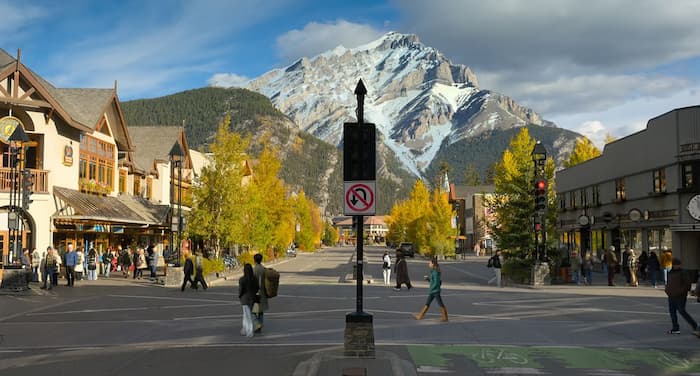
The Quebec scenes in Dokkaebi and the Alberta sequences in Can This Love Be Translated? have placed Destination Canada and Travel Alberta’s Korea strategy back under scrutiny. In both dramas, Canada was not merely a backdrop. It stood at the center of the screen. Quebec appeared through autumn foliage, old streets, hotels and romantic cityscapes. Alberta followed with the Canadian Rockies, Calgary, the Badlands and wide-open landscapes.
The scenery was beautiful. No one would deny that. But as those images continued to dominate the screen, the emotional force of the story began to weaken. For some viewers, the feeling was no longer simply admiration. It was discomfort — the sense that they were watching destination advertising rather than drama.
The power of screen tourism is already well understood. A single scene can change the image of a city. A single line can become a travel keyword. The question comes after that. Does strong screen exposure automatically mean strong destination marketing? Does the beauty of a landscape inside a drama prove that a tourism strategy has succeeded? More importantly, has Destination Canada built a sustainable Korea-market strategy after Dokkaebi and Can This Love Be Translated?

The Quebec scenes in Dokkaebi were undeniably powerful. Old Quebec, its streets, hotels, autumn colors and romantic atmosphere left a strong impression on Korean viewers. Yet they also raised an uncomfortable question. Why did a story built around a Goryeo warrior, a dokkaebi, reincarnation and Korean mythological imagination need Quebec so persistently?
Of course, fantasy dramas allow spatial and temporal leaps. That is not the issue. The issue is whether the location felt organically required by the story, or whether the story seemed to move in order to display the location. When the viewer begins to ask that question, the destination stops functioning as narrative space and starts to look like promotion.
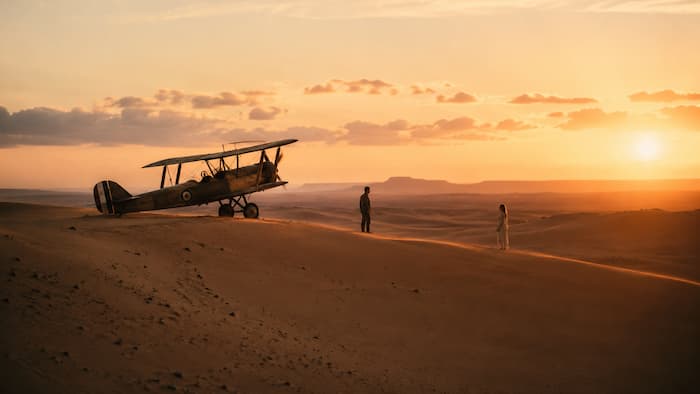
Good location storytelling works when a place and a story need each other. In Leaving Las Vegas, Las Vegas is not just a backdrop. The city’s atmosphere of alcohol, loneliness, desire and self-destruction pushes the character’s fate forward. In Ocean’s Eleven, Las Vegas is almost impossible to separate from the story; casinos, hotels, risk and calculation are the structure of the narrative itself. Chicago works in films because jazz, show business, crime and courtroom spectacle belong to the city’s mythology. In The English Patient, the Sahara is not scenery. It is a space of isolation, memory, love and the wounds of war.
Quebec in Dokkaebi, however beautiful, leaves a different question. Was the place serving the story, or was the story serving the place? Once that question appears, the viewer steps outside the emotion of the drama. The destination becomes visible before the narrative.

Alberta in Can This Love Be Translated? raises a similar question. If the story is about translation, love, relationships and emotional distance, why must Alberta be the necessary stage? The Canadian Rockies, Calgary and the Badlands are visually impressive. But when the landscape is presented repeatedly and almost too carefully, when the camera seems to linger on the destination more than on the characters, the viewer begins to ask: did this story truly need to happen here?
The discomfort surrounding Can This Love Be Translated? is not limited to Alberta. The drama also carried the feel of a travel brochure linking multiple overseas destinations. Overseas filming itself is not the problem. A story that moves across countries can naturally require different places. The problem begins when places seem to exist less for the story and more for the exposure. When a screen holds the scenery longer than the character, when the landscape explains itself more clearly than the emotion does, viewers begin to sense the commercial intention.
No one can state sponsorship or production support arrangements without verified public information. But the audience’s perception is a separate matter. Whether or not something legally qualifies as PPL, if destination exposure feels too heavy, viewers read it as advertising. The moment someone thinks, “I want to go there,” and at the same time wonders, “How much did this cost?”, the screen begins to feel less like drama and more like a tourism brochure.
The issue is not screen marketing itself. Film and drama can be powerful tools for tourism boards. Quebec gained strong visibility among Korean travelers after Dokkaebi. Alberta has also re-entered the conversation after Can This Love Be Translated? These are real effects. But effectiveness does not mean screen marketing should become the whole strategy.
The deeper weakness in Destination Canada and Travel Alberta’s Korea-market approach is sustainability. When a drama becomes popular, the destination follows the filming locations. Then, months later, the industry is gathered for a seminar. Yet the everyday presence of the tourism board in the Korean travel market remains weak. Destination storytelling is not consistently visible. Continuous communication with travel agencies, media and industry partners does not appear strong enough.
The recent Alberta event reflected this limitation. Air Canada and Travel Alberta held a travel trade seminar in Seoul, but the central message still appeared to be built around post-drama filming-location interest. Turning screen attention into travel demand is necessary. But it cannot become the center of a national or provincial tourism strategy. The real task of a tourism board is not to chase content after it becomes popular. It is to create reasons for a destination to be sold even when no drama is airing.
Timing also matters. In tourism marketing, timing is half the strategy. If a drama has created interest in filming locations, the response should come immediately: travel agent education, media briefings, product-development materials, air access information and seasonal itineraries. The heat generated by content must be converted quickly into products, search content, newsletters and media coverage. If that moment is missed, a later event becomes less a market-leading initiative and more a delayed explanation.
Canada is already familiar to Korean travelers as a long-haul destination. Vancouver, the Rockies, Niagara Falls, Quebec, the northern lights, autumn foliage, rail journeys and national parks are powerful assets. The question is whether these assets are being renewed in Korea through fresh stories. Destination Canada’s Korea messaging appears strong when a specific piece of content becomes popular, but less visible during ordinary periods. That is not sustainable marketing.
The core of tourism-board marketing is storytelling. A destination is not sold by scenery alone. Travelers need to know why they should go now, who the destination is for, how many days they should stay, which season fits which route, and how flights, hotels, cities, nature, food and experiences connect. Without that structure, a destination remains an image. Images may generate search. They do not consistently generate bookings.
This is even more true for Canada as a long-haul destination. For Korean travelers, Canada requires long flight times, higher airfares, longer holidays, seasonal planning, currency considerations, local transportation and product pricing. A drama cannot remove those barriers. Content may create interest, but bookings require industry communication and product design. If that structure is weak, screen marketing ends as short-lived buzz.
This is where Destination Canada appears to be missing the larger opportunity in Korea. The Quebec of Dokkaebi is visible. The Alberta of Can This Love Be Translated? is visible. But the Quebec that can be traveled, the Alberta that can be packaged, and the Canada that Korean travelers should choose again are not being told with enough consistency. Filming-location content can create short-term interest. But building travel demand requires ongoing communication with the Korean travel trade, usable materials for media, and itineraries that agencies can actually sell.
For Alberta, the story must go beyond Calgary and Banff. It should structure Edmonton, Drumheller, the Badlands, Kananaskis, Jasper, Indigenous culture, food, winter activities and long-distance driving routes into a coherent market message. For Quebec, the story must go beyond filming-location sentiment. It should connect history, cuisine, winter festivals, the St. Lawrence River and nearby small towns. That is storytelling. Simply following “places seen in a drama” is not storytelling. It is post-content consumption.
The competence of a tourism board is not proven when a drama becomes popular. It is proven when there is no drama. What stories has it built in ordinary times? What products has it developed with travel agencies? How often does it speak with the media? What Korea-specific messages has it created for each region? These are the things that build destination strength.
Canada is a strong destination. But a strong destination does not automatically mean strong marketing. Dokkaebi and Can This Love Be Translated? can show Canada’s scenery. But what moves the Korean market afterward is the work of the tourism board.
Destination Canada and Travel Alberta now face a simple question. It is not how much Canada appeared on screen. It is why those places had to be there — and what was done afterward to grow the Korean travel market.
Screen marketing can be a beginning. It must not become the whole of tourism marketing. What Canada needs now is not another filming-location campaign. It needs a Canada that can sell even without a drama: stories that travel agencies can turn into products, routes that the industry can understand, and storytelling that Korean media can repeat.
Without that, Canada’s Korea-market strategy will remain trapped in the same pattern — following the content after it has already moved on.
여행레저신문 Copyrights ⓒ The Travel News. 무단전재 및 재배포 금지.