
강정호 기자 ㅣ 여행레저신문
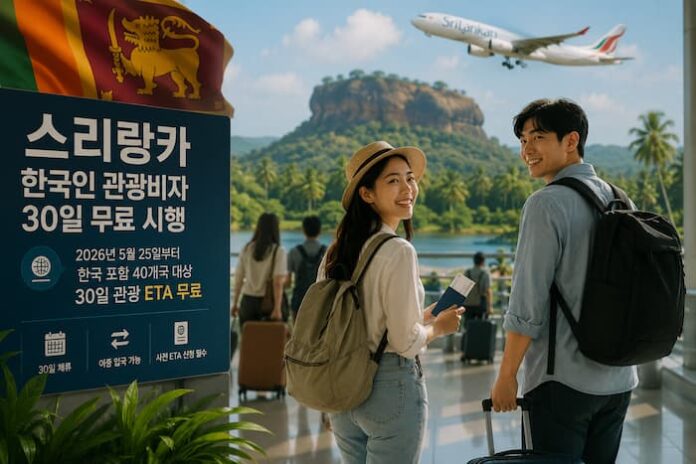
Sri Lanka has removed the tourist ETA fee for South Korean travelers, giving them access to a 30-day travel authorization free of charge. The measure places South Korea among 40 countries covered by the new policy and is clearly intended to make Sri Lanka easier to sell at a time when the island is trying to rebuild momentum in Asian source markets.
The change is not trivial. For a family, a honeymoon couple, or a traveler adding Sri Lanka to a Maldives itinerary, the previous visa cost was one more item on a growing bill. Removing it lowers the psychological barrier and gives tour operators a simpler message: Sri Lanka is now easier to enter, cheaper to add, and more convenient to package.
A useful policy, but not a market strategy
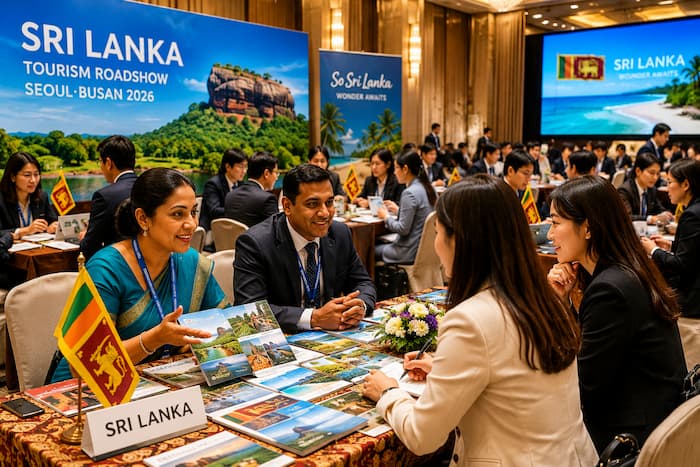
The timing is also deliberate. Sri Lanka is expected to use SITF 2026 and roadshows in Seoul and Busan to meet Korean travel agencies, wholesalers and destination sellers. Those events matter. Korea remains a relationship-driven travel trade market, and tourism boards still need direct contact with agents who shape package products and group demand.
But a visa waiver is not the same thing as a market strategy. It removes one administrative cost. It does not solve the larger problem: Sri Lanka is still not priced, packaged or promoted strongly enough for the way Korean consumers now choose overseas destinations.
That gap shows up in the numbers. Sri Lanka’s overall tourism recovery has been visible, but South Korea remains a small source market. According to Sri Lanka Tourism Development Authority data, Korean arrivals in the first four months of 2026 were still modest and lower than the same period a year earlier. In other words, the Korean market is not waiting for Sri Lanka with pent-up demand. It has to be won again.
The airfare problem is bigger than the visa fee
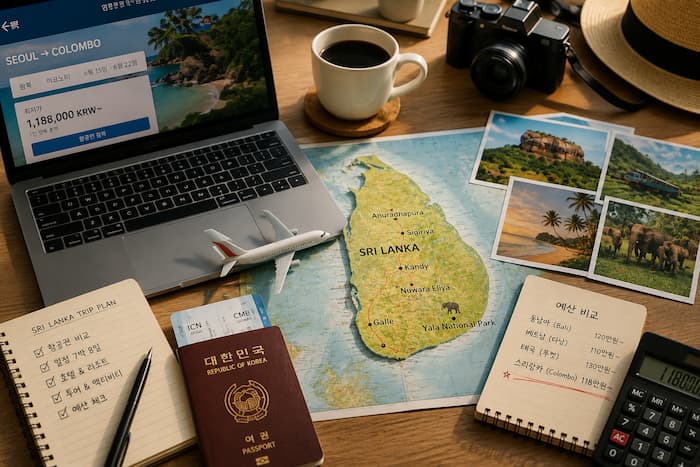
The clearest obstacle is price. A waived ETA fee can save money at the margin, but the larger cost of a Sri Lanka holiday from Korea is still airfare. When Korean travelers compare Sri Lanka with Vietnam, Thailand, Japan, Taiwan, the Philippines or even long-haul discounted options, the first question is not cultural richness. It is total trip cost.
Sri Lanka has many assets that should appeal to Korea: Sigiriya, Kandy, Galle, Nuwara Eliya, Yala National Park, tea country, Ayurveda, beaches, rail journeys and boutique heritage hotels. Few Asian destinations combine wildlife, ancient cities, colonial ports, wellness and coastline so compactly. The product is not weak. The way it is being translated into Korean demand is the weak point.
Korean travelers no longer respond strongly to old destination marketing built around a ballroom presentation, a cultural performance and a stack of brochures. They check flight prices, hotel standards, road distances, safety, food, Instagram visibility, YouTube clips and real itineraries before they talk to a travel agent. The consumer journey has moved. Much of Sri Lanka’s promotion still feels as if it has not.
Roadshows need a second life online
Seoul and Busan roadshows can still be valuable, but only if they become the starting point of a wider campaign. Sri Lanka needs Korean-language digital storytelling, short-form video, clear itinerary mapping, airfare-linked promotions and product lines built for specific segments: honeymoons, wellness retreats, senior long stays, photography travel, tea and rail journeys, family wildlife trips and Maldives stopover packages.
Busan also deserves more than a symbolic stop. The southeast Korean market has its own outbound rhythm, its own travel agencies and its own price sensitivity. Treating Busan as an extension of Seoul would miss the point. If Sri Lanka wants regional Korean demand, it needs regional product design and regional media targeting.
The free ETA policy is therefore a welcome opening move. It signals that Sri Lanka is paying attention to Korea and other priority markets. But the harder work begins after the visa fee disappears. Sri Lanka must answer a more demanding question from Korean travelers: why should they choose Sri Lanka now, at this price, over destinations they already understand?
If Sri Lanka can combine lower entry friction with sharper pricing, better air access, modern Korean-language content and more imaginative products, the visa waiver may become more than a headline. If not, it will remain a useful but limited gesture in a market that has already moved on.
여행레저신문 Copyrights ⓒ The Travel News. Unauthorized reproduction and redistribution prohibited.