이만재 기자 ㅣ 여행레저신문
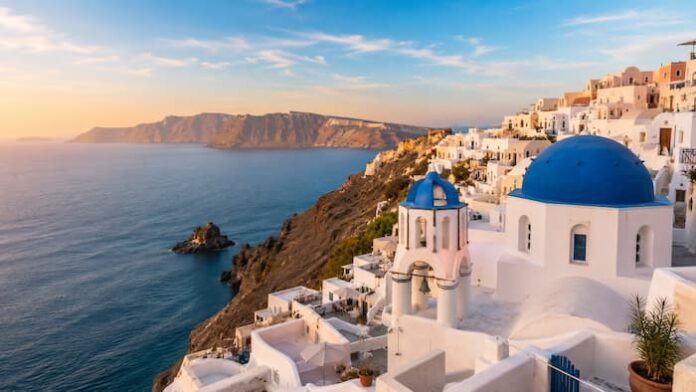
Santorini is one of the few destinations in the world that needs almost no introduction. Its name has become an image before it becomes a place: whitewashed houses, blue domes, cliffside villages, terraces facing the caldera, and the Aegean Sea turning gold at sunset. For many travellers, Santorini is not first discovered through a map or a brochure. It is discovered through a photograph.
At the Seoul International Travel Fair, Tasos Konidaris, Special Advisor to the Mayor of Santorini, spoke about how the island is looking toward the Korean market and how Santorini is preparing for a better, more balanced visitor experience. Santorini is widely known by its tourism name, while Thira is the ancient and official administrative name used for the municipality. The Municipality of Thira is the local government authority that administers Santorini and its surrounding island communities.
Santorini’s global success cannot be explained only by advertising budgets or conventional tourism campaigns. Of course, the island has always been beautiful. But the way its beauty travelled across the world was strikingly modern. Photographs of white houses, blue church domes, volcanic cliffs and Aegean sunsets moved through Facebook, Instagram and travel media until Santorini became one of the strongest visual symbols of global travel. Santorini is a landmark case in the age when a photograph can create a destination.
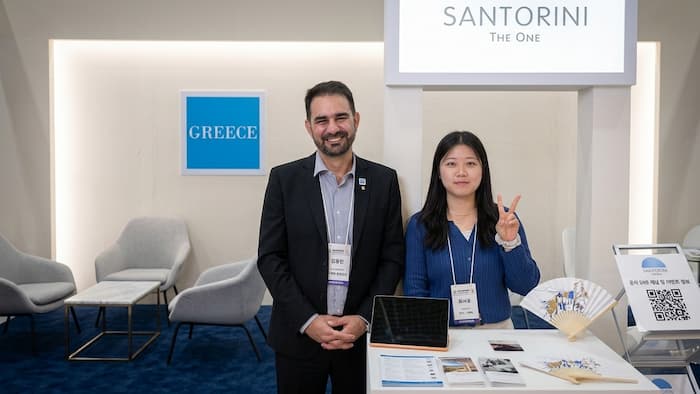
Konidaris was direct in his invitation. “You should come, especially to Santorini,” he said. He also noted that access has become more realistic for long-haul travellers. “There are direct flights from Istanbul to Santorini now,” he said, explaining that Korean travellers can connect through Istanbul and continue to the island. For Korea, Santorini is still a long-haul destination, but with European and Türkiye-based connections, the journey has become easier to imagine and plan.
Santorini is already one of the most recognised destinations in the world. Yet for the Korean market, there is still room to present the island more deeply. Many Korean travellers first think of Santorini as a honeymoon destination, a place for once-in-a-lifetime photos, or an island of sunsets. But Santorini is more than a backdrop. Its volcanic caldera, the ancient site of Akrotiri, black-sand beaches, local wine culture, cliffside villages, caldera walking routes and quiet corners beyond Oia give the island a richer travel story.
The island that turned photography into desire
Santorini’s landscape begins with geology. The caldera, shaped by volcanic activity, gives the island its dramatic form. Villages rise along the cliffs, looking out over the sea and the volcanic islands. From those terraces, the view does not need much explanation. Sea, sky, white walls, dark volcanic rock and evening light come together in one unforgettable frame.
That frame has travelled further than almost any tourism advertisement. The blue domes of Oia and the white architecture of Santorini have become more than local scenery. They have become a shared global image of escape, romance and beauty. People encounter Santorini first through images, and those images become a desire to travel. In this sense, Santorini is one of the most powerful examples of modern destination marketing, even when the marketing itself was carried by travellers, photographers and social media.
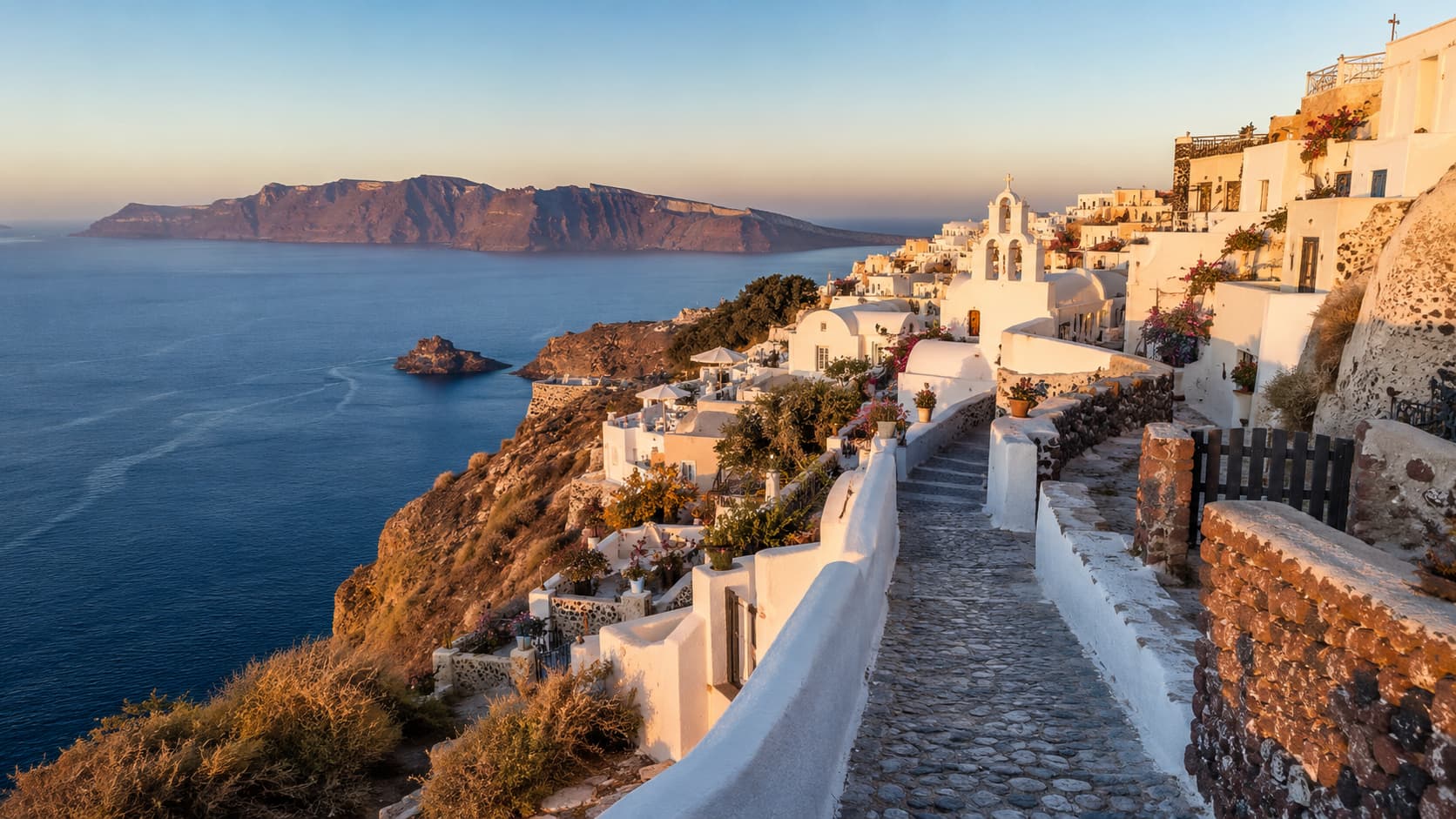
For Korean travellers, the image of Santorini is especially strong. Many people have seen the island long before they have planned a trip to Greece. Santorini creates the feeling of “one day, I must go there” before the itinerary exists. The next step for the Korean market is to turn that visual dream into practical travel: how to get there, when to go, how long to stay and how to experience the island beyond a single viewpoint.
Managing success, not only celebrating it
Today, Santorini’s challenge is not only how to remain popular. It is how to manage popularity. The island has long been discussed in relation to overtourism, especially when cruise visitors arrive in large numbers within a short period of time. On crowded days, narrow streets, viewpoints, ports and local transport can all come under pressure.
Konidaris described the issue with unusual clarity. “Before, we had 20,000, 18,000, even 15,000 cruise visitors in one day,” he said. “Now we have limited people coming from cruise ships to 8,000 per day.”
He explained that Santorini now uses a berth allocation system. The system helps distribute cruise ship arrivals by assigning ships to specific days, reducing the concentration of visitors at the same time. In practical terms, it means one ship may be asked to arrive on another day rather than adding pressure to an already crowded schedule.
This matters because Santorini is no longer simply trying to receive as many visitors as possible. It is trying to shape a better visitor experience. A more carefully managed flow helps travellers enjoy the island more comfortably, helps local communities deal with pressure and helps the destination protect the very beauty that made it famous.
Why Santorini deserves more than a quick visit
For Korean travellers, this shift is important. Santorini is not best experienced as a rushed photo stop. It is an island that becomes more rewarding when travellers stay for several days. Konidaris said Korean visitors usually stay “three or four days.” That length of stay allows the island to be experienced as a place, not only as a postcard.
Oia’s sunset may be the most famous scene, but it should not be the whole journey. The walk from Fira toward Imerovigli, the archaeological site of Akrotiri, the black beaches of Perissa and Kamari, volcanic boat trips, hot springs, wineries, small restaurants, quiet alleys and caldera-side mornings all add layers to the experience. Santorini is a place to photograph, but it is also a place to walk, taste, sit, wait and watch the light change.
Santorini wine deserves a deeper place in the Korean travel imagination. The island’s volcanic soil, dry climate and strong winds have shaped a distinct wine culture. The traditional low basket-shaped training of vines shows how local people adapted to the island’s demanding environment. For many Koreans, Santorini is still known mainly as a visual destination. In the future, it can also be introduced as a place of wine, gastronomy, island living and slow travel.
Santorini and the Korean travel market
Santorini has a clear advantage in Korea: the name is already known. Many people recognise the island, and even more have seen its images. The challenge is to help travellers move from admiration to planning. Santorini must be explained not only as a beautiful island, but as a destination with routes, seasons, connections, recommended stays and ways to avoid unnecessary crowding.
Konidaris also showed interest in press trips and travel industry familiarisation trips from Korea. He noted that journalists and travel professionals from several countries visit Santorini, stay for two or three days, see the island, take photographs and write their stories. For Korea, direct experience of this kind can be highly valuable. Santorini may already be powerful in photographs, but first-hand stories can give the island depth, credibility and practical meaning for Korean travellers.
This is where Santorini’s story becomes especially relevant for travel media. A photograph can awaken desire, but good content turns that desire into a journey. Travellers need to know how to arrive, where to stay, how long to remain, what to see beyond Oia, how to combine Santorini with Athens or other islands, and how to experience the island at a more comfortable pace.
The Greek journey that begins with Santorini
Santorini can also become the beginning of a broader Greek journey. A classic itinerary may connect Athens and Santorini. Another may combine Santorini with Mykonos or Crete. More extended routes can bring together the Aegean islands, ancient sites, Meteora, wine regions and cultural landscapes. Yet Santorini remains the first dream for many Korean travellers. It is the image that opens the door to Greece.
For tomorrow’s Korean market, Santorini should not be introduced only as a pretty island. It should be presented as a destination that became famous through images, learned to manage its success and now encourages a more meaningful stay. Cruise visitor limits, berth allocation, longer stays, walking routes, wine and island culture all belong to the new Santorini story.
What came through in the conversation with Konidaris was Santorini’s desire to come closer to the Korean market. Santorini is already a world-famous name, but for Korean travellers, it still has many stories to tell. Beyond the white villages and blue domes, there is a volcanic island with its own geography, wine, local life, visitor management challenges and quiet moments that can only be seen by those who stay.
Santorini captured the world through a single photograph. Now, for Korean travellers, the next step is to step inside that photograph and experience the island’s light, wind and time. Santorini is still beautiful. And it is learning how to protect that beauty for the people who come to see it.
여행레저신문 Copyrights ⓒ The Travel News. 무단전재 및 재배포 금지.